The silk floss tree

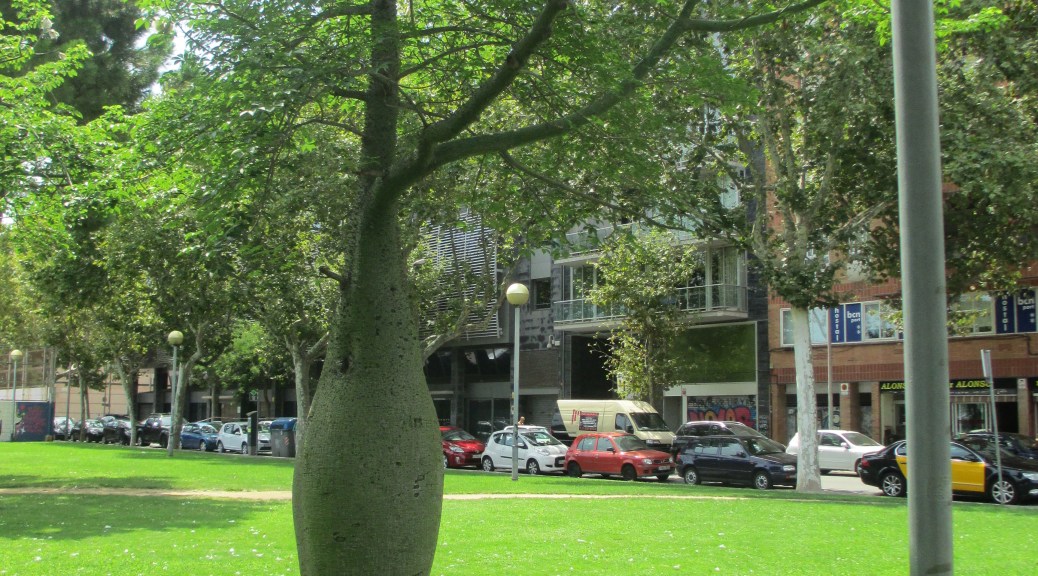
There are many fabulous trees in the world but we can grow only a small proportion of them in our British temperate climate. Here’s the tropical silk floss tree, Ceiba speciosa, which originates from Brazil and Argentina, but can be seen growing on streets in Barcelona. What a lucky city that is!

There’s something prehistoric about the silk floss tree. Its trunk is swollen like a bottle and armed with the most vicious looking spines. You could never climb it without serious protection! Perhaps they evolved to protect the tree from giant South American sloths, which are now extinct.

IMG_1592

The leaves are glossy and palmate, and the flowers fabulously exotic. They are about 12cm across with 5 pink petals joined to an orange and red centre. There are huge sex organs (styles and stamens) which stick proudly out of the middle.

IMG_1597

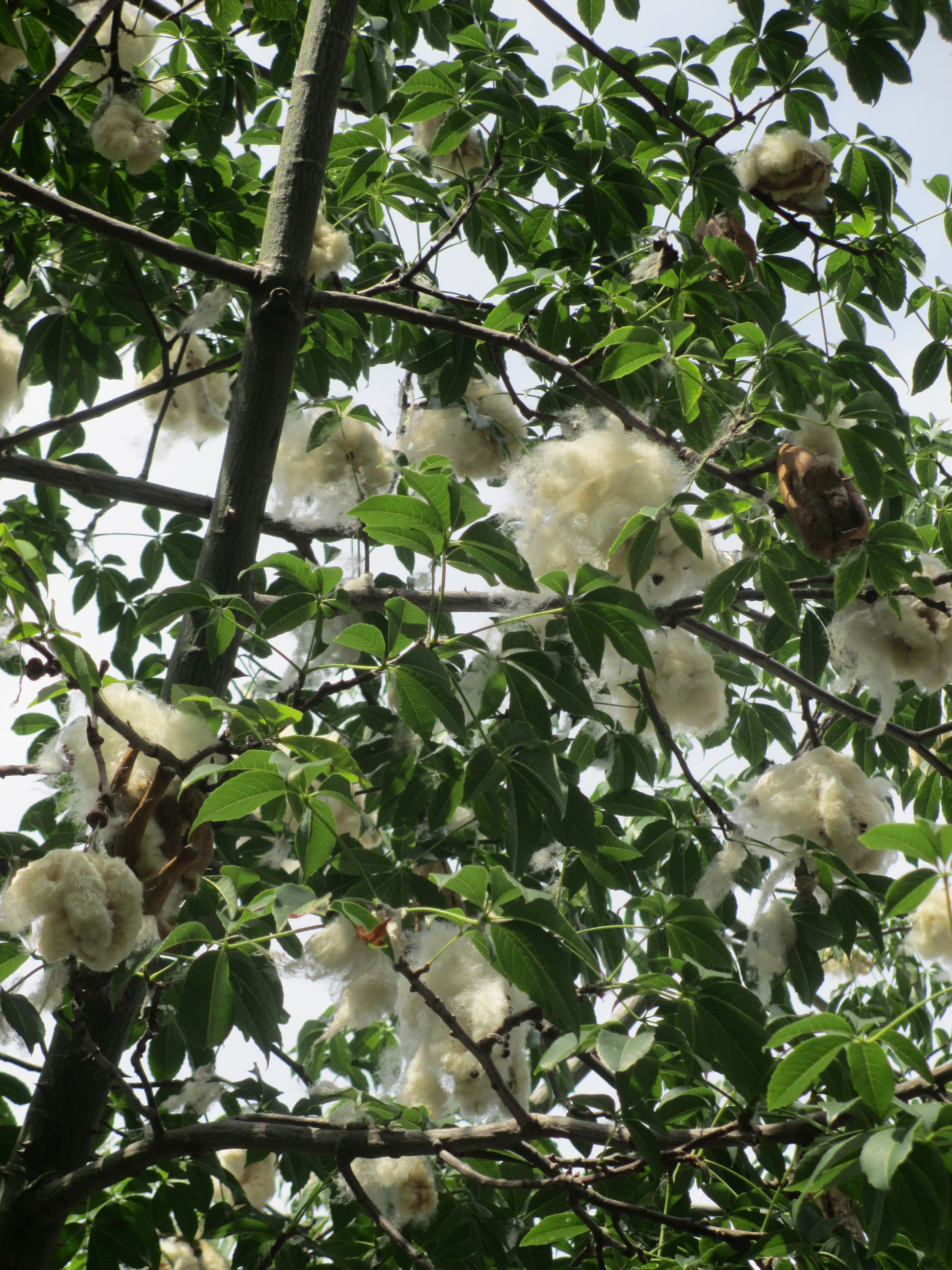
And the fruit too is strange, bursting open with silky hairs and seeds.
IMG_1591

It is of course a relative of the kapok tree which produces a fibre used for stuffing cushions and a member of the notable tropical tree family Bombacaceae. This is a remarkable group in itself including many strange members such as the baobab, the durian, balsa wood and of course kapok. The trees often have swollen trunks or even massive elephantine trunks and branches which help store water, and I guess that is what the soft balsa wood is designed for. Other members of the family such as Bombax and other Ceiba species have light timbers which are used for making matchsticks.

The trees are also deciduous, so may lose their leaves in the dry or colder seasons.

In Barcelona you can see these trees where the major boulevard Avinguda del Parallel reaches the port – close to the bottom of the famous Ramblas. There are several of these marvellous trees in this park amongst the palms. If you’re lucky they will be in flower and fruit at the same time.

Barcelona has a favourable climate and a great collection of street trees. The city council’s website goes into some detail on its street trees and reveals that these silk floss trees are believed to be 80 years old, but were only planted in their present location in 1992 for the Olympic games. Fortunately they are doing well!

A summer visit to Beth Chatto’s gravel garden

Situated in the not-so-pretty village of Elmstead Market, between the Essex towns of Colchester and Clacton, Beth Chatto’s marvellous garden is a great day out. The gravel garden alone, which is just a part of what is on offer, is a morning’s entertainment in itself.

Beth, now aged 90, began the garden with her husband in 1960. They owned a fruit farm nearby and started the garden on what they called “wasteland”. Beth was a flower arranger and speaker at that point and began with an interest in unusual plants. She built up a collection which led to the nursery in 1967 and then began writing books, including The Dry Garden, The Damp Garden, Plant Portraits  and The Green Tapestry.

The gravel garden is not irrigated; indeed Beth says that the original idea was an experiment to see what can be done on an unpromising former car park. Miraculously, you don’t even need to pay to go into the gravel garden, whereas there is an entry fee for the lush water and shade gardens. The tempting and well-stocked nursery is also free to visit and there is a reasonable café which offers meals and cakes.

In July, the gravel garden looks almost like an Australian landscape with the dominant Eucalyptus tree and waving grasses. It was a windy day the movement of the trees and the flowering grasses was magnificent. But there are many plants flowering away, not least the Mount Etna broom (Genista aetnensis) with its scented yellow pea flowers reaching up to 4m above the ground. Other highlights are the tree poppy (Romneya coulteri), standing up to 1.5m high with its large white blooms and the yellow centres, so attractive to hover flies:

IMG_1451
Romneya coulteri

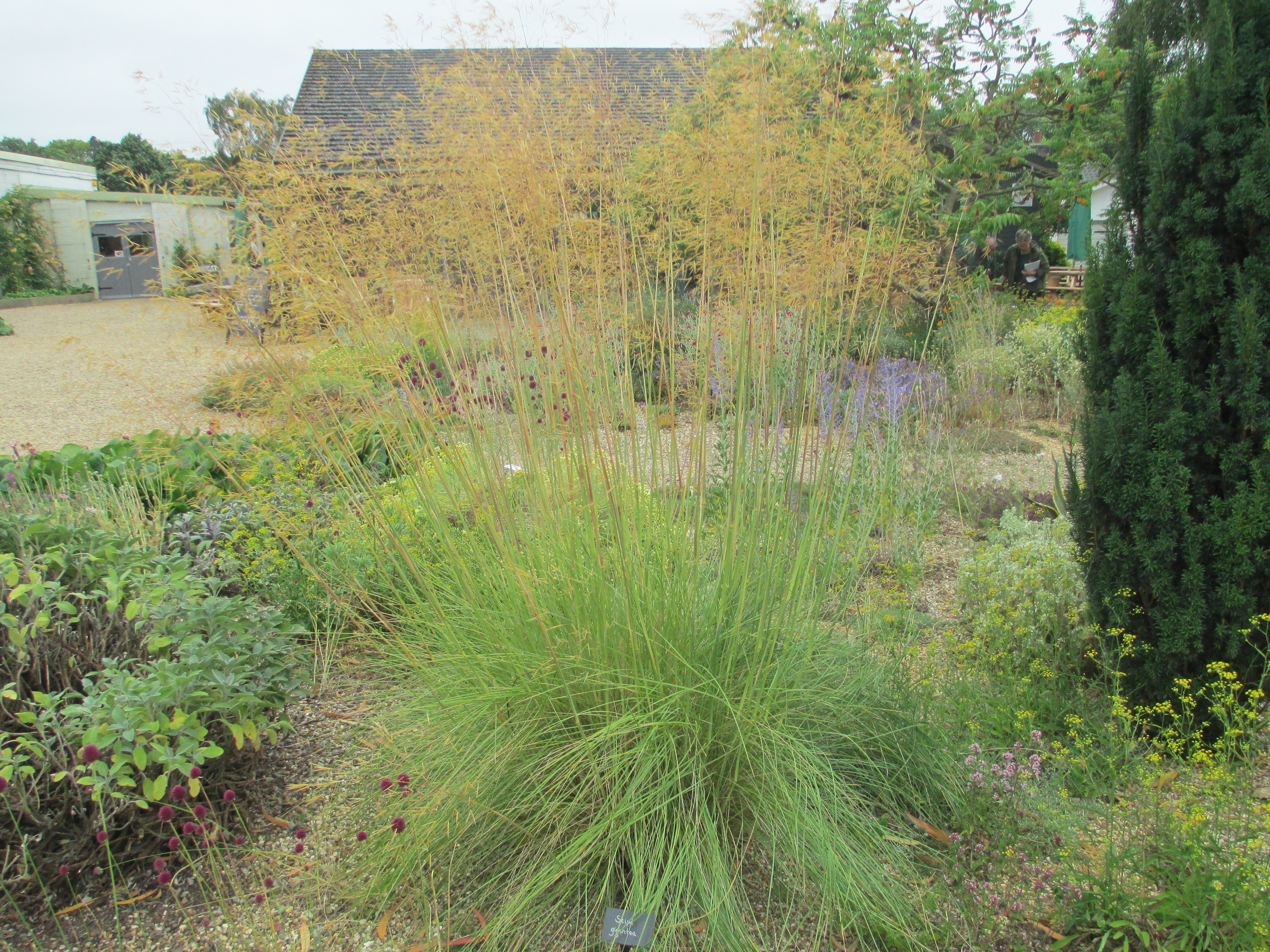
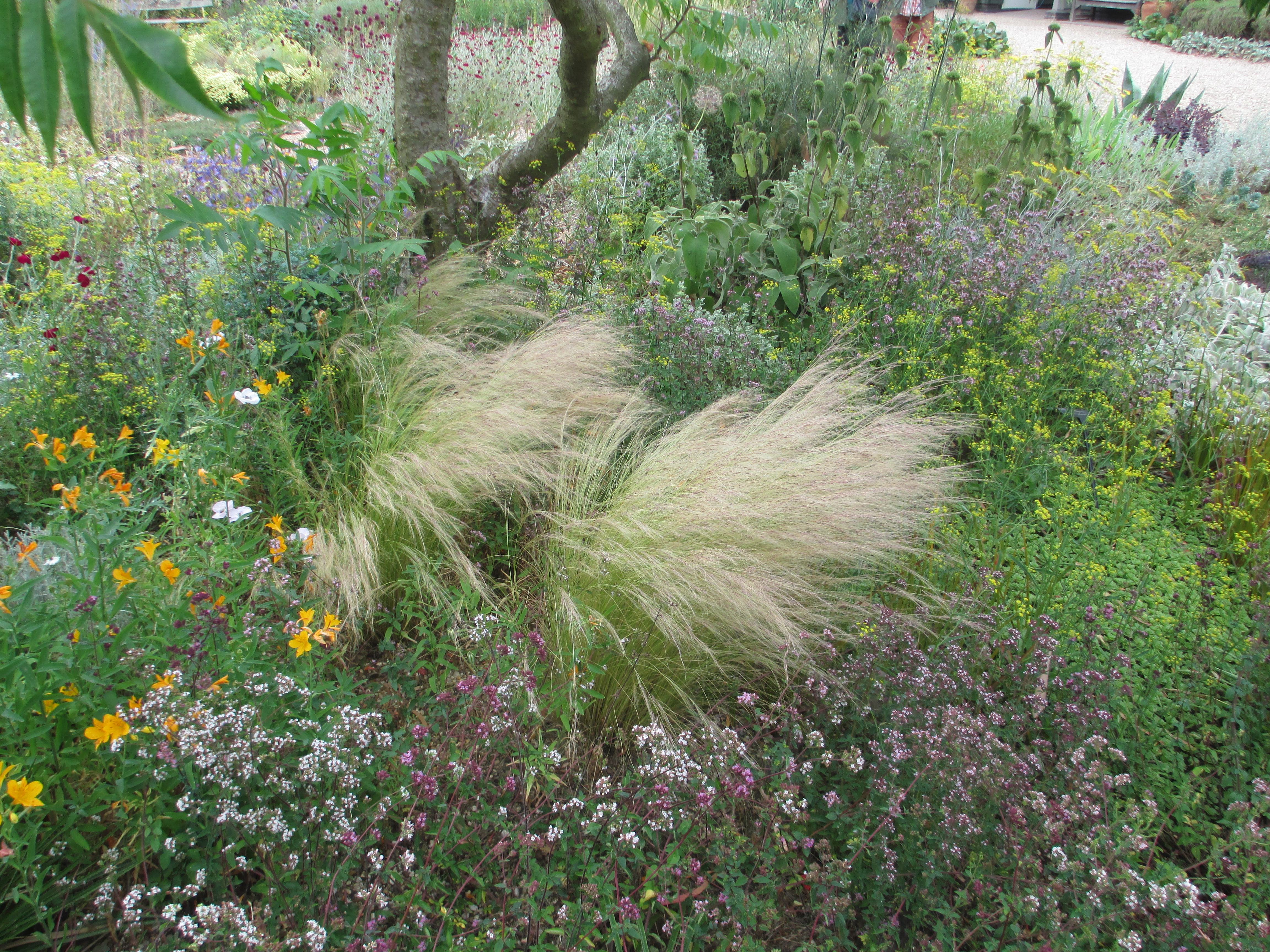
But the garden is a lesson in the variety of different plants all in flower: the grasses, the salvias, thymes, oreganos, the yuccas, the mulleins, hollyhocks and umbellifers. Among the grasses I was particularly impressed by Stipa gigantea and more unusually Stipa barbata which has wispy spikes which were fluttering in the breeze, and furry Stipa tenuissima.

IMG_1447
Stipa gigantea
IMG_1448
Stipa barbata
IMG_1449
Stipa tenuissima

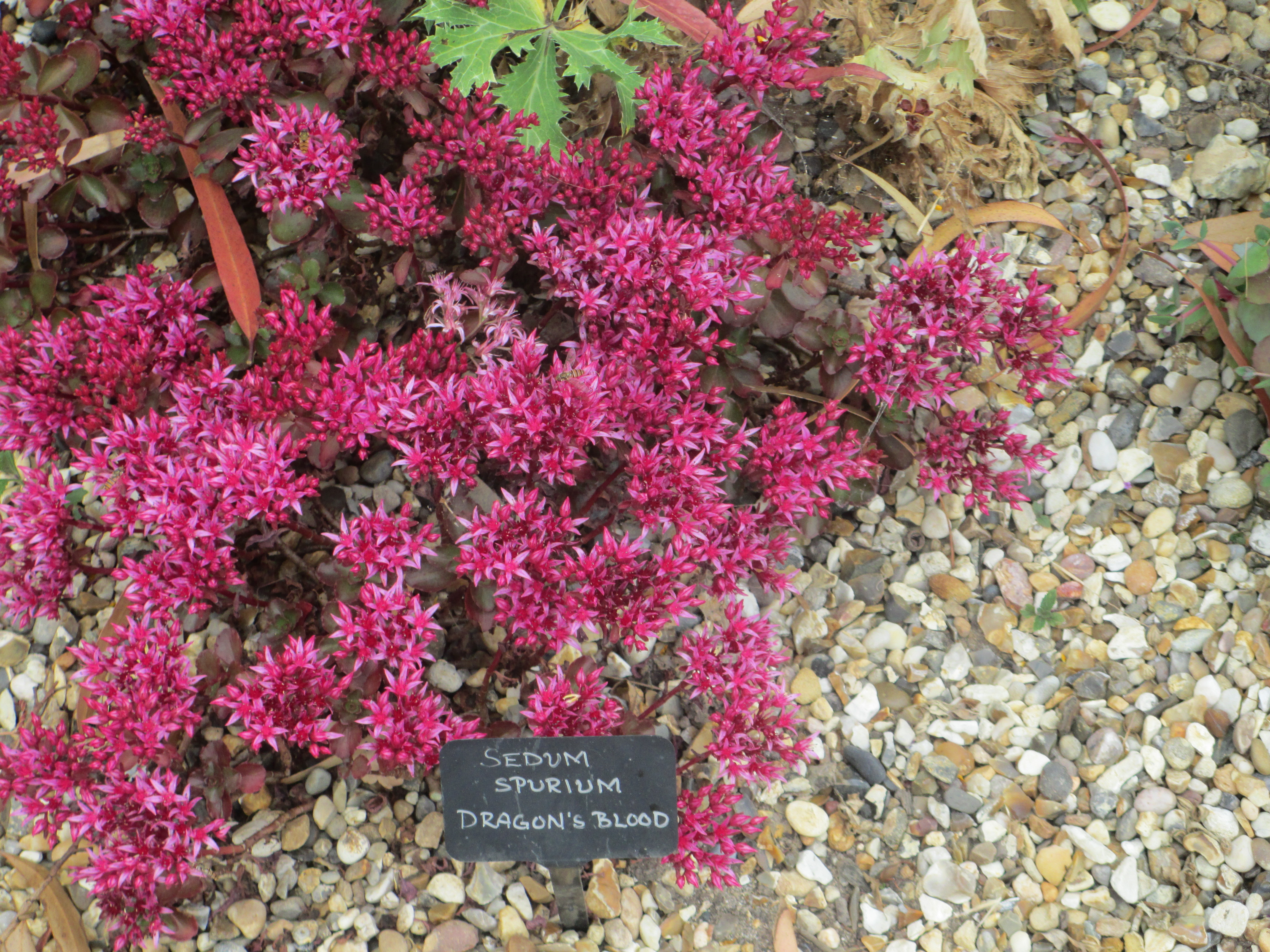
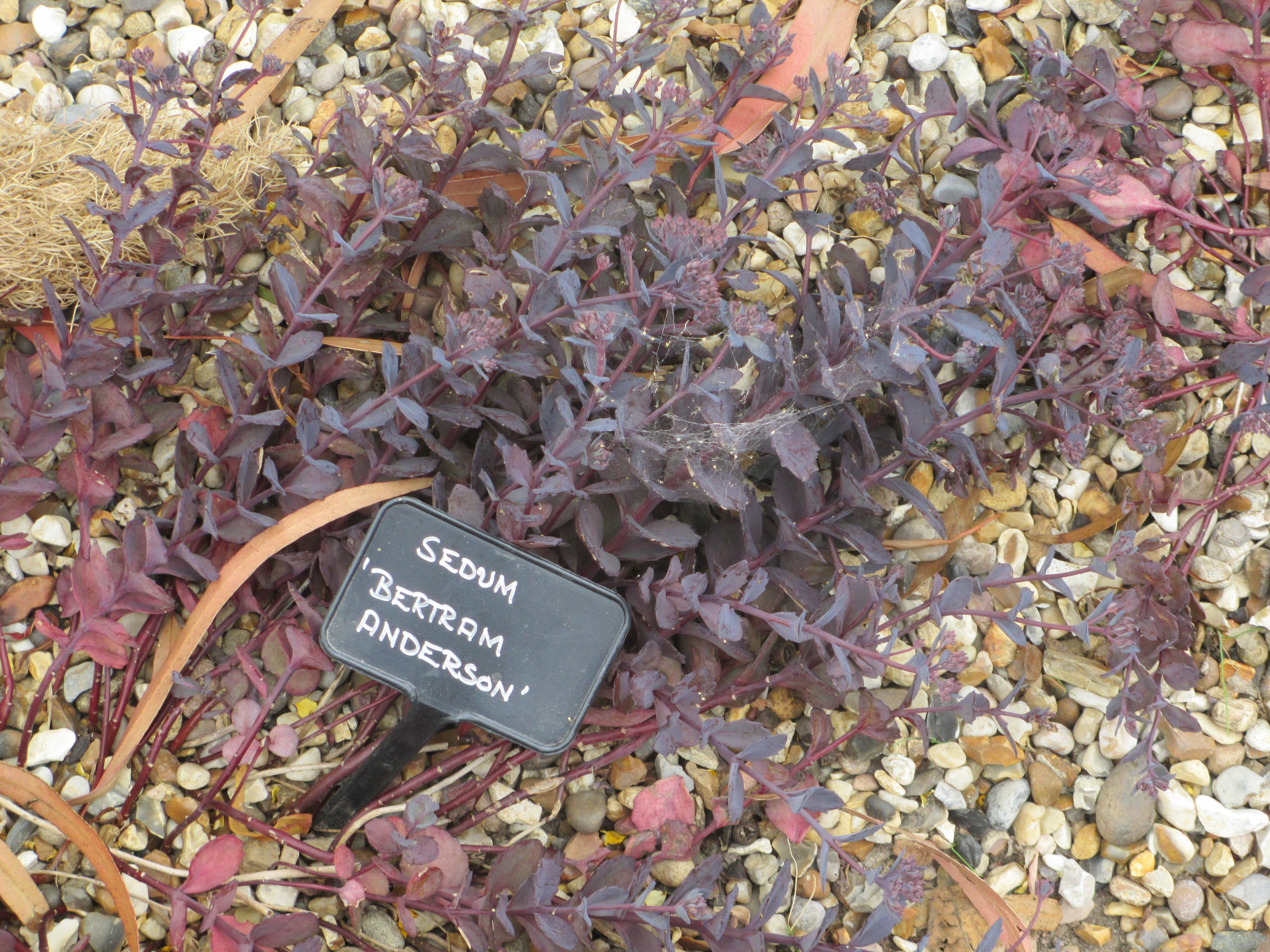
Another genus well represented is Sedum: the dramatic ‘Dragon’s blood’, the dark ‘Bertram Anderson’ and the tall ‘Purple Emperor’.

IMG_1462
Sedum spurim ‘Dragon’s blood’
IMG_1463
Sedum ‘Bertram Anderson’
IMG_1464
Sedum ‘Purple Emperor’

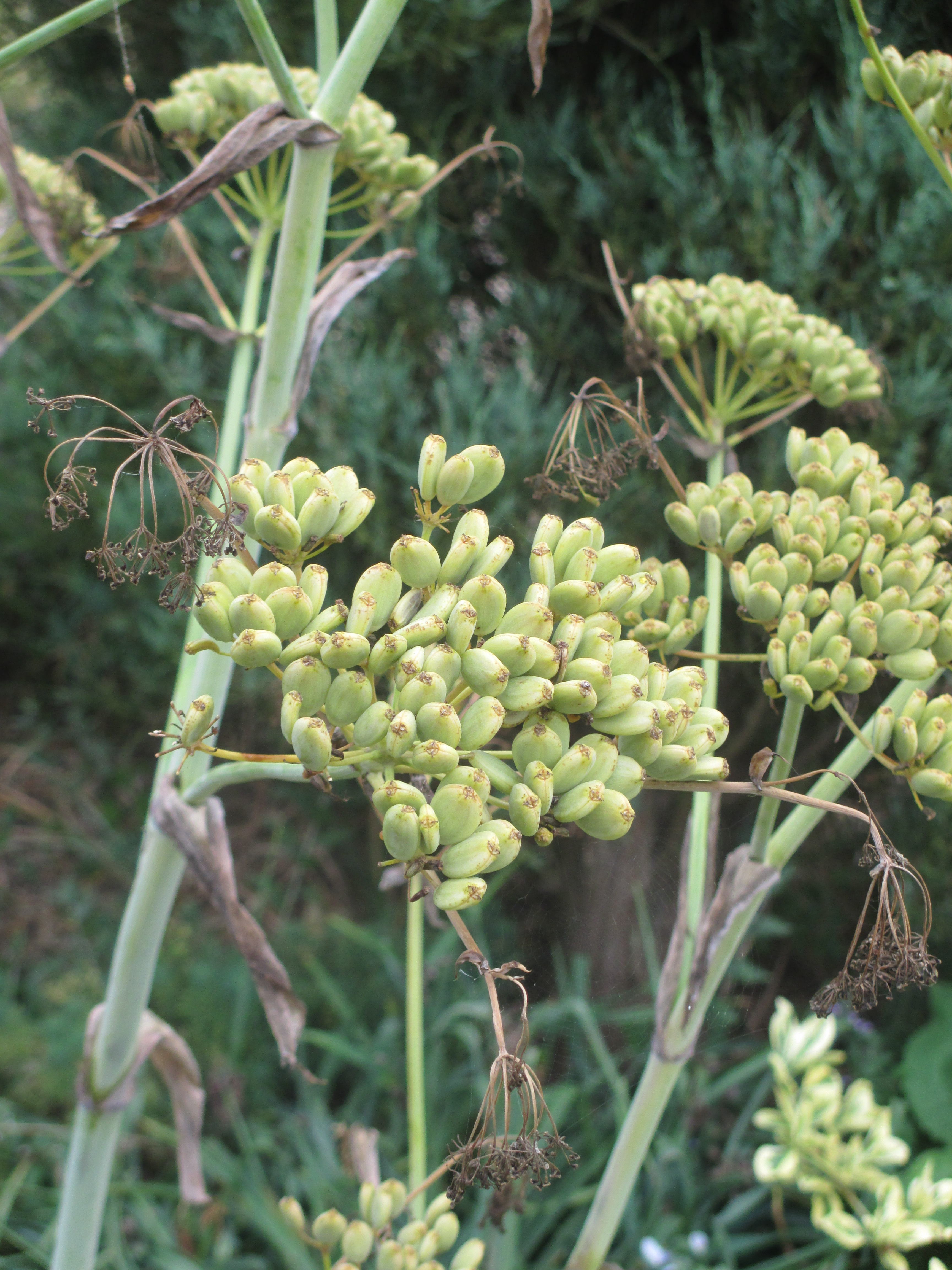
The variety of the plants that do well in the garden is immense. I love the giant yellow-flowered umbellifer Ferula communis and Beth even has an unusual Ferula tingitana ‘Cedric Morris’ which has fat seed heads.

IMG_1440
Ferula tingitana ‘Cedric Morris’
IMG_1442
Ferula tingitana seed heads

To pick out just a few more favourites, I would chose the lovely Verbascum chaixii ‘Album’, and the gorgeous furry rosettes of the big verbascums, probably V. bombyciferum, now developing where they have seeded.

IMG_1483
Verbascum chaixii ‘Album’
IMG_1439
Verbascum rosette

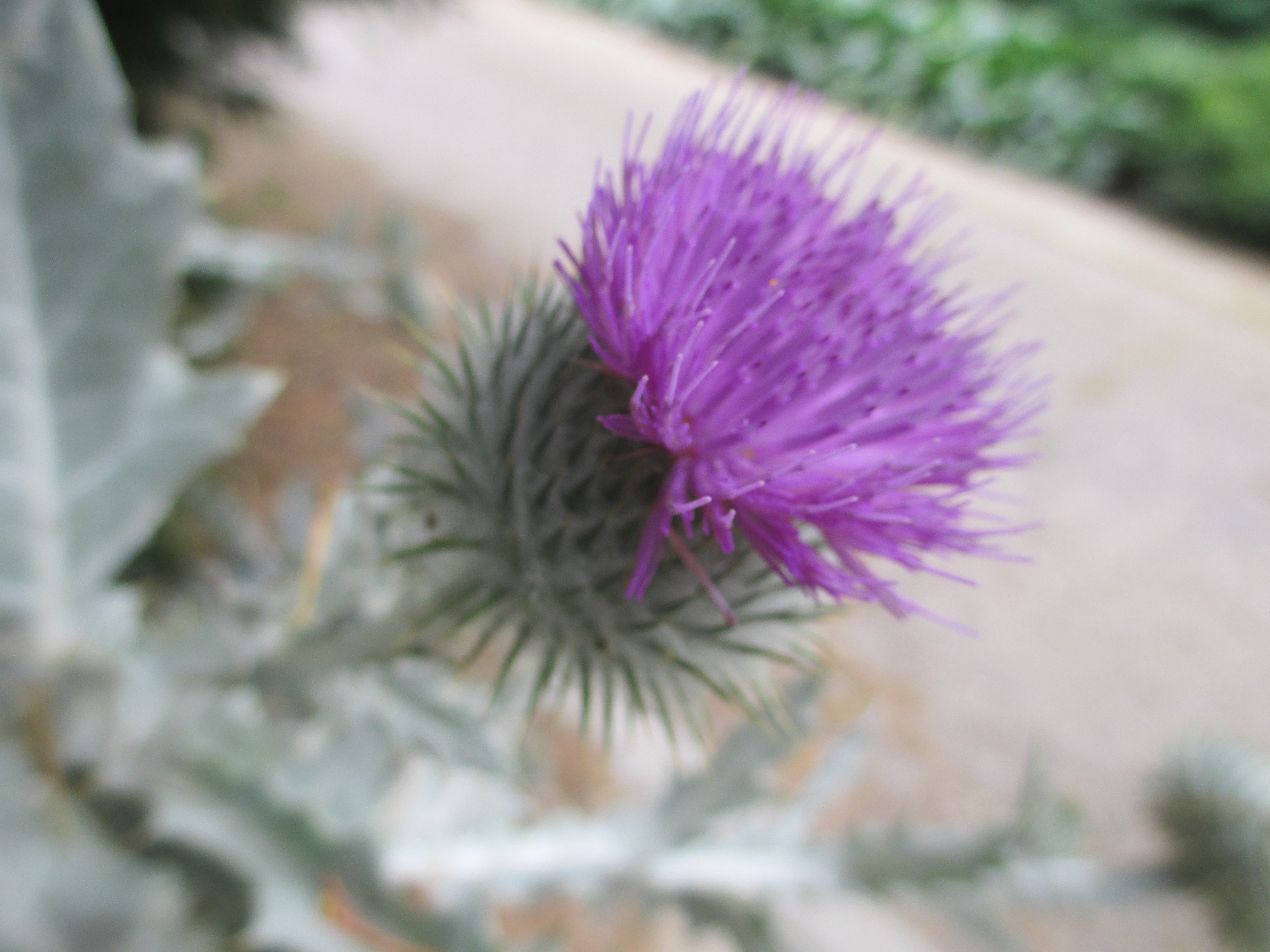
Two more glories are Onopordum acanthium – the so called Scottish thistle, a lovely big glaucous blue plant with the characteristic mauve flowers, and a subtley beautiful sage Salvia sclarea var turkestanica, which forms tall stands in the garden.

IMG_1479
So called “Scottish” Thistle
IMG_1478
Onopordum flower
IMG_1467
Salvia sclarea
IMG_1466
Salvia sclarea blooms

Putting the straw back into strawberries

Thu 29 May

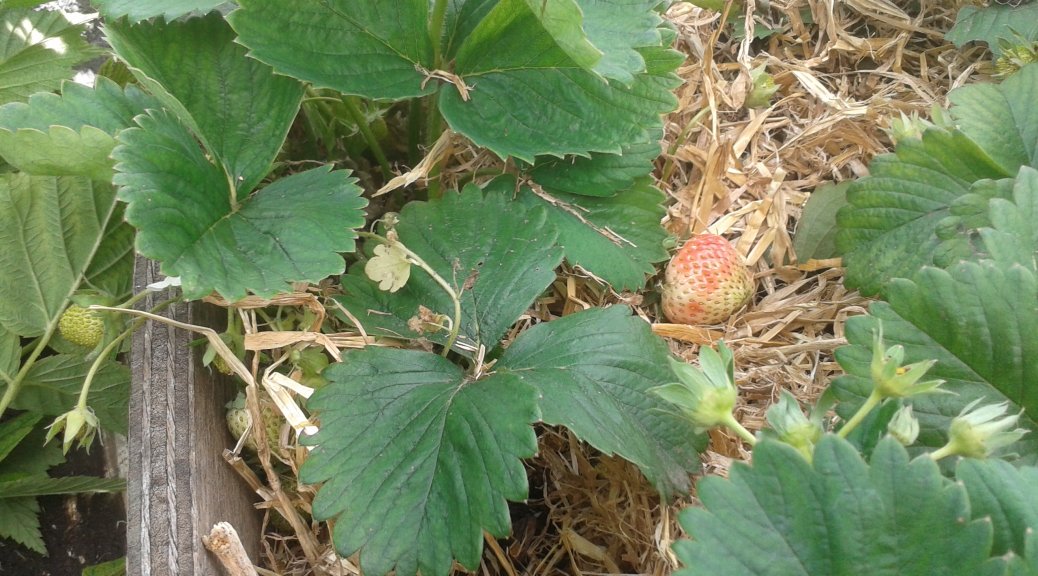
There’s glorious weather down on the allotment and the strawberries are beginning to ripen. They also need some weeding and I have a bale of straw that came from a pet shop whichI have kept for trying out on the strawberries in the traditional way.

I’ve been round my strawberry patch, weeding out the rogue plants such as raspberries shooting up from the next bed, speedwell, annual dog’s mercury, dandelions and little euphorbias. Then carefully with my left hand I lift up the swelling green fruit off the ground, then with my right I grab a bunch of straw from the bag and lay it as a collar around the plant roots. The developing fruit can then be just laid back onto the straw. The fruit then sit protected from the sometimes wet soil and hopefully are a bit more difficult for slugs and snails to munch on.

Let’s see whether it works! I also pick my first crop of strawberries and realise I must clean out the freezer by making jam with the strawberrries left from last year.

Making the most of organic matter

Tue 10 June

I went down to the allotment on my bike today taking with me a bag full of kitchen and garden waste for my big compost heap. The one in the garden is small and pretty full most of the time, and I want to avoid giving the council too much of my compostable waste.

On the way I was also able to collect a large bag of wood chippings from the woodland surrounding Hackney marshes. There are piles of chipped wood where they have been thinning the shelter belts. They often use the chips to make path surfaces or quite often just leave them to rot. I was particularly looking for some older stuff which was moist and part rotted to act as a mulch. I put this on my dahlias, iris cuttings and courgette plants because the soil is looking pretty dry on these warm summer days. I also use it to make paths on my allotment, underlain by old carpet, but the newer stuff is best for this.

I had not much time for watering today but picked some broad beans and strawberries. I need to do some feeding and watering in the near future, as well as make repairs to the raised beds.