All posts by plighto

Gardens of MONTJUïC, Barcelona: 4. Gardens of Mossèn Costa and Llobera

When you come to the southern end of the Miramar garden you’ll find a restaurant and on its right hand side, some stairs which allow you to descend into the Gardens of Mossèn Costa and Llobera. This is a delightful subtropical garden of palms, cacti and succulents perched over the harbour on the sunny and well drained eastern slopes of the mountain.

The green notices tell us that the garden was built by architect Joaquim Maria Casamor and gardener Joan Pañella in an area previously occupied by military batteries. It totals 6.15 hectares and was opened in 1970. It benefits from being sheltered from north winds and is generally two degrees higher than the rest of the city.

It’s surrounded by steep cliffs and old quarries. Huge Washingtonia palms from California and lots of large cacti create an amazing landscape.

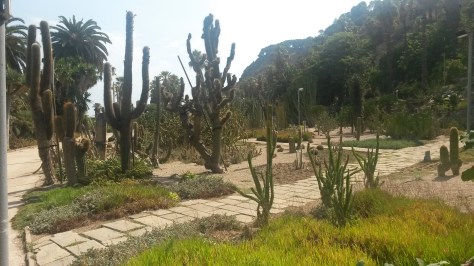
Washingtonia robusta palms from California and Phoenix dactylifera date palms
An amazing landscape…

There are also some great views across the harbour.

Views across the harbour
Visiting cruise liners on show

It’s a pleasant way to walk slowly down the hill with plenty of plants to see. Who knows what you’ll find in flower, but I am sure there will be plenty whatever the time of year.

There are many of these barrel cactuses – Echinocactus grussonii – which rejoice in the Catalan name of “seient de sogra”, which translates as mother-in-law’s seat.
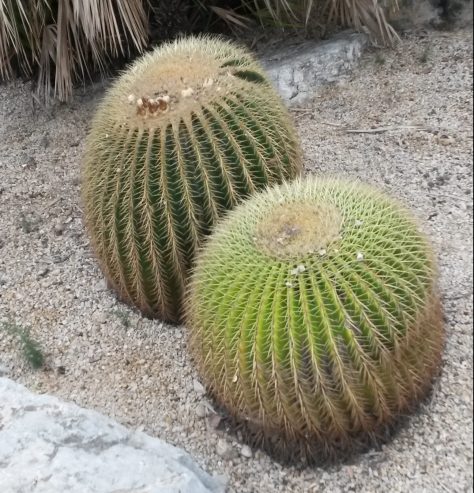
Mother-in-law’s seat – Echinocactus grussonii
Echinocactus grussonii in flower

A green notice in the garden tells us that E. grussonii grows fast and does not flower until it reaches maturity. It’s appearance and its easy reproduction make it one of the most cultivated cacti in the world. But in its natural habitat – Querétaro, in the centre of Mexico – it is restricted and almost extinct due to uncontrolled ploughing and the development of a reservoir.

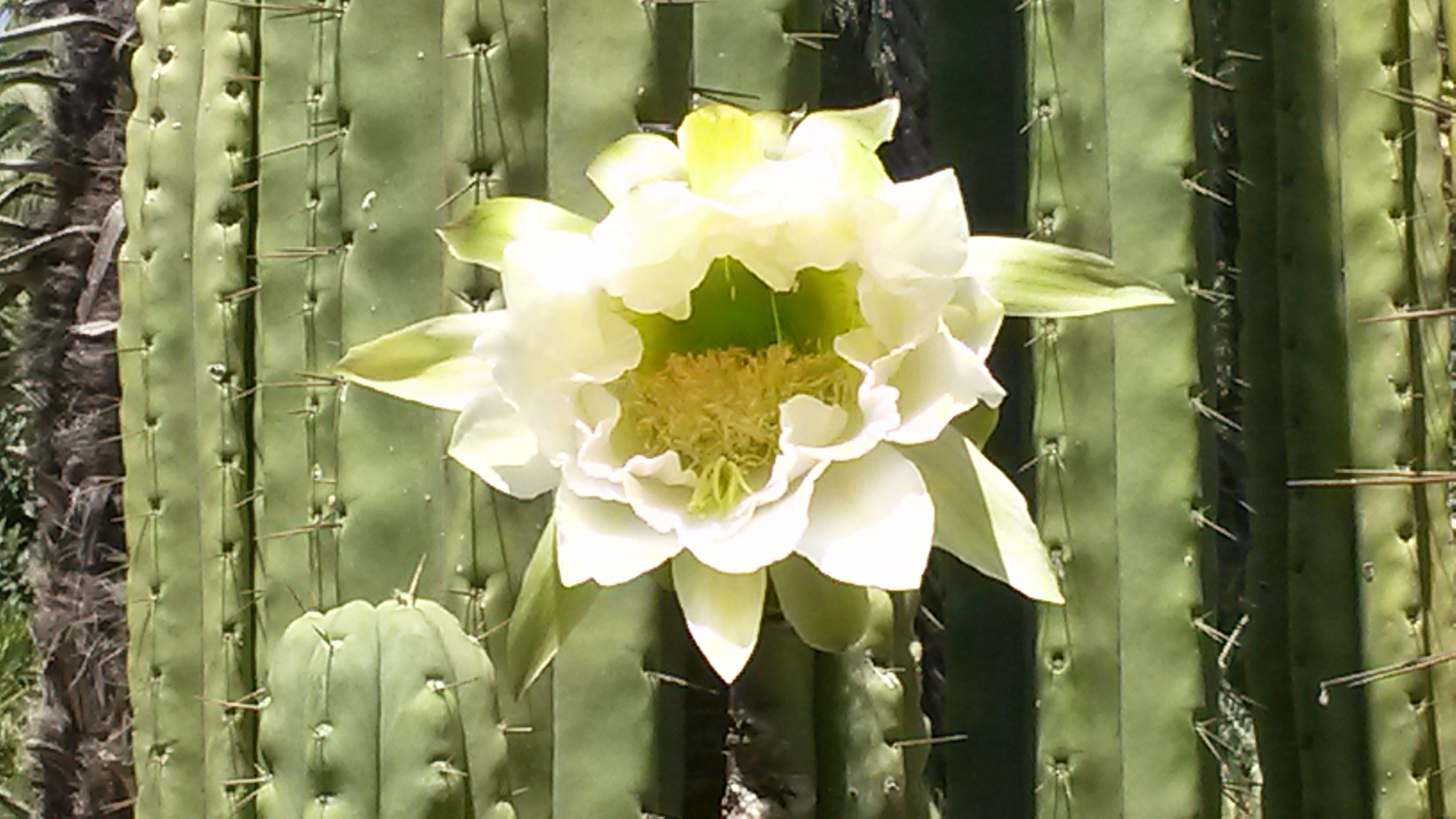
In summer I saw these flowering cacti, but I don’t have names:

Amazing trees in this garden include the Australian flame tree, Brachychiton acerifolius, with its bright flowers and large characteristic seed pods.

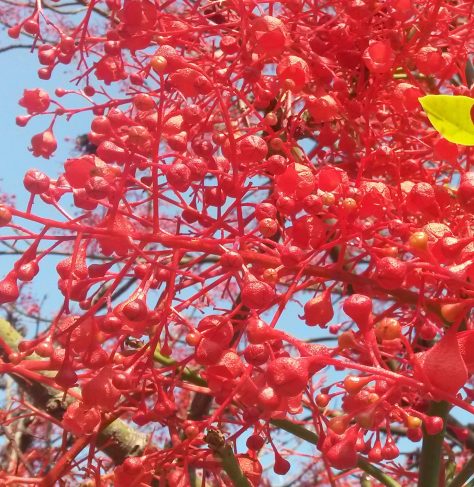
Brachychiton acerifolius, Australian flame tree, with a view of the port
B.acericifolius: Intensely red bell-shaped flowers
B. acerifolius: Large pods containing seeds which are characteristic of the genus. The pods also contain irritant hairs so should be treated carefully

This is not the only Brachychiton species planted in Barcelona. Widely planted in parks and streets is B. populneus, a handsome tree appearing a little like a weeping fig when mature. However it has white flowers freckled pink inside and pods like those above but smaller. Be careful of the pods if you see them as they contain hairs as well as seeds which can be irritable.
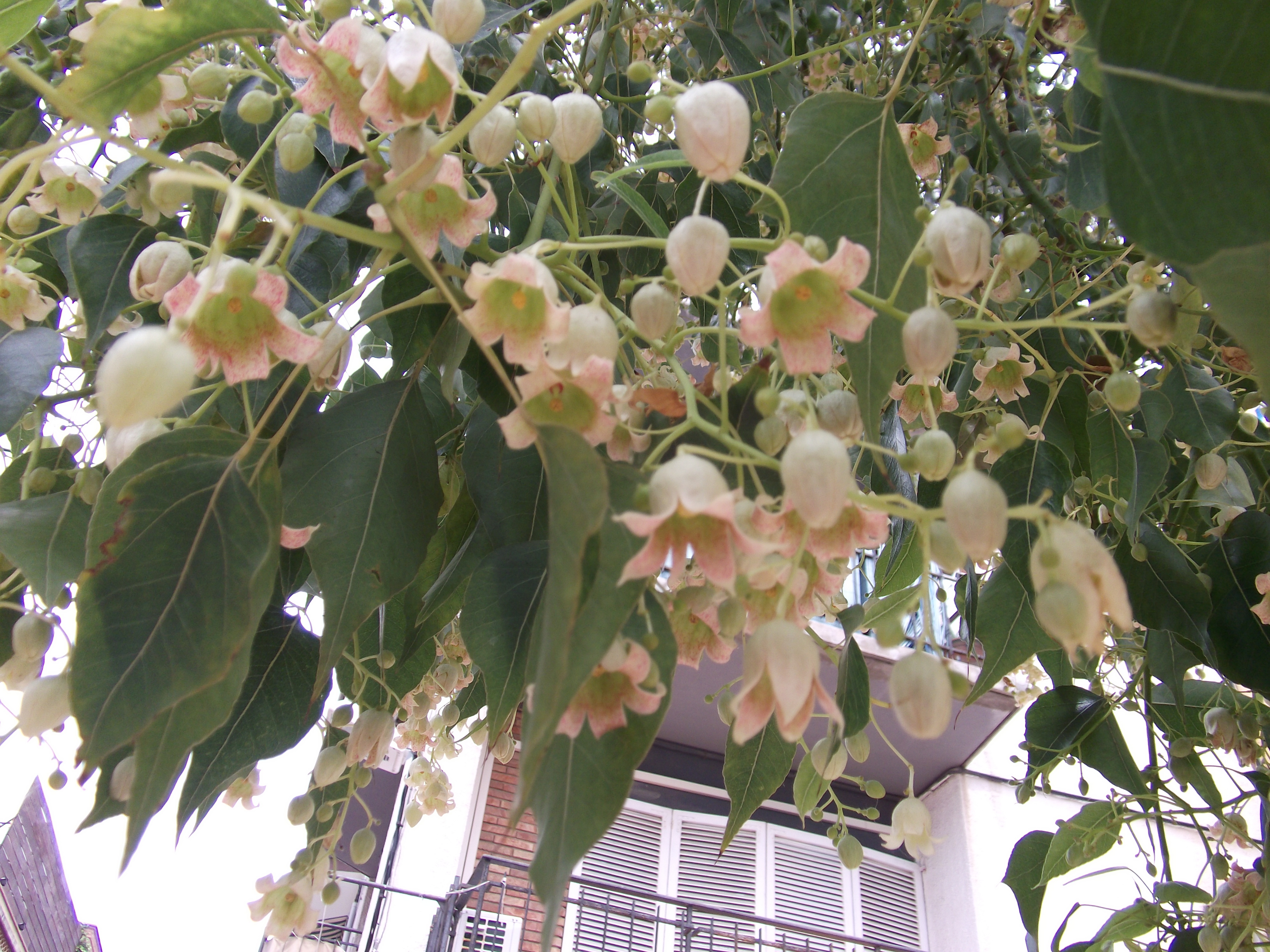
B.populneus in flower in Barcelona in early June

Brachychiton trees come from the east coast of Australia. There are about nine species which are all generally called Kurrajong. The genus was classified in the family Sterculiaceae but is now considered part of the very broadly defined Malvaceae, as is the family Bombacaceae. See the Ceiba trees in the Porta de MontjuÏc.

Another member of the genus in the garden is the Pink Kurrajong, B. discolor, which I found flowering at the end of July 2016.

Brachychiton discolor, the Australian Lacebark Tree or Pink Kurrajong
Brachychiton discolor flowers

Other great trees are the Washingtonia robusta – the Californian palms which are a characteristic of Los Angeles and the southern part of the state. There’s a grove of Brahea armata – Mexican blue palms – with their long inflorescences. A native of Baja California.

Brahea armata: the Mexican blue palm

There are many desert plants to interest you and what you find will depend on the season. But I don’t think there will be a time when you will be bored!

Agave stricta in flower

When you’ve had your fill of cacti and desert plants, walk to the lowest most northerly end of the garden and leave by the lower gate. The path runs parallel to a major road and you will pass on your right the Forestier steps – an incomplete staircase intended for the 1929 Exposition.

The Forestier staircase – never completed but it can take you back up to the Miramar Gardens

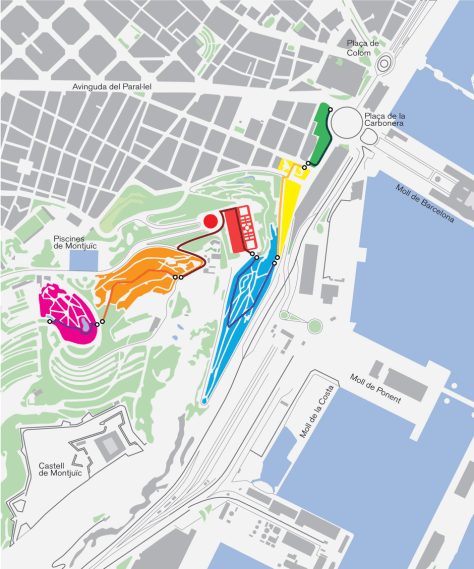
You are now walking toward the Walter Benjamin Gardens and the Porta de Montjuïc: Moving from the blue area on the map to the yellow and the green.
Gardens of MONTJUÏC, Barcelona: 5. Walter Benjamin Gardens and the Porta de Montjuïc

The Porta de Montjuïc is the highlight of this part of the garden route and could be the start of your experience, in which case see the bottom of this blog. However, if you are approaching from the Gardens of Mossèn Costa and Llobera in my previous blog, you will pass the Forestier stairs on your right and then walk down pleasant series of steps surrounded by jacaranda trees.

In April or May these will be inundated by lovely blue blossom. However, I’ve never seen it myself – just one or two remainders later in the year.

Jacaranda mimosifolia in flower

Walking down these steps, you are in the yellow area on the map. At the bottom turn slightly left, cross a minor road and find a small urban park called Hortas de Sant Bertran. There’s little to say about this urban garden, so walk through it and slightly to the left you will encounter a green space running along the side of the main road. This is coloured green on the map and is the Walter Benjamin Gardens.

Walter Benjamin Gardens

These gardens comprise three tree-lined squares, trying to create a calm shady sitting space in a busy urban environment. Each square is planted with a different tree species and there are some focal points such as stone pyramids and a fountain.

These gardens take their name from a German literary critic and were designed by architects Daniel Navas, Neus Solé and Imma Jansana, the green notices tell us in Catalan.

Not foreseen by the designers is the dazzling graffiti provided by the local youth. It may detract from the calmness but it is not unattractive and does not stop people snoozing here! In fact more recently it’s clear there are people actually living under the shade of these friendly trees.

Dazzling graffitti is now part of the Gardens of Walter Benjamin

A notable tree here is Parkinsonia aculeata, which you are unlikely to see in the UK. It is in the pea family, Fabaceae, and widely planted as a street tree in Catalonia. It’s a native of Mexico and, apparently, an invasive species in Australia.

Parkinsonia aculeata

Barcelona can be proud of its street trees, which are diverse and undoubtedly reduce temperatures and pollution big time. There are at least 150 species and you can see a list here, but I can tell you that it is not complete! One of my favourites, Brachychiton populneus, is missing!

In the other two squares we have a red-leaved plum or apple tree and a green-leaved Judas tree (Cercis siliquastrum), which must be lovely when enriched with its purple flowers in spring. There’s also a good deal of Robinia pseudoacacia along the roadside.

A square with Judas trees – in spring the trees will outshine the graffitti!

Porta de Montjuïc

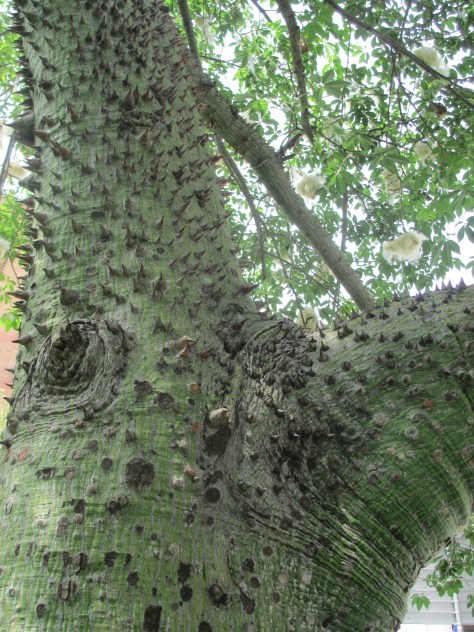
The Walter Benjamin Gardens then give on to the Porta de Montjuïc and you are back in the city. The grass verges are planted with magnificent Ceiba silk floss trees with their bottle-shaped trunks and very severe spines. I have of course featured these in my Amazing trees section.

Ceiba trees populate the grass verges of Porta de Montjuïc
The trunks and branches can be fiercely spiny

If you are lucky they may have showy flowers or silky fibrous fruit. They are from South America and were classified in the Bombacaceae family – close relatives of the kapok, balsa wood and baobab trees. However, taxonomists now believe that the concept of the Bombacaceae is flawed because it is “polyphyletic”, that is it has more than one evolutionary origin. It is now regarded as part of the Malvaceae, a very large family including the wild mallow Malva and the garden Lavatera. The is also true of the Sterculiaceae, as we saw in the Gardens of Mossèn Costa and Llobera.

Ceiba speciosa in flower in Barcelona
The fibrous fruit – similar to kapok

According to Barcelona City Council there are two species planted here – Ceiba speciosa and Ceiba insignis. I am not sure how different these two are. But there are certainly many species of Ceiba – some of which are real giants of the rainforest with huge buttress roots that tower over all other trees.

Ceiba trees are of very special importance to South American culture and it is worth giving Wikipedia a read on the subject. Think of links to Pre-Columbian and Mayan gods and the underworld, an ingredient of hallucinogenic drinks, the national tree of Guatemala and so on.

And I can’t help speculating why on earth these trees might have evolved such huge spines. My idea is that that they may have been a suitable defence against Megatherium, the giant ground sloth. It was at least the size of an elephant and used to roam much of South America in the Pleistocene, making a meal of any tasty trees.

Anyway, Ceiba are certainly interesting trees and a worthy endpoint to a day spent visiting the Gardens of Montjuïc!

Annual Mercury

This weed was totally unknown to me before I started gardening in the south of England. Now I wish I could ignore it. It is always the first and most abundant weed to appear on the bare ground in my London allotment. Don’t get me wrong: it is not difficult to remove – you just pull it out. But the problem is that there is just so much of it, and it grows and sets seed very fast!

According to the Online Atlas of the British Flora, Mercurialis annua is ubiquitous but only in the south and east of England. It loves light lowland soils. For those who know about farming, it is mainly distributed below the Tees-Exe line, ie south of an imaginary diagonal line drawn from the mouths of the rivers Tees and Exe. In fact, it’s not so common in Yorkshire either so not surprising I had not seen it during my school years in Teesdale or my student years in Edinburgh.

I became extremely familiar with this weed when I started my London garden. It reminded me immediately of its perennial cousin dog’s mercury (Mercurialis perennis). For me, this is a more noble plant of settled woodlands and hedgerows. I imagine its leaves are a little less thin and translucent, and it can survive in deep shade.

Noble cousin: Dog’s mercury – Mercurialis perennis Credit: Dave, E. Sussex

Dog’s mercury is a native plant, the atlas says, being distributed all over mainland Britain up to the Great Glen in Scotland. In the lowlands, it grows in woodlands and hedgerows, and in the uplands it likes basic crags and screes.

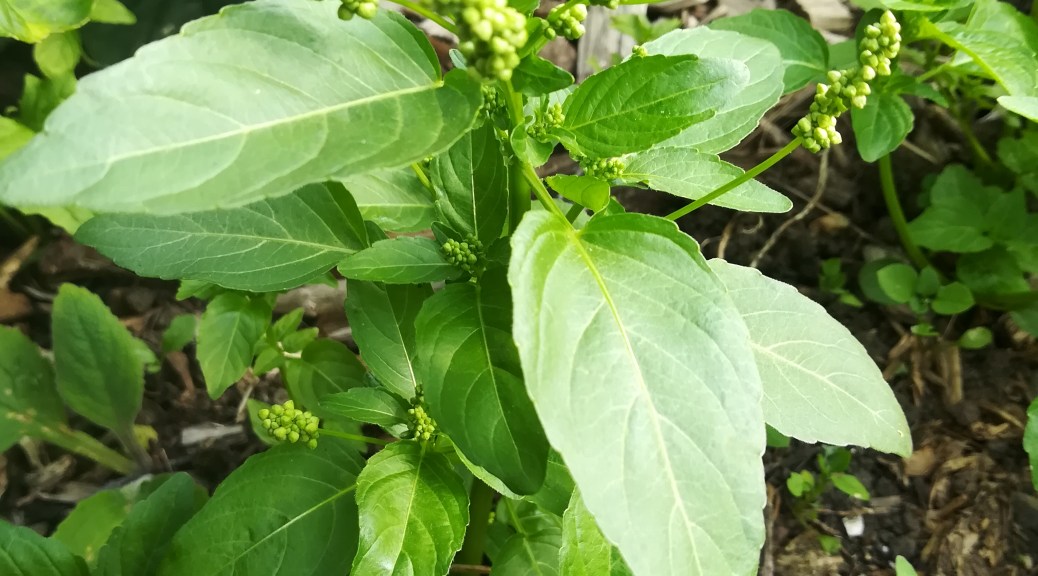
Now I hardly ever see the perennial version. It is always annual mercury to excess. When I sow seeds, for example, tiny annual mercury seedlings always appear in abundance. Their first leaves have a characteristic oval shape with noticeable veining. Without intervention these weedlets will swamp any crop.
Seedling brassicas – outnumbered by annual mercury seedlings

The Online Atlas of the British Flora suggests the weed is an ancient introduction, via ports and gardens, from more Mediterranean climes. It has been found in Viking deposits in York. Recent mapping over the last 50 years suggests it is still increasing its British distribution.

Myddleton House: Irises in Flower

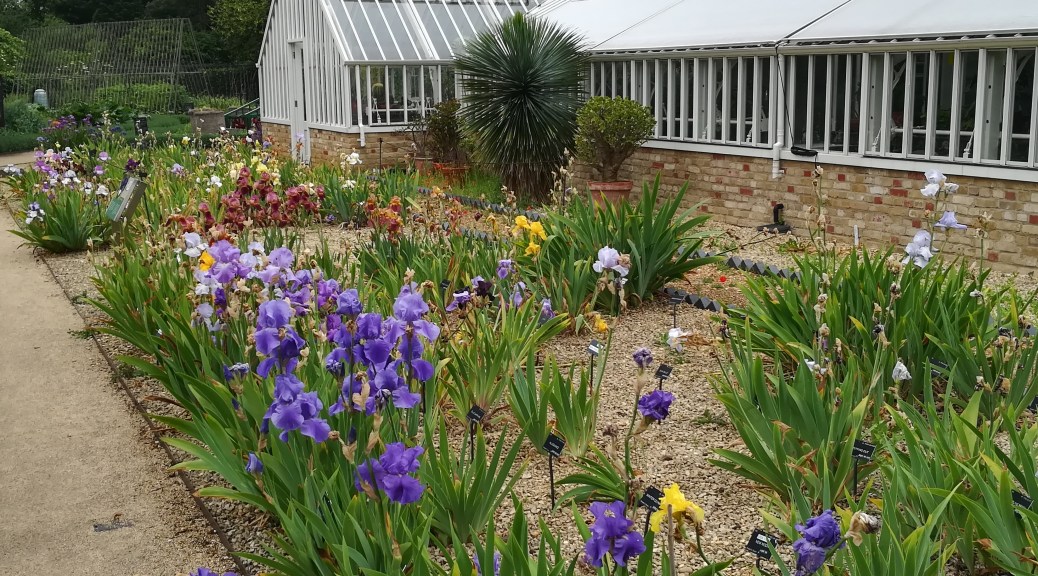
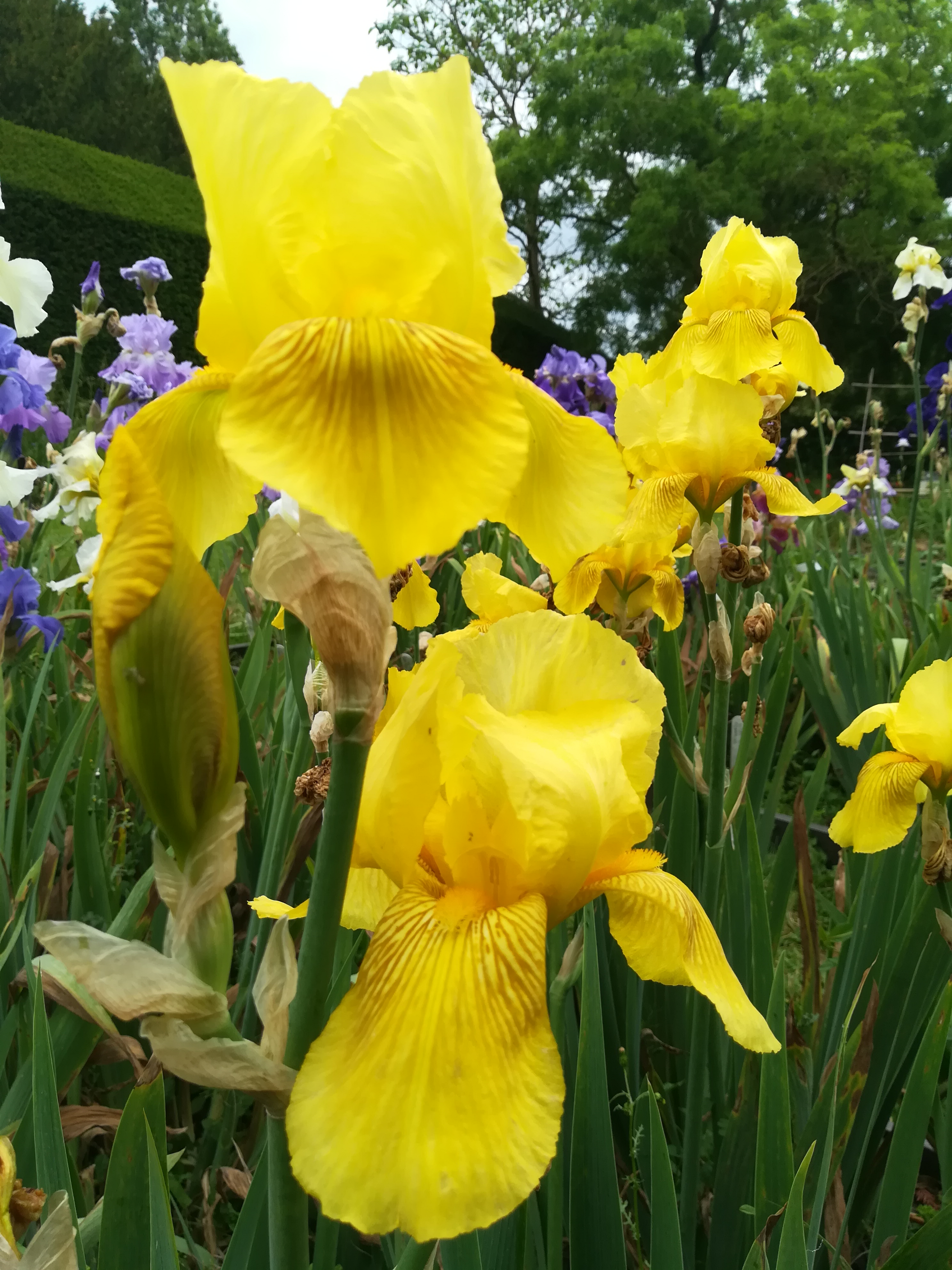
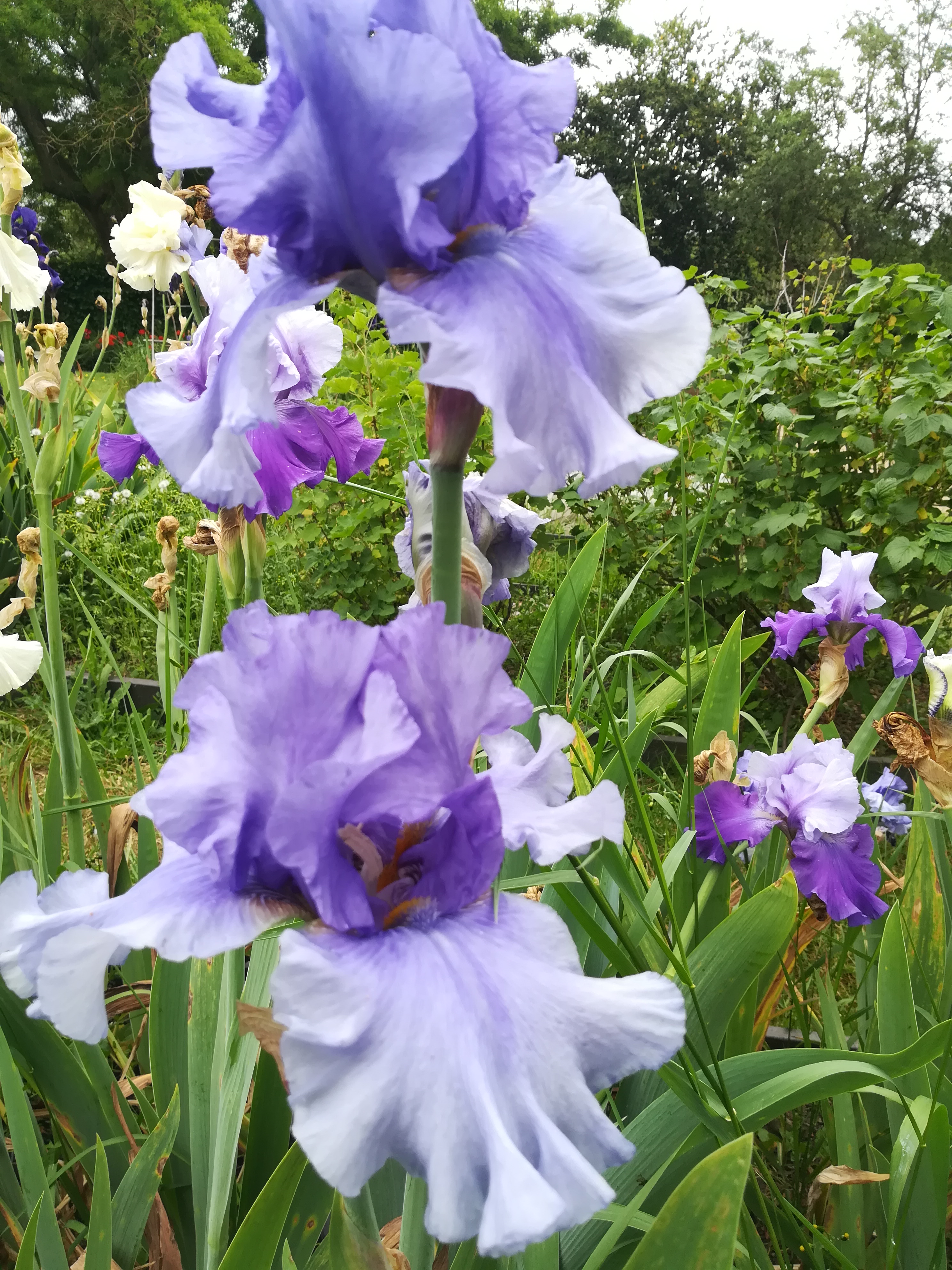
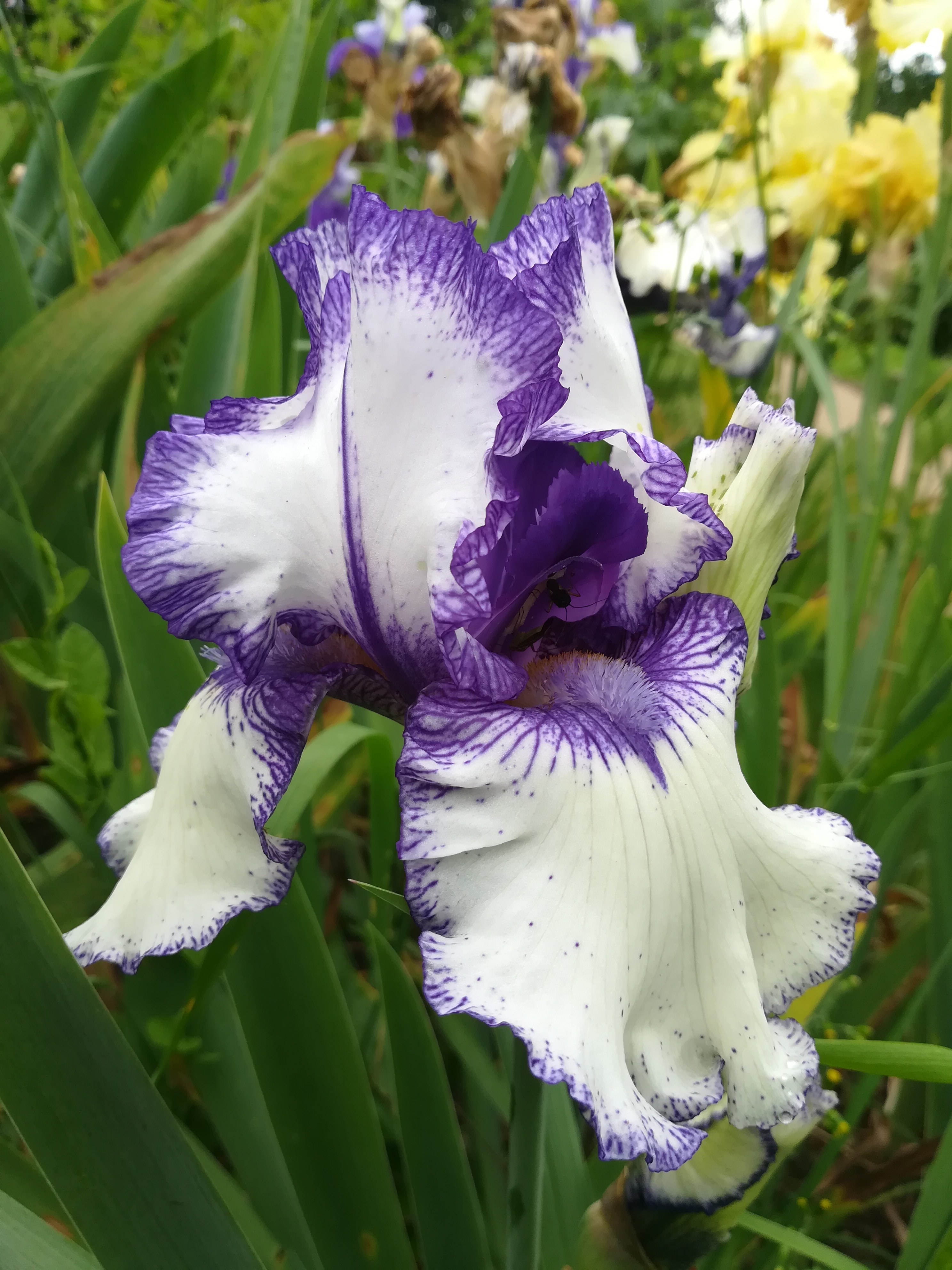
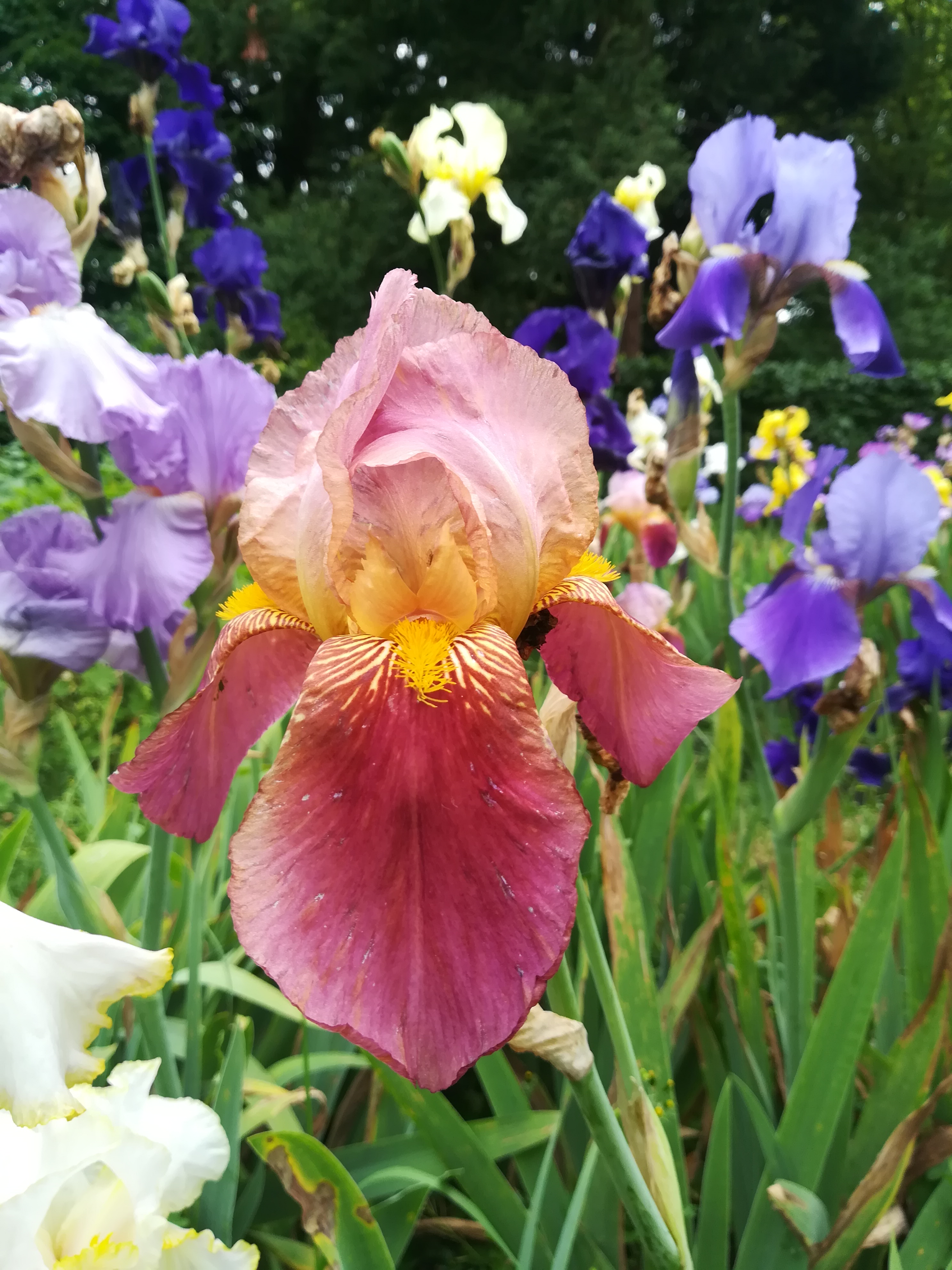
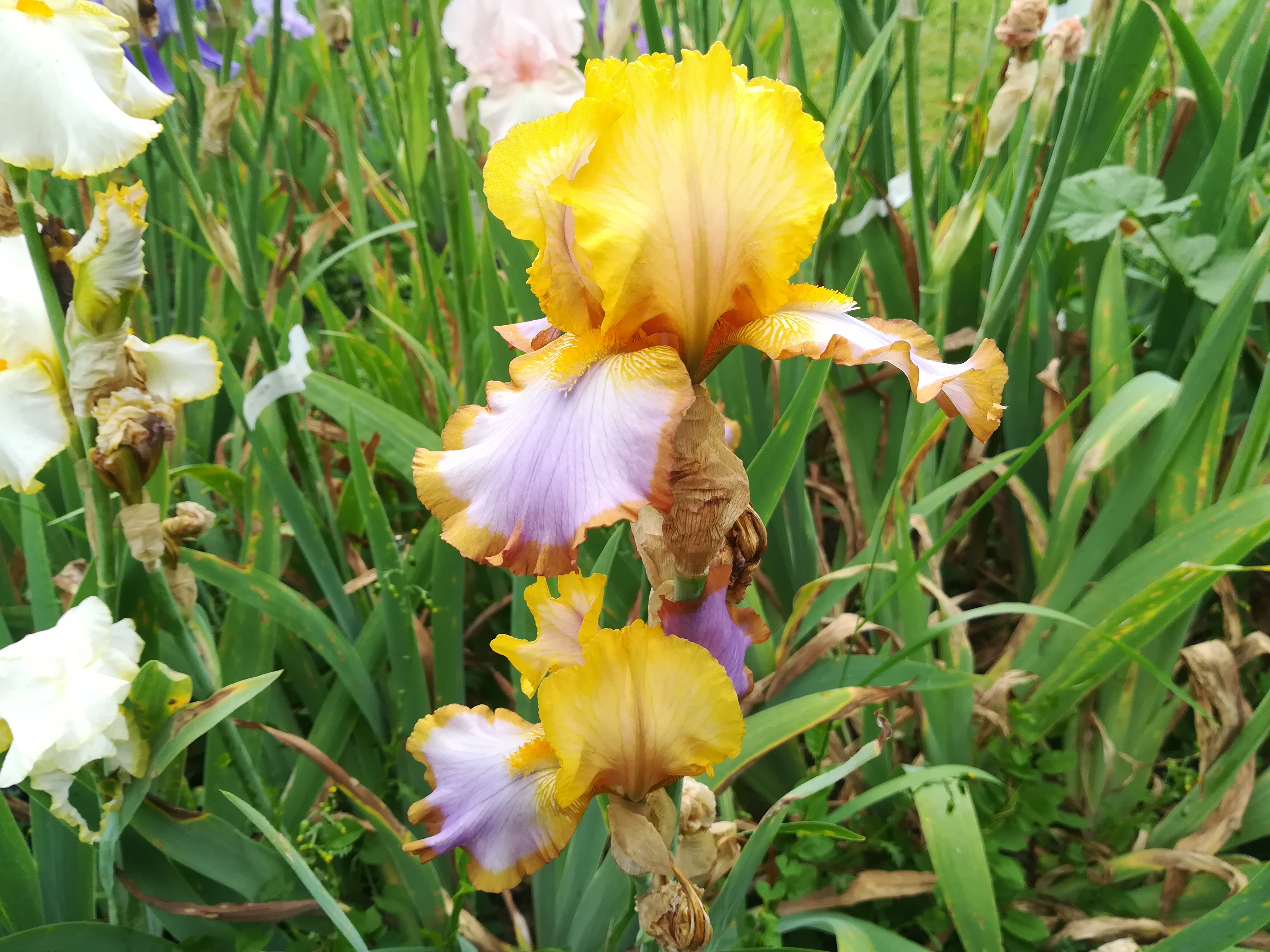
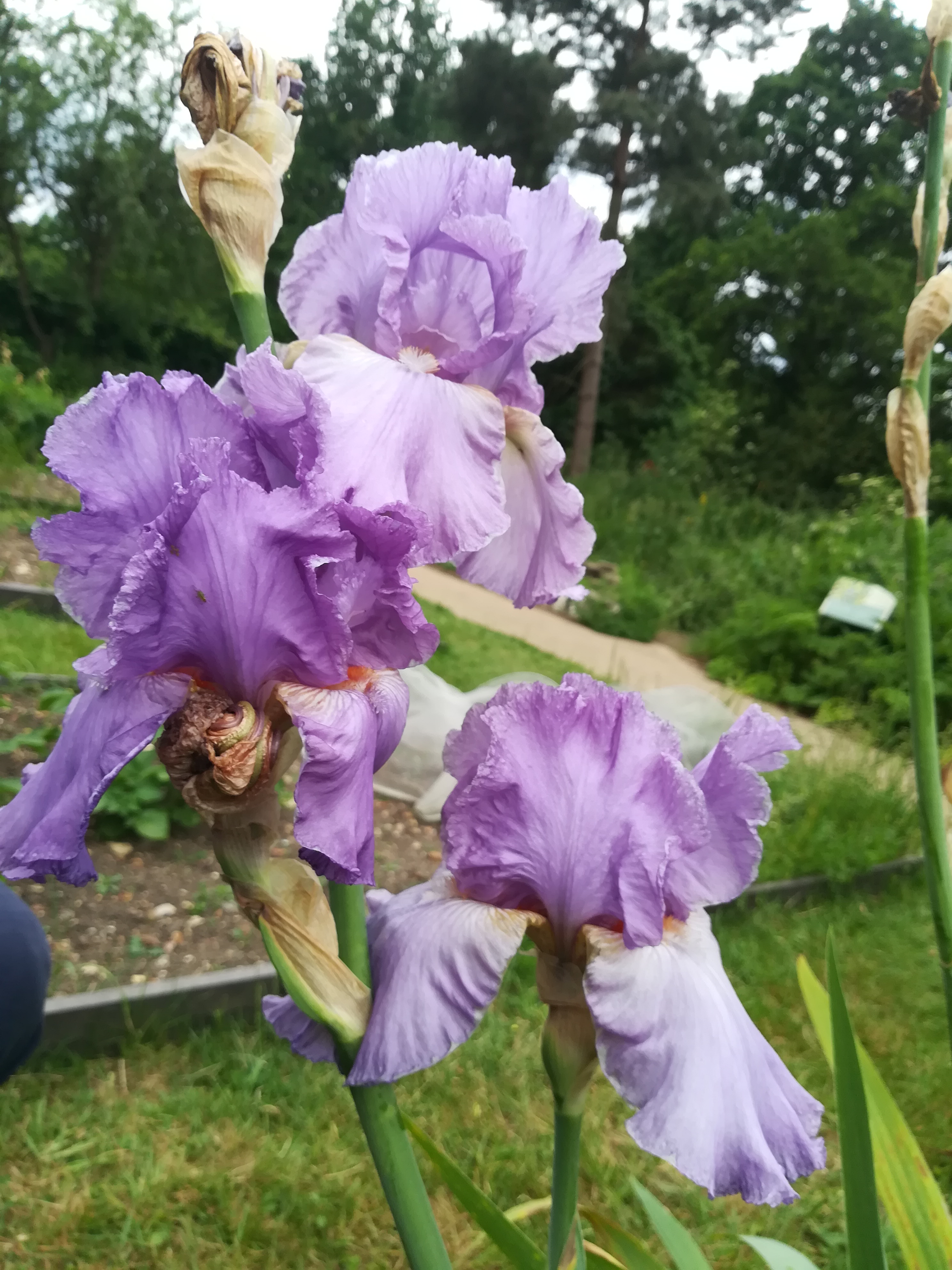
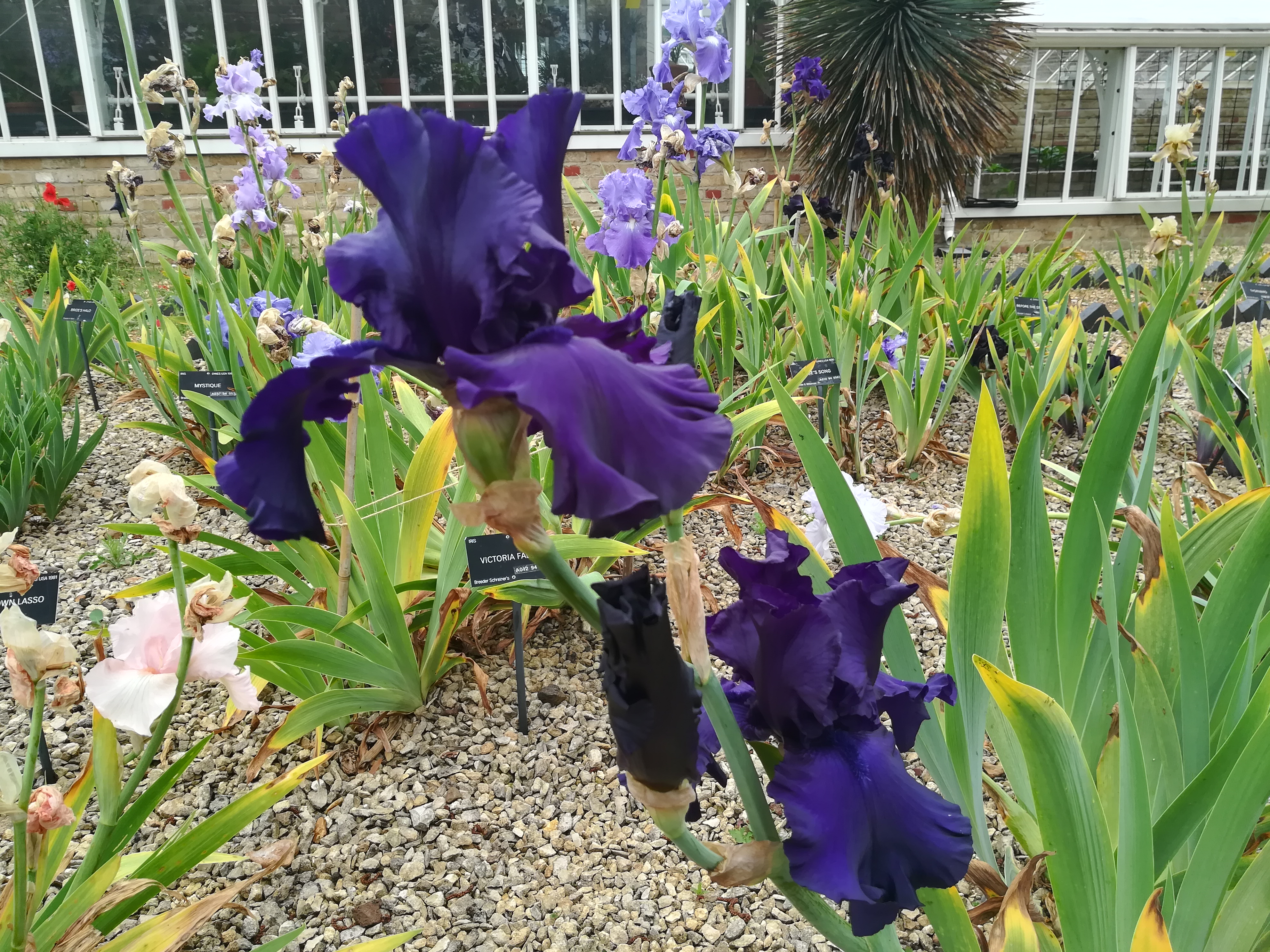
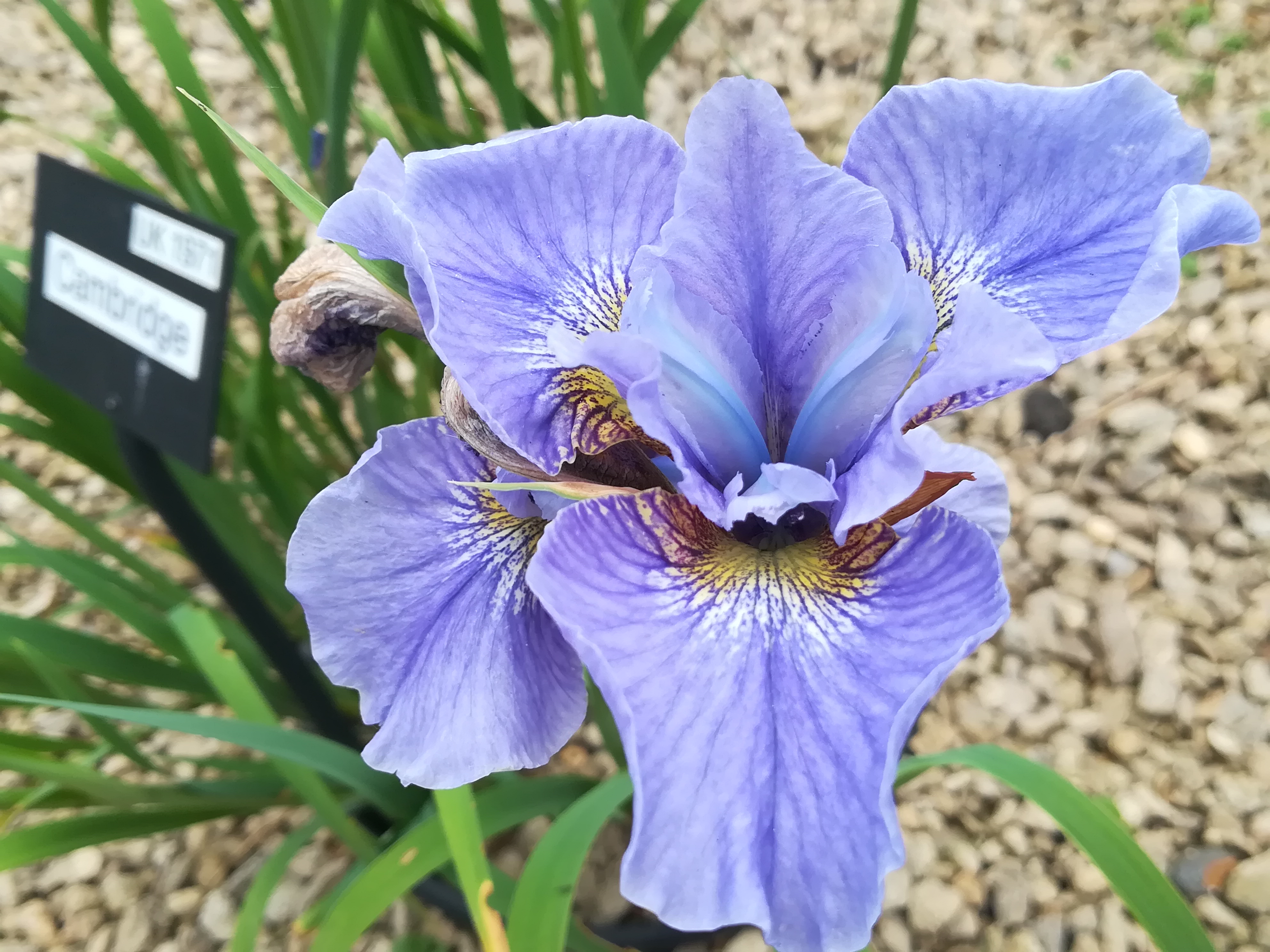
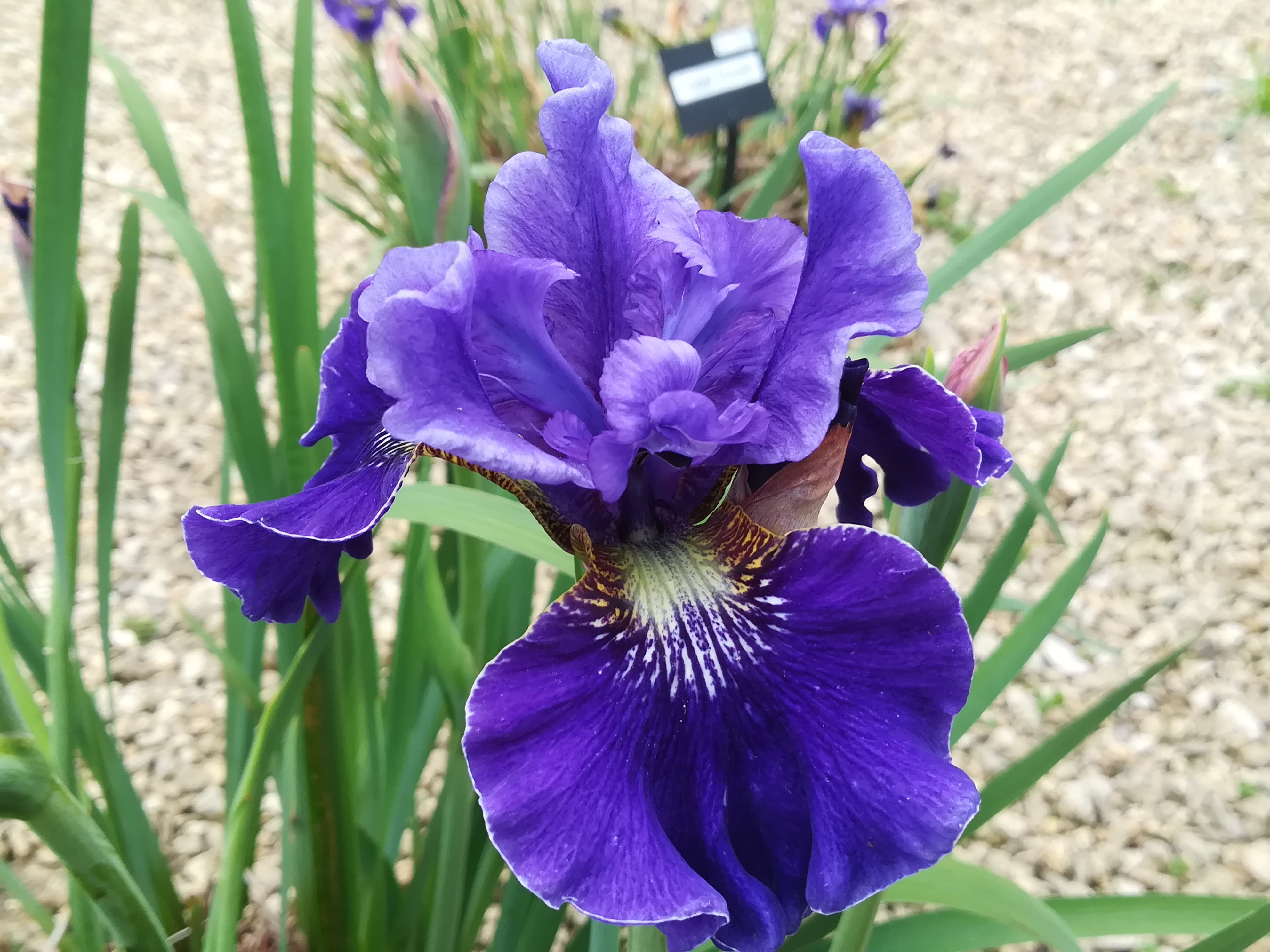
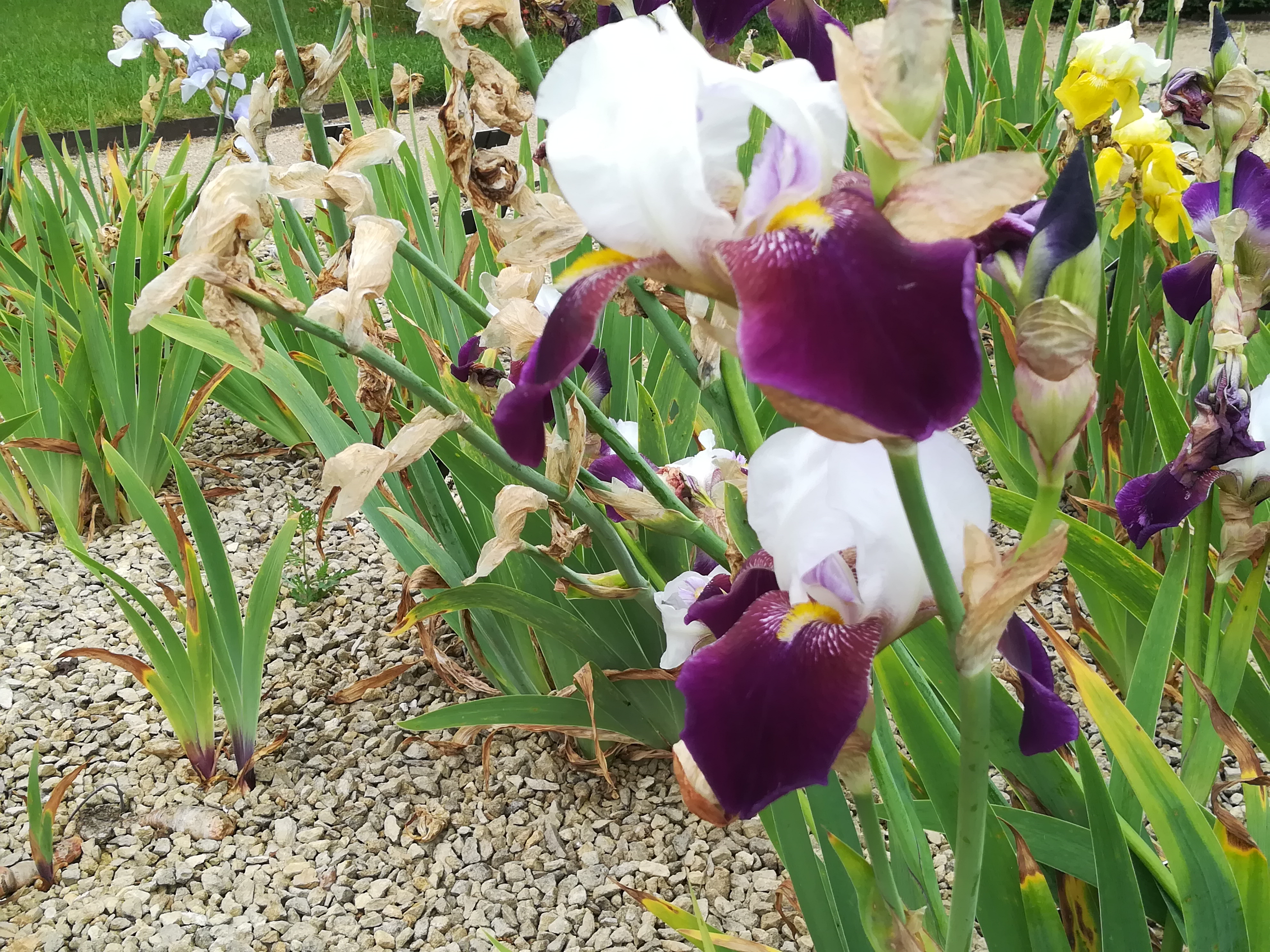
Visiting in early June in 2019, I saw many of Myddleton House’s beautiful irises in flower. You will see below some lovely photos which really show how diverse the plants have become. The effort that plant breeders have put in to creating diverse and beautiful bearded irises (Iris germanica) and Siberian irises (Iris sibirica) is enormous.

The collection is mainly those irises which have won the Dykes Iris Society medal, an award given by the American and British Iris societies in memory of William Rickatson Dykes, author of an authoritative book on irises published in 1914. 

I’ve done my best to check my pictures are correctly named because sometimes it’s not easy to tell which label refers to which plant. The American awards were checked on the American Iris Society’s Iris Encyclopaedia. Unfortunately the British Iris Society’s website does not offer the same service. But the American Iris Society has this page which is some help and there is also the Historic Iris Society’s useful photo index.

The irises are mostly tall bearded ones – Iris germanica – which is what I like most. There are a few Siberian irises and they are marked in the captions.

Probably Shipshape (USA 1969)
Sahara ( UK 1935)
Dovedale (UK 1983)
Alexia (UK 2006)
Orinoco Flow (UK 1994)
Early Light (UK 1989)
Coralie (USA 1933)
Missouri (USA 1937)
Everything Plus (USA 1991)
Rosy Wings (USA 1939)
Probably Cherie (USA 1951)
Brown Lasso (USA 1981)
Rippling Waters (USA 1966)
Allegiance (USA 1964)
Thornbird (USA 1997)
Probably Hello Darkness (USA 1999)
Mary Todd (UK 1965)
Dauntless (USA 1929)
Pacific Panorama (USA 1965)
Dusky Challenger (USA 1992)
Before The Storm (USA1996)
Headlines (UK 1959)
Iris sibirica Stephen Wilcox (UK 2011)
Iris sibirica Cambridge (UK 1971)
Iris sibirica Berlin Ruffles (UK 1999)

Myddleton House, Enfield, London

Visited on 12 August 2017, also previously on 26 June 2015.

This is a large Georgian house and grounds which used to belong to the famous gardener and plant breeder Edward Augustus Bowles. Now it is the headquarters of the Lee Valley Regional Park Authority. The garden is open to the public, entrance is free but there are modest parking charges in the car park.

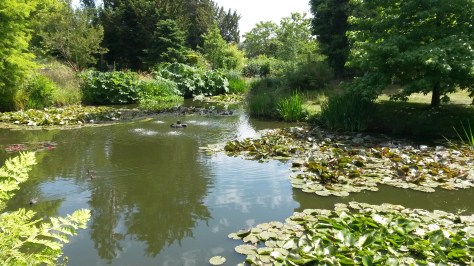
I visited the park over 20 years ago and I was then unimpressed by the general standard of maintenance and the lack of any plants of interest. Now that is long past. It has undergone a rejuvenation and there is plenty to admire in the park-like surroundings of the house, the lake filled with water lilies and the fruit and vegetable gardens at the far end of the garden.
You can easily spend enjoyable hours here. There is a cafe, a plant shop and plenty of information on the history of the garden.

Unfortunately the large cedar tree to the left in the main image above has recently been removed as it was unsafe. But that is the way with gardens – nothing can remain the same.

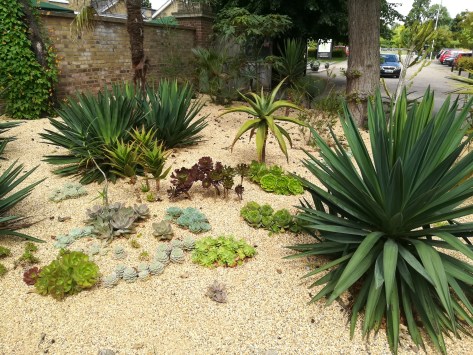
The gardener at Myddleton House clearly has an interest in succulents, many of which are unlikely to be hardy but are planted out in the summer. This is a bed which you must pass on the route from the car park which contains some has lovely echeverias, aeoniums and aloes.

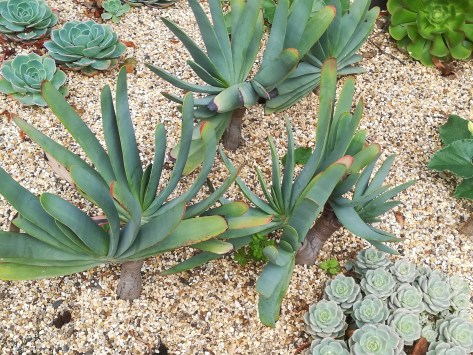
Fan aloes: Aloe plicatilis

A particular favourite seems to be the fan aloe (Aloe plicatilis). These are widely planted in pots and around the garden. They will probably never manage to become very large – they have not over the last couple of years – but they are attractive when small too.

Beyond the pond, which is packed full of water lilies, there is a curved border where the New River – a 17th century canal which supplied London with drinking water – used to run. It still runs nearby and is used by Thames Water. And close to that, there’s an enormous wisteria with its roots in a wall which must be as old as the house.

Some of the most interesting parts of the grounds are the orangery, next to the house, and the glass houses, vegetable and fruit plots at the far end of the garden. 

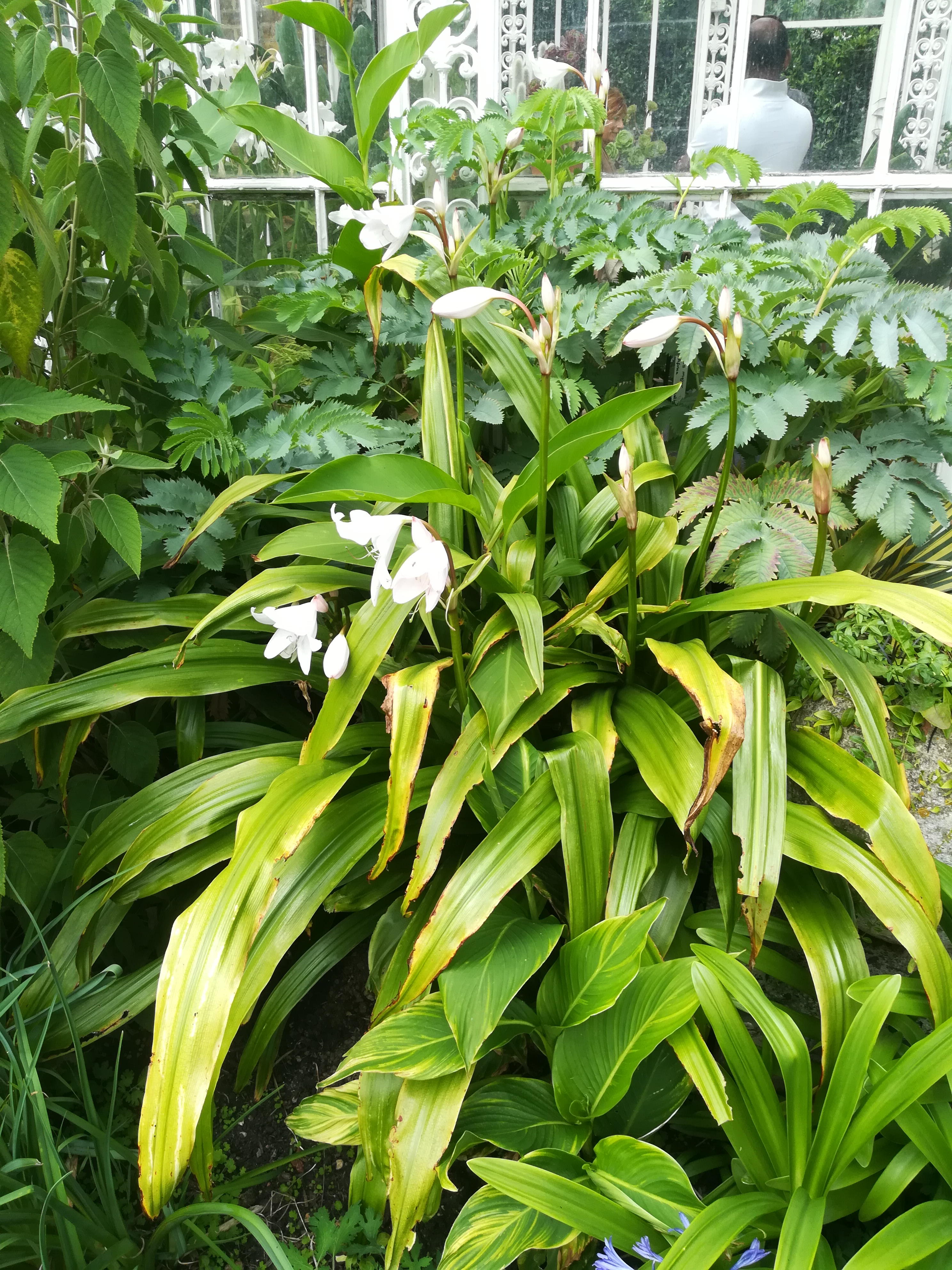
A novel combination of Melianthus major and Crinum powellii next to the orangery in 2017.

A fine display of summer bedding in 2017.

Here next to glasshouses is the garden’s famous iris collection. Unfortunately I’ve never seen it in flower. The garden collects only those which won the Dykes Iris Society medal, an award given by the British and American Iris societies in memory of William Rickatson Dykes, author of an authoritative book on irises published in 1914. Unfortunately some of my favourite irises, including those bred by Arthur Bliss and Cedric Morris, are not included!

An attractive Phytolacca, probably P. polyandra, flowering in June 2015. These are American and East Asian plants which are apparently prepared as food by some native tribes. They produce tempting rich purple berries. However, they are generally toxic and full of alkaloids.

An old market cross, re-erected among box hedges

This is the market cross which used to be in Enfield Town market place. Apparently Bowles rescued it from a builder’s yard and had it erected in his garden. Well done Eddie!

A fine newly planted avenue of fruit trees in 2017.

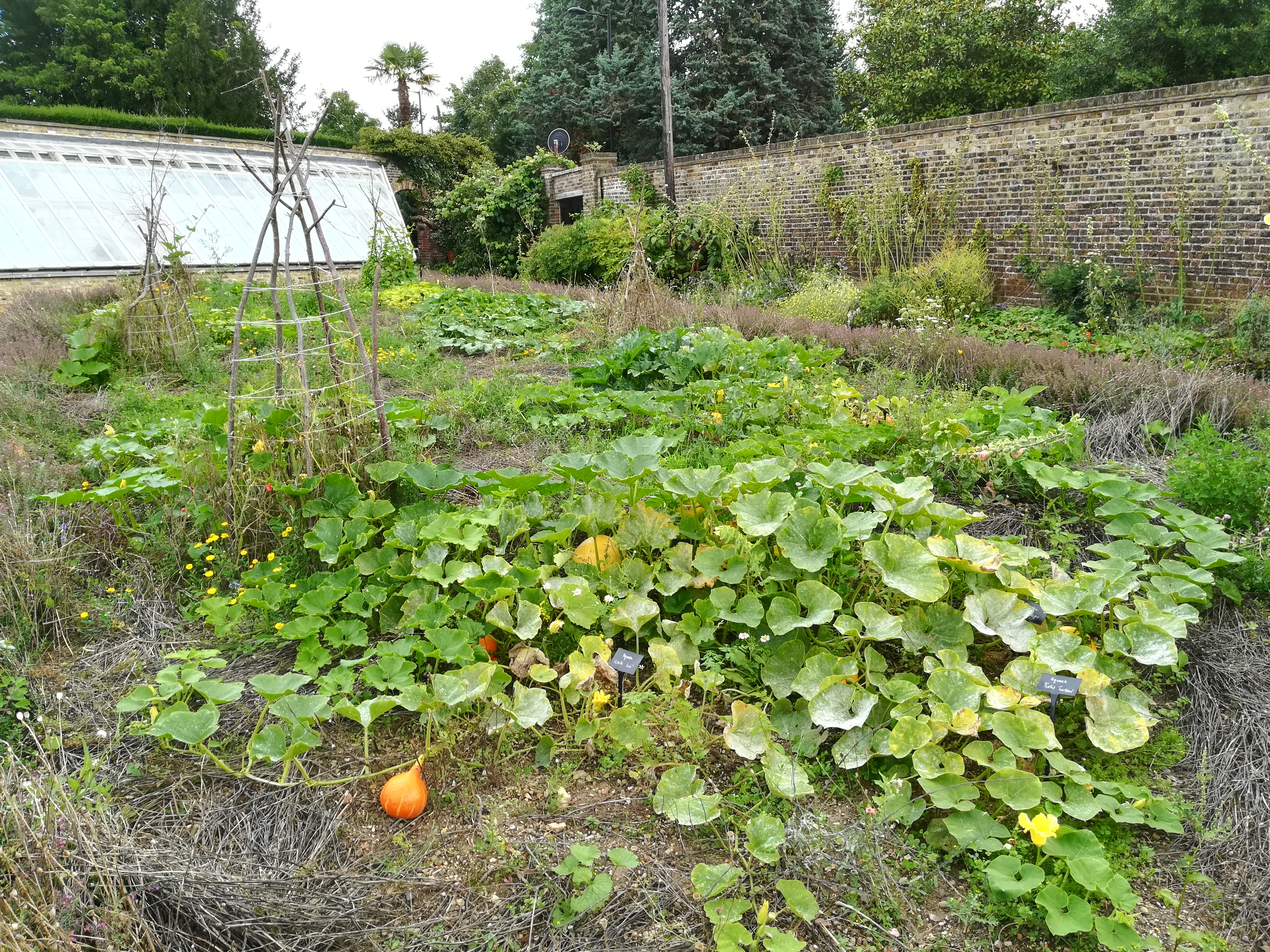
The vegetable garden, which was crawling with pumpkins in August 2017.

Well trained young fruit trees were evident in 2017.

The glasshouses are well kept –

and there’s plenty to see under glass.

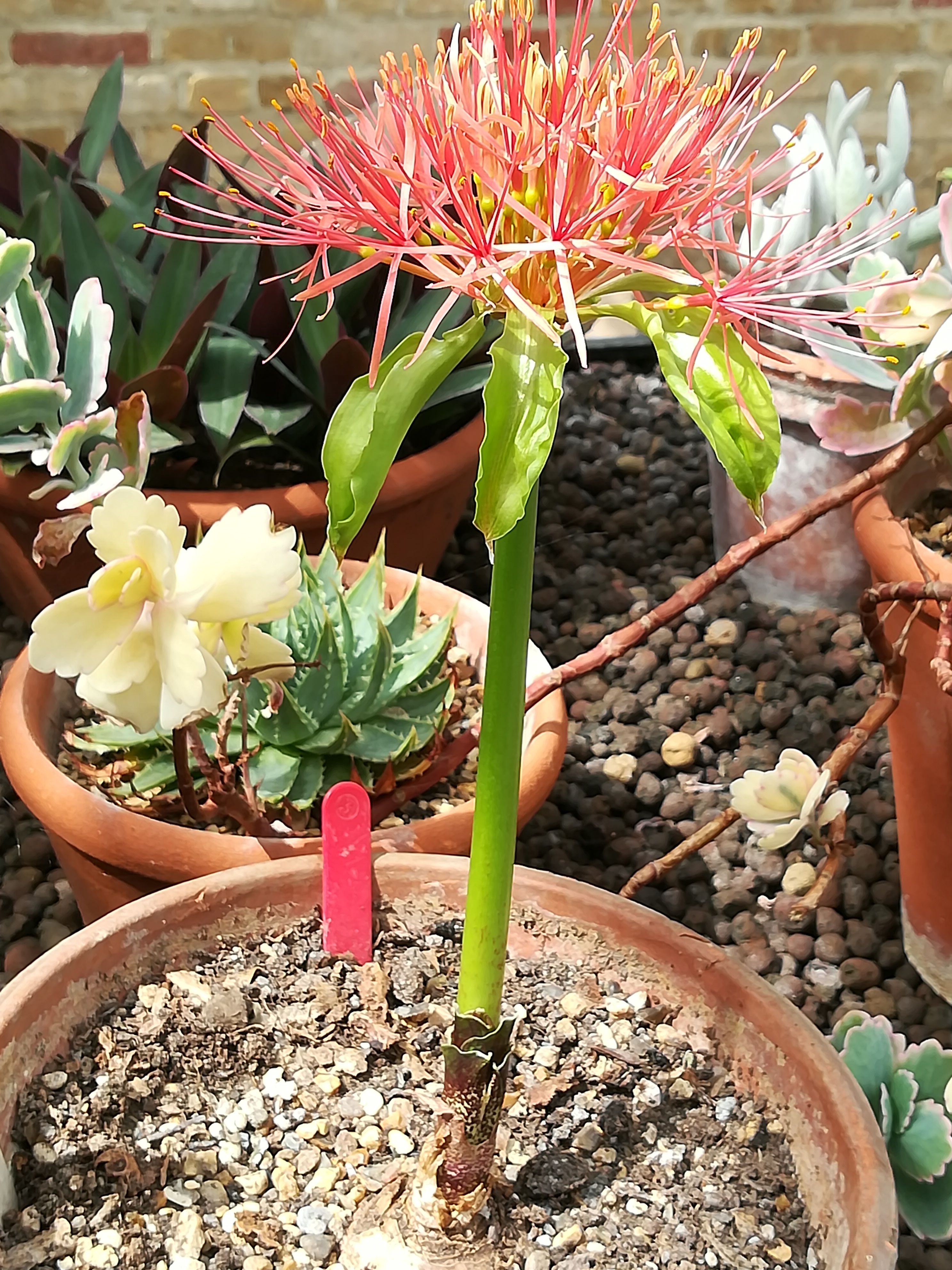
Scadoxus multiflorus, an African bulb flowering in the glasshouse

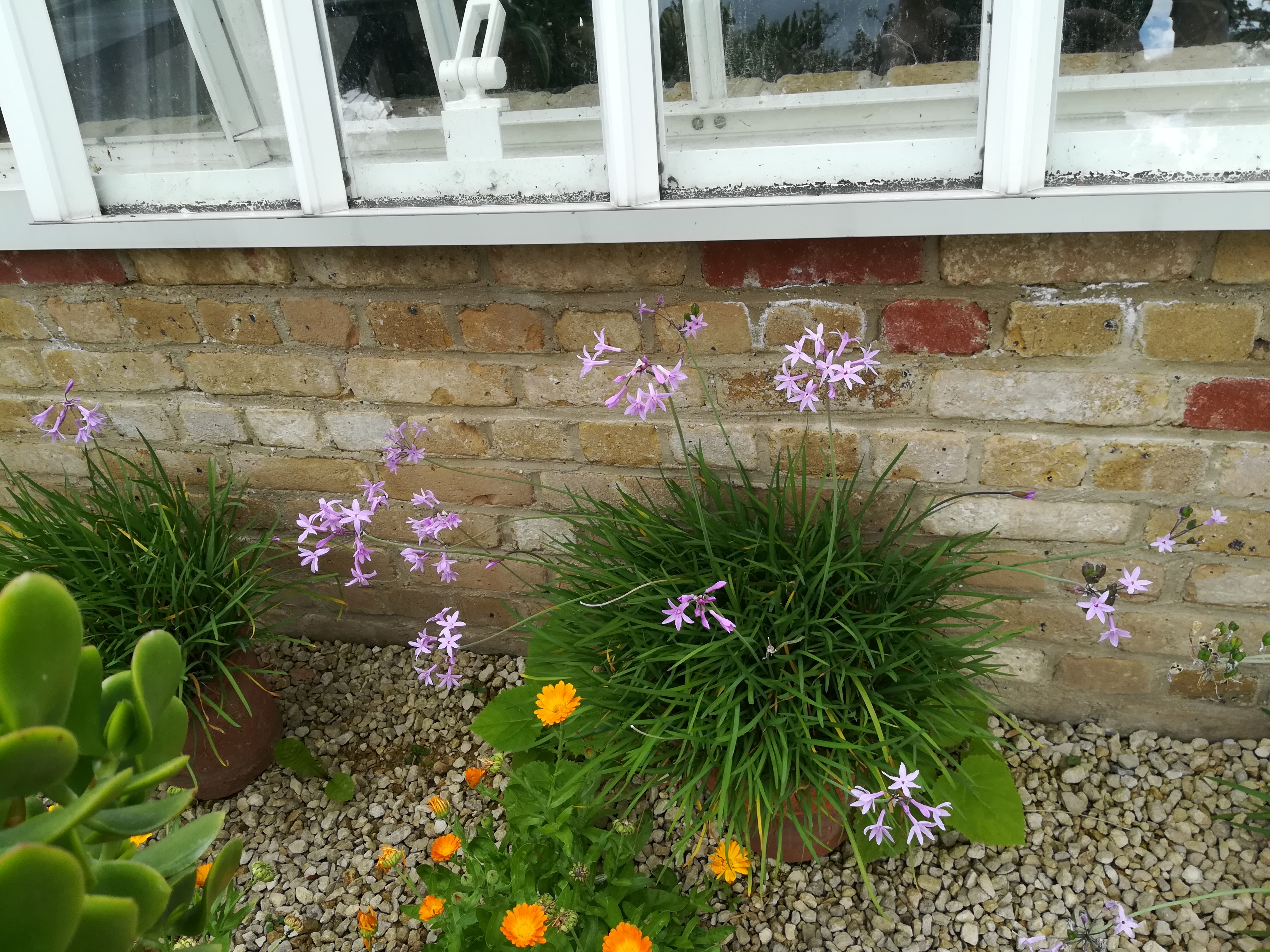
Tulbaghia violacea, also known as society garlic. I’ve seen it widely planted for bedding in the Mediterranean but originates from South Africa.

Rotheca myricoides, an African plant called by some ‘butterfly bush’.

Fuchsia Checkerboard, one of my favourites.

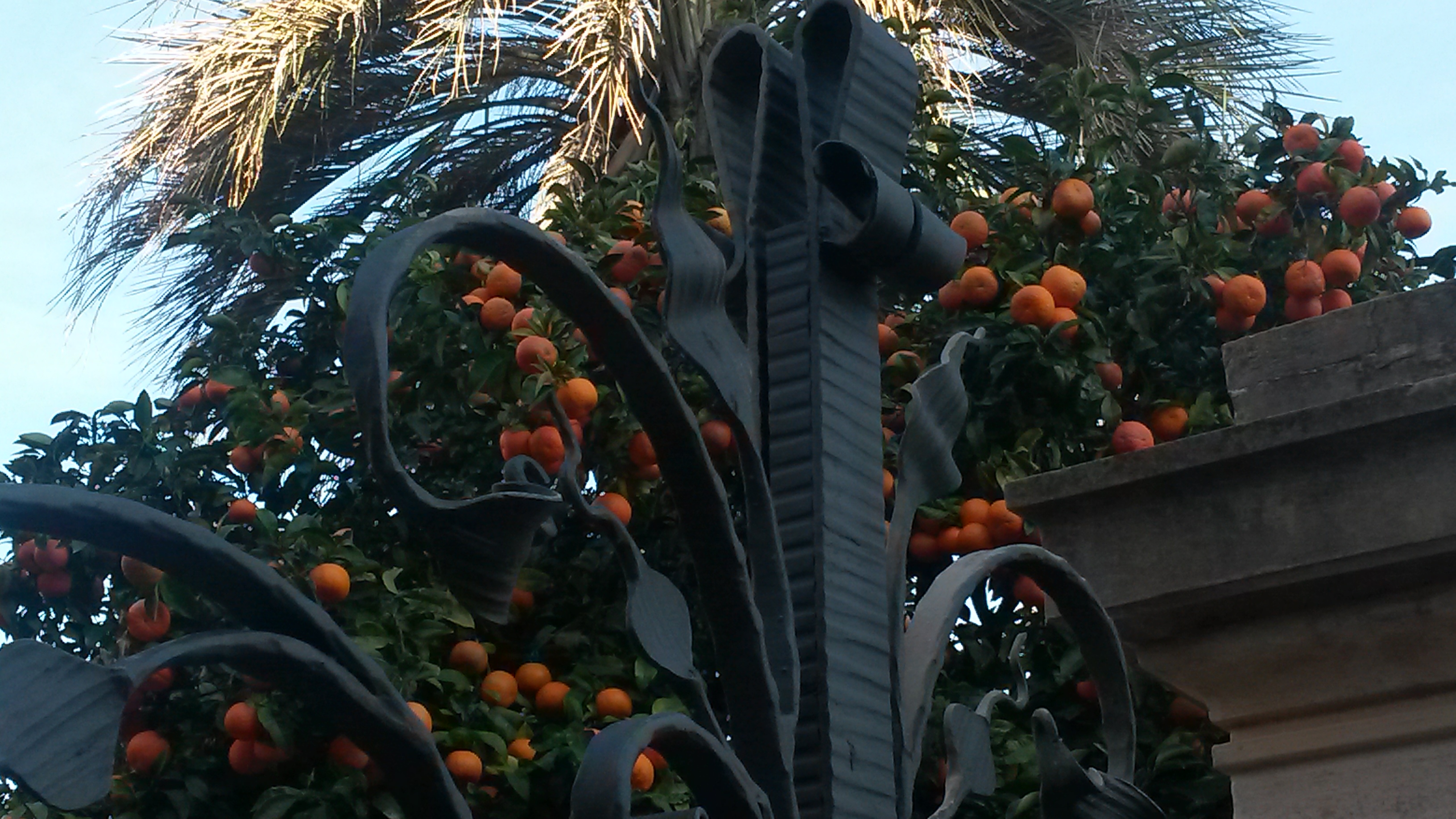
Citrus in bloom and fruit.

Perhaps an unwelcome addition to the garden, deadly nightshade Atropa belladonna. A wild British plant that is very poisonous.

Cluny House Gardens, PERTHSHIRE, in Autumn

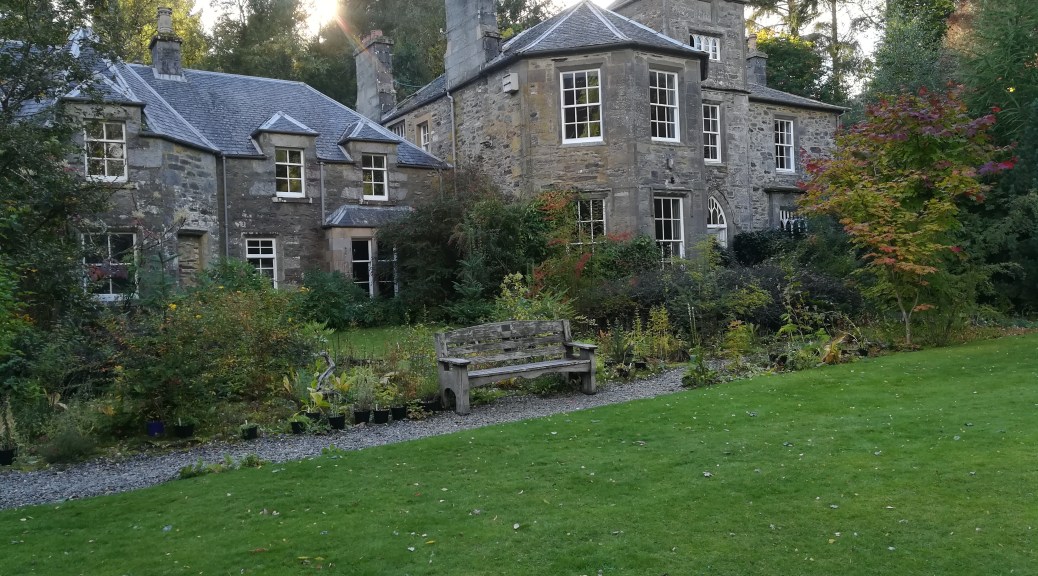
With friends, I spent a lovely hour at Cluny House Gardens, near Aberfeldy, Perthshire, on 22 September 2018. It was a sunny afternoon with an autumn chill in the air. There was plenty to see in the garden, which is composed mainly of damp woodland on sloping ground with an acid soil. The house looks charming but is not open to the public.

There was a selection of acers, some of which were beginning to colour; tree peonies; rhododendrons and huge forest trees such as giant redwoods and firs. Underneath the trees were a great selection of plants, many flowering, which are difficult to grow in the south of England and unfamiliar to a gardener like me!

Trees

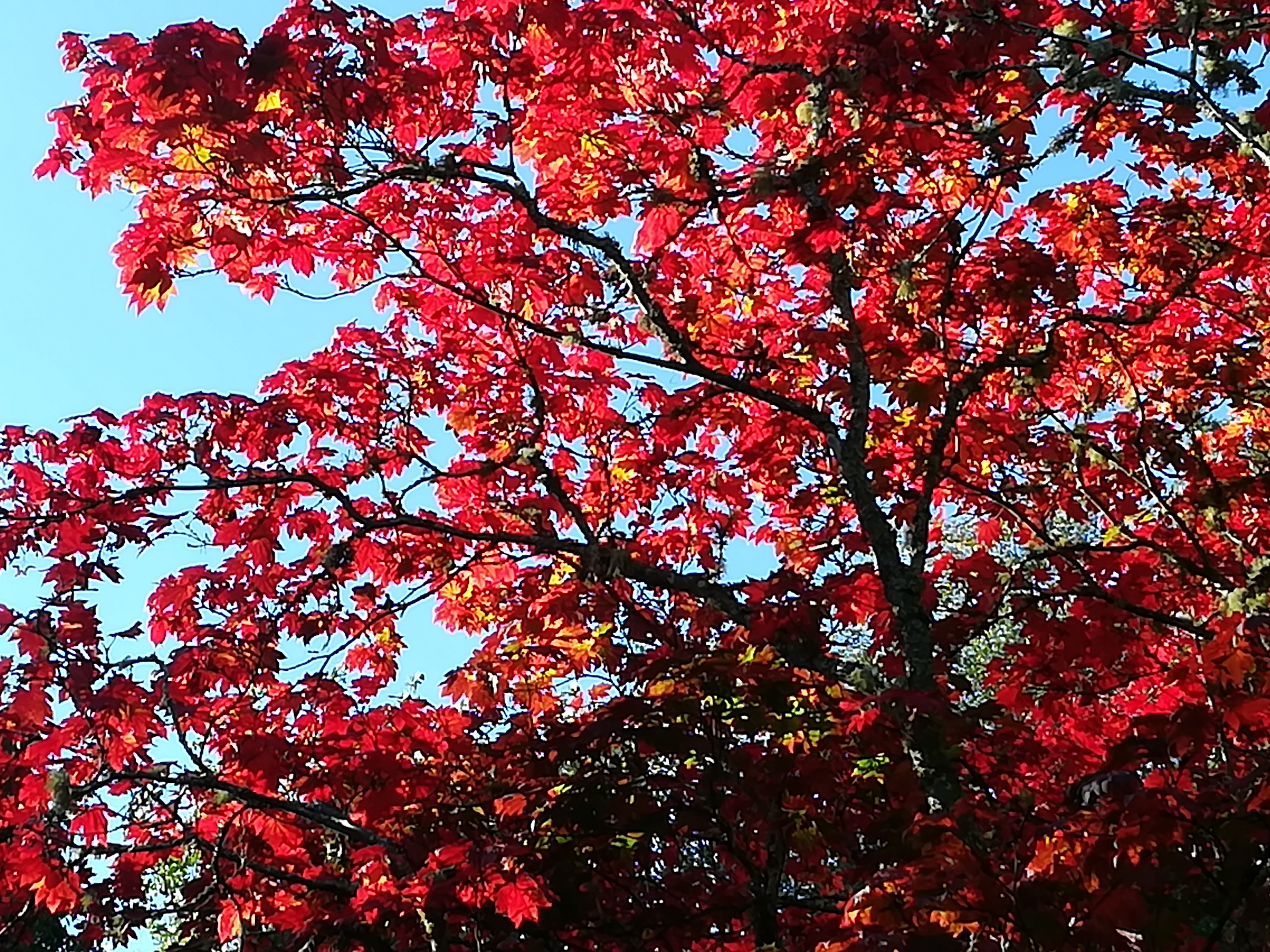
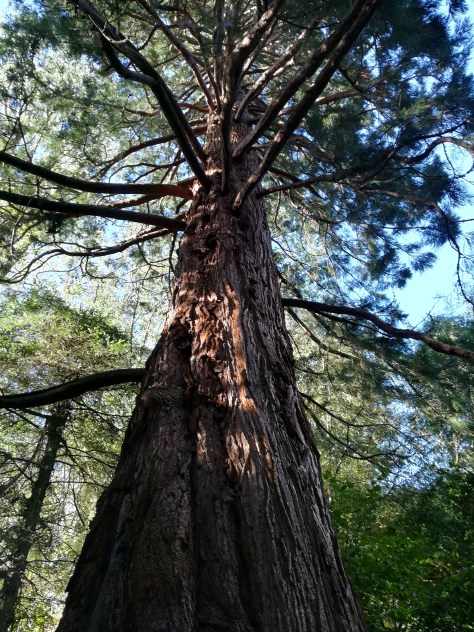
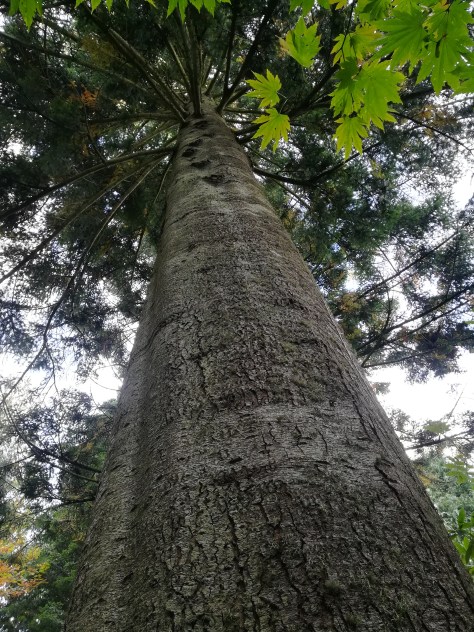
Japanese maples were turning red and they were dominated by huge conifers like giant redwoods (Sequoiadendron giganteum) and noble firs (Abies procera).

Japanese maples were turning red
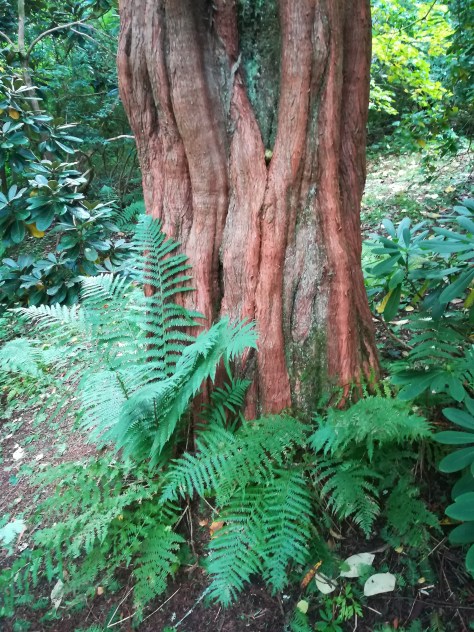
Giant Redwoods – Sequiasdendron giganteum – this one is perhaps the largest I’ve seen in the UK
Abies procera – the noble fir – well beyond Christmas Tree size!

And underneath…

The understory abounded with life – mosses, lichens, fungi, ferns and quite a few flowers even in late September. I am unfamiliar with many of the plants and I’ve done my best to identify what I can. But if you can help with the unidentified images, please do. Send me an email and I’ll credit you with identifications!

Redwood tree with an understory of rhododendrons, ferns and a collection of exotics
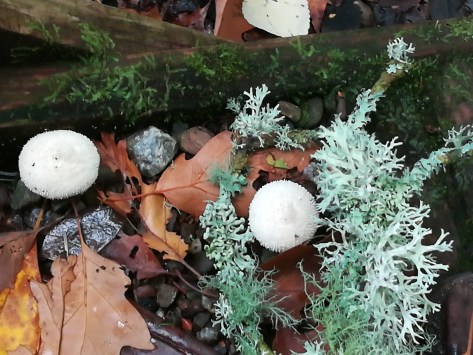
Toadstools, lichens and mosses among the leaf litter – the signs of healthy air and soil
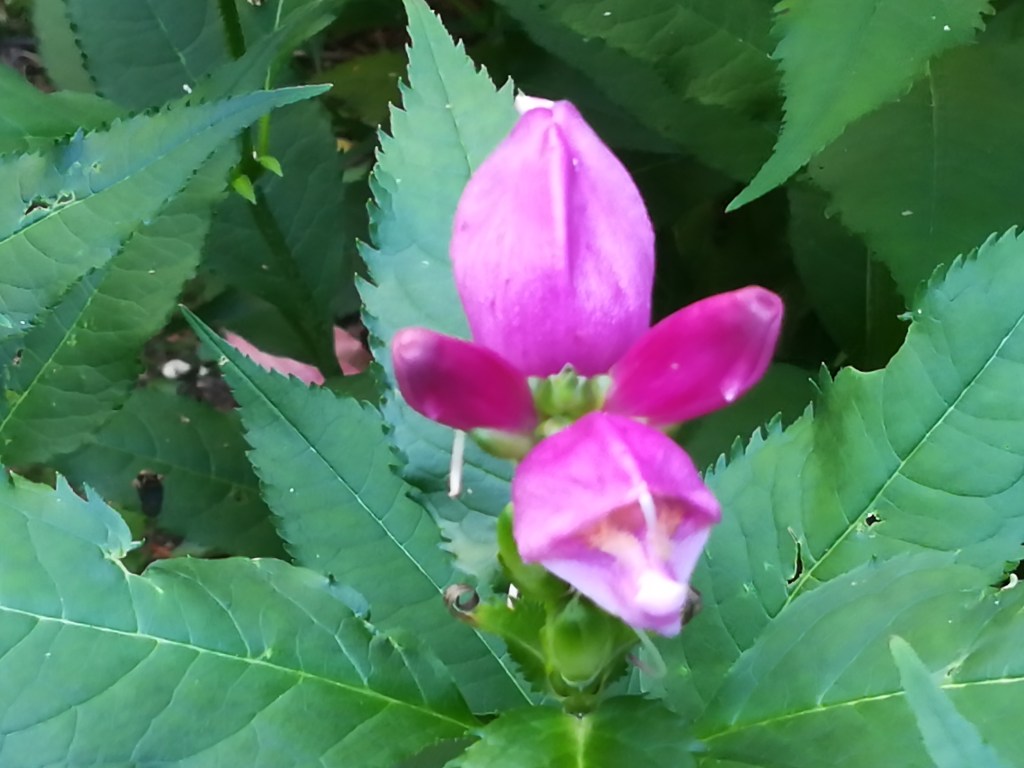
Chelone obliqua
Chelone obliqua, the twisted shell plant, was flowering beneath the trees. It’s an American member of the Plantaginaceae family
Actaea pachypoda – the white baneberry. It’s in the Ranuculaceae and very common in the undergrowth
Tropaeolum speciosum smothers a rhododendron. This climber comes originally from Chile but seems to love Scotland
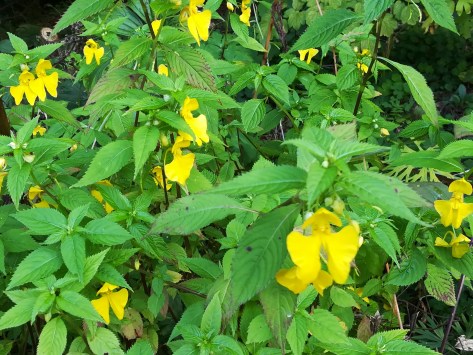
I’d like some help on identifying this one!
Cyclamen hederifolium goes rampant
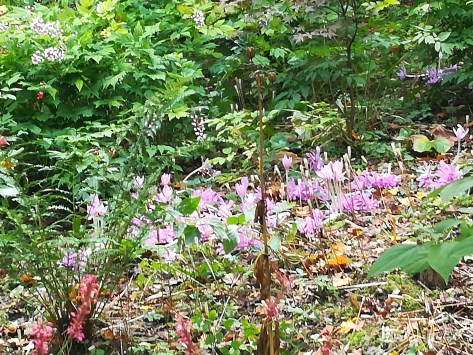
Any suggestions for this one?
Euonymus quiquecornutus in fruit. This one was labelled!
I think Gentiana asclepiadea – the willow gentian. A native of the alpine forests of Europe
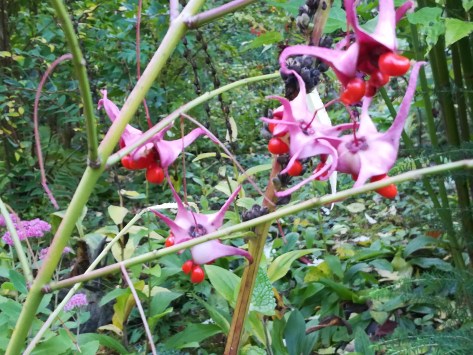
Large perennials about a metre tall with large bulbous fruits – I feel I should know what these are but…
Kirengeshoma palmata – so-called yellow wax bells –comes from East Asia and is in the hydrangea family
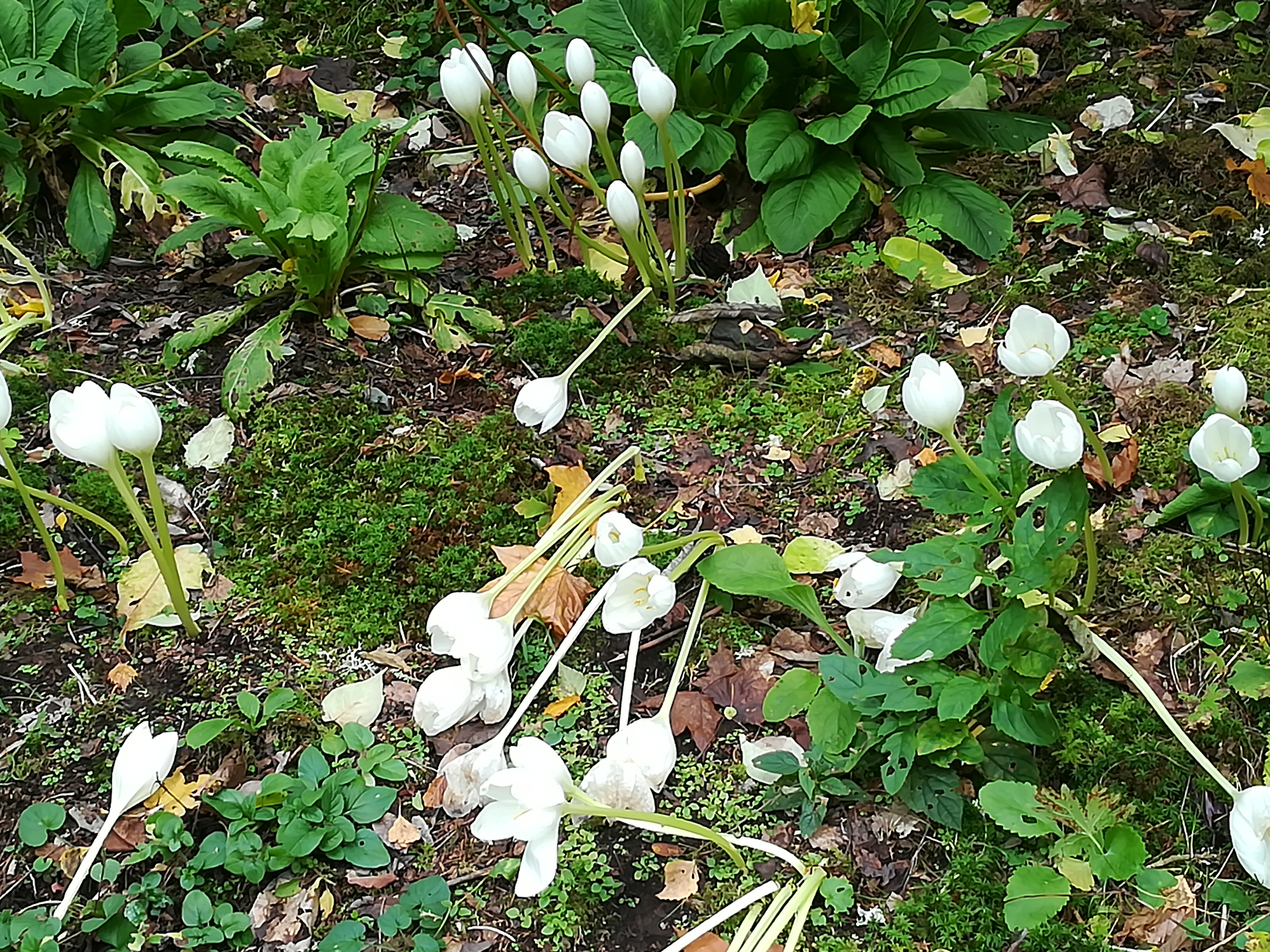
Huge stands of Colchicum autumnale – the autumn crocus – in flower
And white colchicums too!
Possibly the dreaded honey fungus – Armillaria. A tree killer!

Bormes-Les-Mimosas, Provence, France

This little town is perched above the Mediterranean coast to the east of Toulon. It is a garden in early spring when the widely planted mimosas are all in flower. I visited in mid February 2017 with friends who know the south of France well.

2017-02-17 16.13.14
One of the many beautiful blowsy acacia trees

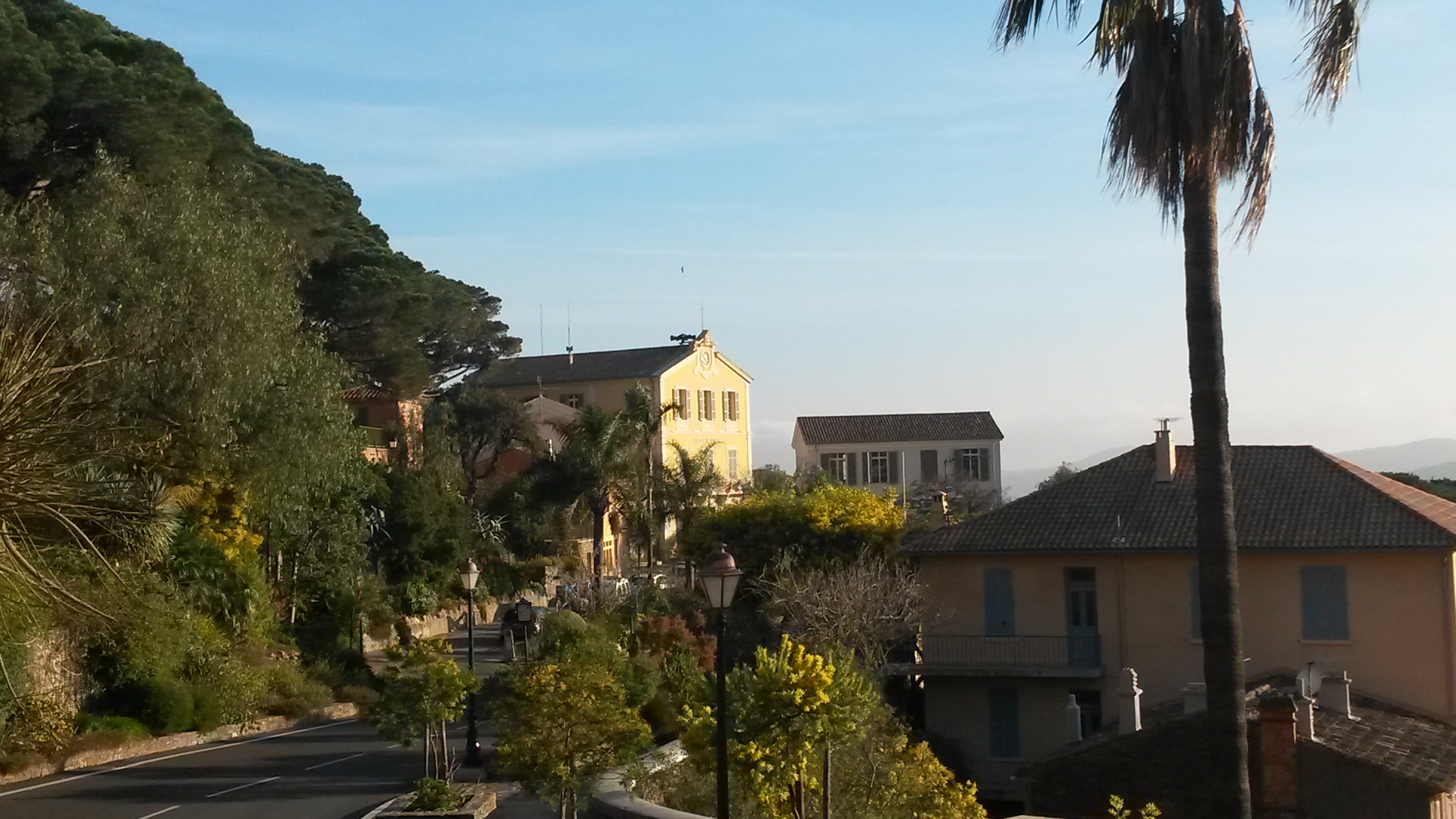
The town is pretty with all the blossom, the cypresses, palms and pines at that time of year. Most are in private gardens but there are municipal spaces and a garden which surrounds the town hall – the Mairie. They have a collection of mimosas – and I use the term in the most general sense to cover genera such as Acacia and Albizia as well as Mimosa – and some other subtropical trees.

2017-02-17 16.48.27
The Mairie in its garden

Here I spotted Acacia baileyana purpurea, a very attractive tree which survives much further north in my London garden, albeit in a reasonably sheltered south-facing site. It flowers usually in January, but it is nothing like the more spectacular green-leaved varieties. Its attraction is its lovely grey foliage which is purple when young.

2017-02-07 16.22.59
Acacia baileyana purpurea in London

The garden also included a flowering eucalyptus, which for me is not a common site.

2017-02-17 17.01.34
A flowering eucalyptus – any suggestions for the species?

And in among the pretty little houses of the village area you will find other exotic plants including fruiting citrus trees and climbers.

2017-02-17 17.18.46

2017-02-17 16.45.19

2017-02-17 15.41.49


In short, Bormes-les-Mimosas is a lovely place to go in the middle of winter when the sun is weak and other gardens may be unappealing.

THE BAOBAB TREE

THE BAOBAB TREE

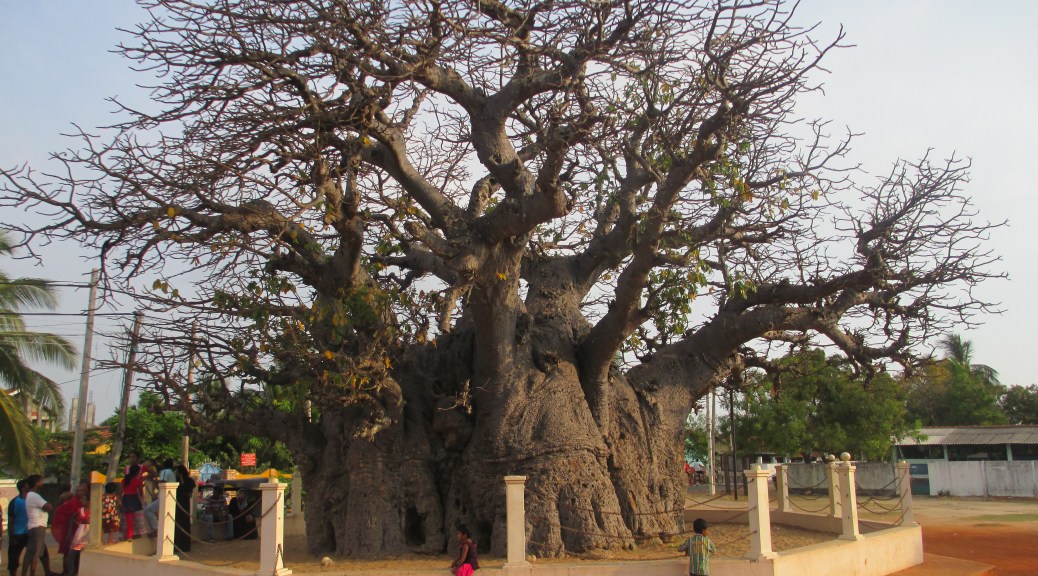
Baobab trees with their huge barrel shaped trunks and wizened bark are synonymous with Africa. They are widespread in tropical, arid and sandy habitats and provide important for food and materials for many tribes.

IMG_1124
A digitata with leaves in Sri Lanka

The tree above is one planted in Mannar, Sri Lanka, by Arab traders back in 1477. It is small relative to many African examples, being only 7.5m high with a circumference of 19.5m. In Africa they can reach up to 25m high and 45m in circumference.

Close up, the bark really does look like the skin of an elephant.

Baobab’s are members of the genus Adansonia. A.digitata  above is the most widespread species but there are nine in all. They inhabit arid, sandy and tropical environments. Like other trees in the Bombacaceae family, such as balsa wood, the silk floss tree, kapok and Bombax species, their remarkable barrel shaped or inflated trunks are adapted for water storage.

2014-09-04 13.56.13

Nowadays I understand that the latest classification is to merge the Bombacaceae into the Malvaceae, the mallow family. This is because the genetic evidence suggests the Bombacaceae family is not natural and it’s more helpful to think of them all as disparate members of a much larger and diverse group.

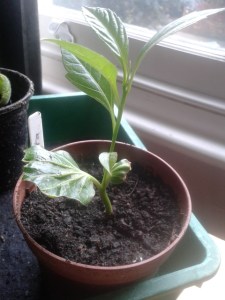
I managed to grow this seedling from seeds bought in Paris (see  photo). Note that it has entire leaves, not palmate leaves like a mature tree. The seeds look a bit like rough brown aniseed balls, about half a centimetre in diametre. To get them to germinate you have to soak them in boiling water for fifteen minutes, plant them and then wait – often many months. I got one germination out of five seeds, and the seedling did not survive many months on a London window sill.

450px-Adansonia_grandidieri04

Perhaps this is the tree I would most like to see, Grandidier’s baobab – Adansonia grandidieri –which is only found in Madagascar. Surely it is one of the botanical wonders of the world.

What a wonderful flora that island has. I’d love to go there and see it!

More work needed on Hackney’s Breaker’s Yard

Just opened a month ago, the National Trust’s Breaker’s Yard garden still needs a bit of work to give it polish. Tyre planters remain unplanted and more than a few corners look untidy.

2014-09-04 16.16.25

Unplanted

2014-09-04 16.53.10

2014-09-04 16.47.21

And untidy

Although the theme is interesting and novel, the details need attention. For example, the public gates to the street remain closed and only those brave enough to walk through Sutton House (without paying an entrance fee) can gain free access.

2014-09-04 16.01.02

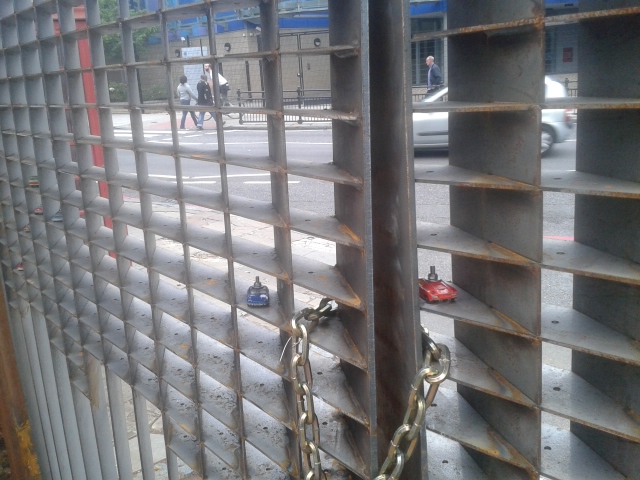
Gates to the street remain locked

None of the plant containers, which include not only tyres but trolleys and metal troughs, is a show stopper.

2014-09-04 15.59.28

2014-09-04 16.02.23

Plantings not spectacular

The main space is dominated by two vehicles – the caravan-like The Grange and a 1980s ice-cream van. These are perhaps a little old and tarnished. Is the Breaker’s Yard just a resting place for two old artworks on their way to dereliction?

BreakersYardShoot2Small-9

The Grange and a 1980s ice-cream van

One point that needs attention are the custom-built gates, which allow toy cars of the matchbox size, to be bolted in for ornament. But there is just too few of them to be interesting  And visitors might also like to be made aware that Sutton House is less than a mile away from where the factory that made Matchbox toys once stood.

2014-09-04 17.01.20

Just too few Matchbox cars

Another thing is the irrigation system, which includes water tanks and an unfinished channel which runs the length of the garden. It finally empties its flow into the Tudor house’s well. Exactly what this achieves – perhaps rainwater recycling or aquifer recharge – remains a mystery.

2014-09-04 16.13.50

Empties into the Tudor well

There are some interesting things to be seen at the garden, but a few of them are in Sutton House’s long standing front garden and over the fence in a neighbouring garden, which includes vegetable plots, beehives and espaliered fruit trees. The Breaker’s Yard is as yet only a minor addition to Hackney’s growing gardening tradition.

Scotney Castle in late summer

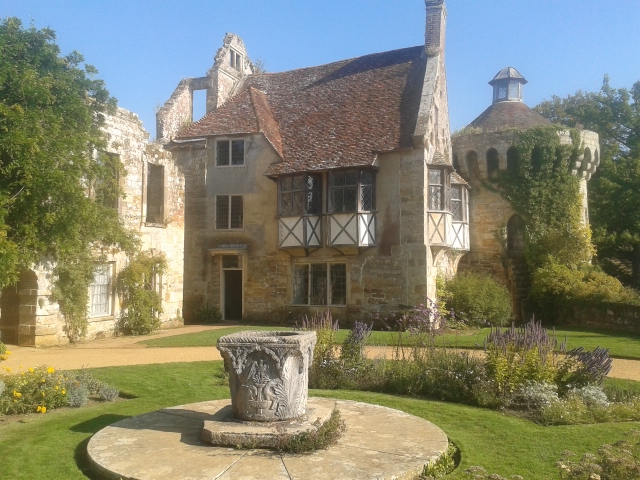
Scotney Castle has been fully in the hands of the National Trust for only a few years since the death of its last owner Betty Hussey in 2006. She lived in the large Victorian mansion at the top of the hill overlooking the valley of the river Bewl at Lamberhurst, near Tunbridge Wells in Kent. One of her predecessors built the house in 1837, having decided that the medieval and Georgian moated castle at the bottom of the valley was too damp and unhealthy.

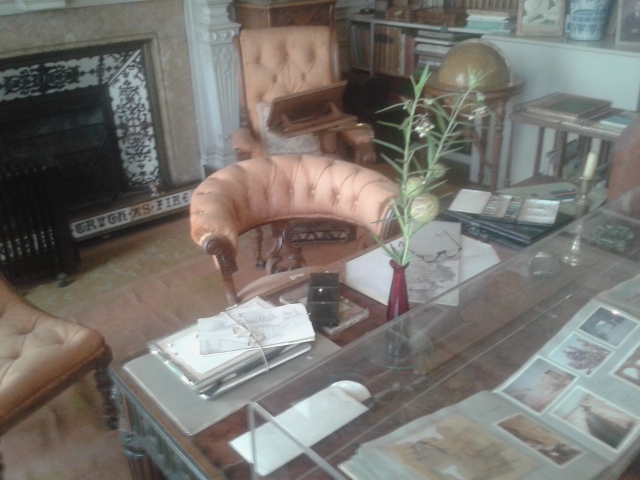
The Victorian house is open to the public and it looks comfortable and old fashioned inside.

2014-09-03 15.54.25

The house, built 1837

2014-09-03 15.22.06

The study

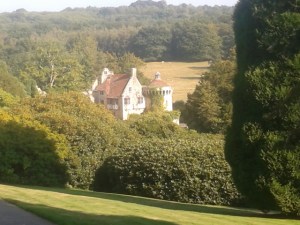
But perhaps its greatest interest is the view across the valley and down to the old castle, which the family decided to turn into a picturesque ruin once their new mansion was completed.

2014-09-03 16.11.46

The view from the house to the castle

The Hussey family came to Scotney in the 1770s having made their money in the early industrial revolution in Worcestershire. The estate has chestnut coppice woodland, partly used for charcoal production, and a history of hop growing.

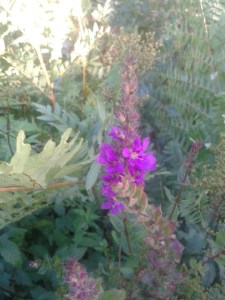
The grounds of the castle in late summer lack the flowers of the rhododendrons which dominate much of the garden between tne old castle and the house. But the beauty of the estate is also in the landscape and the waters of the moat which are bursting with life, including pickerel weed (Pontederia cordata), purple loosestrife (Lythrum salicaria) and gipsywort (Lycopus europaeus).

2014-09-03 16.16.27

Pontederia cordata

2014-09-03 16.22.02

Lythrum salicaria

2014-09-03 16.22.07

Lycopus europaeus

There is an old quarry where the stone for the castle was extracted, now well planted up and apparently containing a dinosaur footprint.

2014-09-03 16.08.30

The old quarry

There is also the vestige of a medieval lane where once monks walked to a nearby abbey and peasants hearded pigs into the woods to find acorns and beech nuts.

2014-09-03 16.06.41

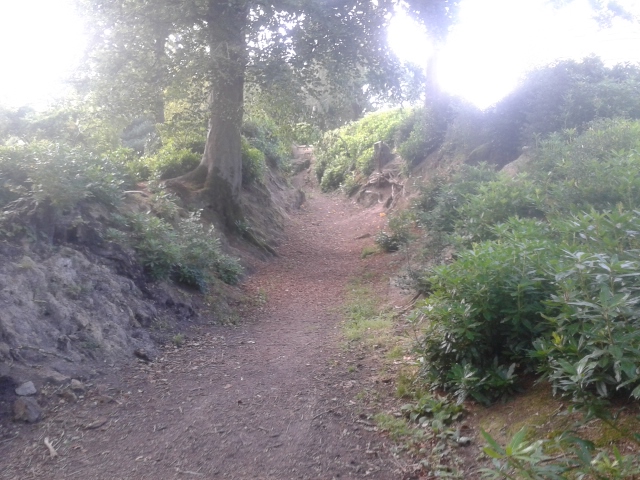
A medieval road?

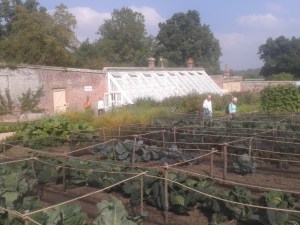
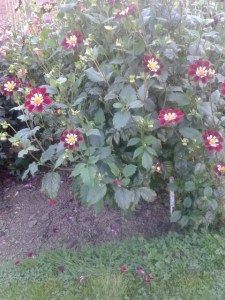
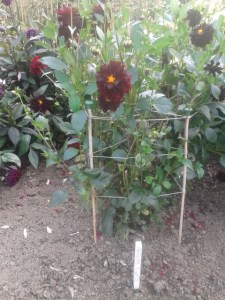
Of interest to gardeners though is the National Trust’s efforts to revive the large walled garden of the Victorian house. It is remarkably tidy and, in late summer, is full of various varieties of runner beans, pumpkins, courgettes, brassicas and dahlias for picking. Some of the last are fine varieties with good long stems for flower arranging including, Mary Evelyn, Arabian Nights and Pink Princess.

2014-09-03 14.56.49

Pumpkin ‘Jack of All Trades’

2014-09-03 14.58.32

Brassicas and the glasshouses in the walled garden

2014-09-03 14.43.23

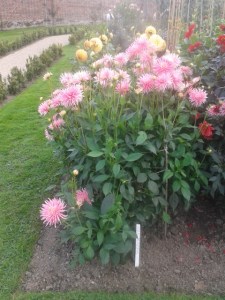
Dahlia ‘Mary Evelyn’

2014-09-03 14.44.38

Dahlia ‘Arabian Nights’

2014-09-03 14.43.01

 Dahlia ‘Pink Princess’

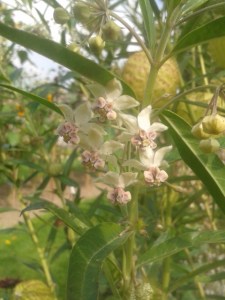
The very strange South African plant in the Apocynaceae called Gomphocarpus physocarpus also grows in the garden. It has small delicate white flowers and large prickly fruits like hairy balls up to 8cm in diameter. It adds a fascinating element to any flower arrangement.

2014-09-03 14.50.46

Flowers

2014-09-03 14.49.48

And fruit of Gomphocarpus physocarpus, also known as the balloon plant