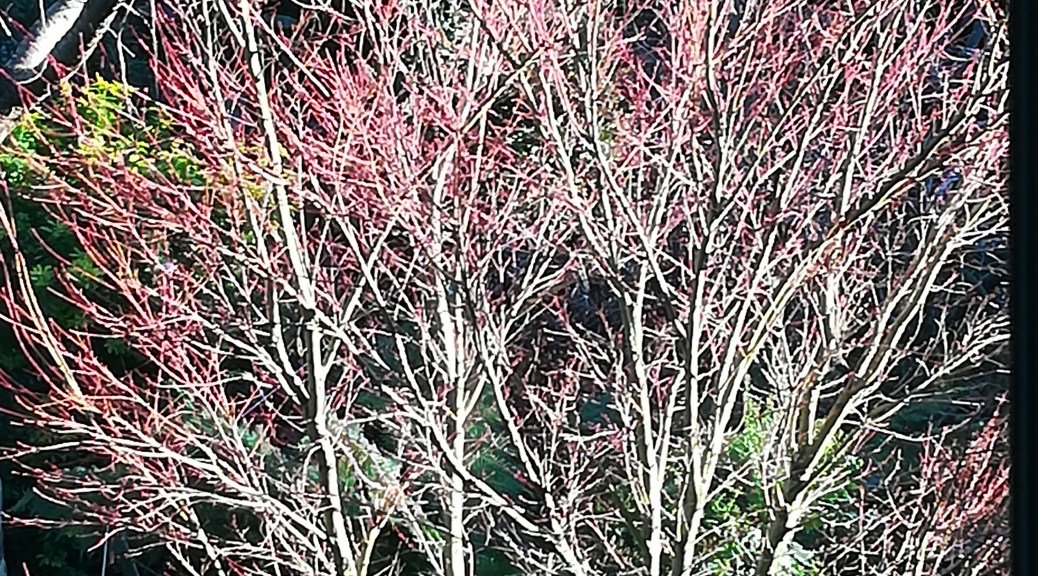
My small London back garden is north-east facing and on a sandy loam soil. It is about five metres wide, 30m long and fortunately completely walled. I guess I should also mention my front garden which is south-west facing, but that is only about three square metres and is dominated by a small tree and a wisteria climbing the front wall of the house. This is all that I have to make beautiful and what I’m trying to show here is that it is possible to have points of interest all year round.
January is a challenge. It is not the most exciting month of the year but there’s more to see than you might think…
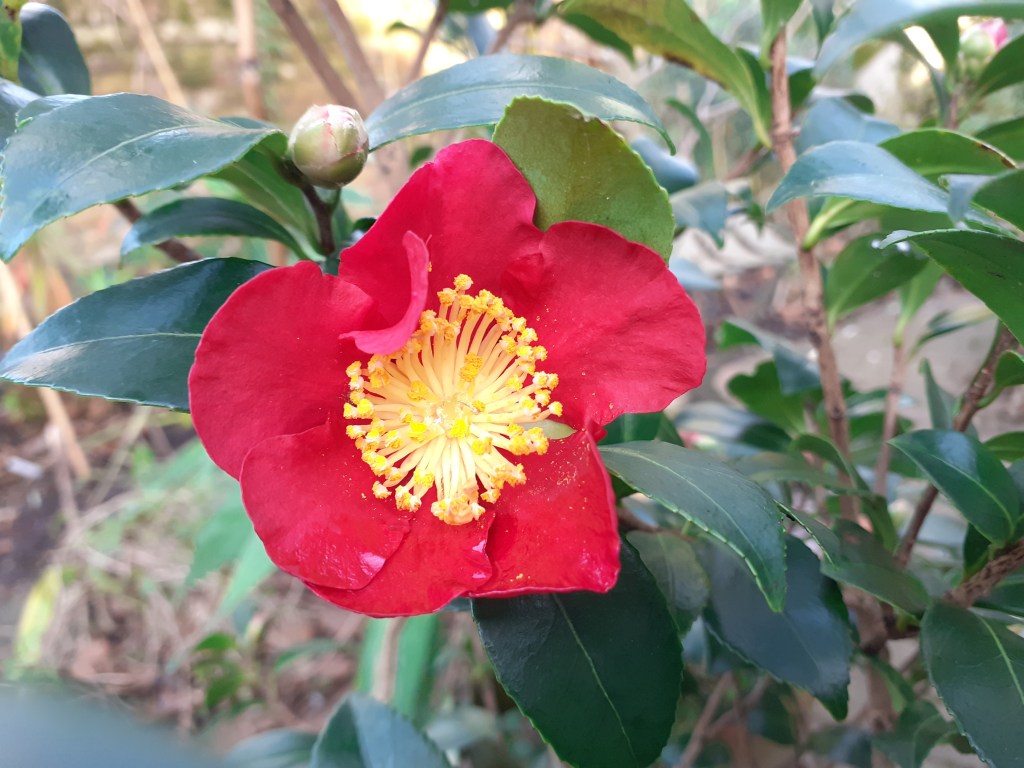
This is one of the sasanqua camellias that are known for flowering in the autumn and winter. This lovely crimson Yuletide came out last year on Christmas Day and then flowered throughout January. Unlike some other sasanquas, it is good at holding on to its petals.
It is currently in a pot but as it gets bigger it might be better in the ground. My experience is that although my soil is at best neutral and often contaminated with concrete or mortar, with a good mulch of leaf mould or matured woodchip, camellias of all kinds can do well.

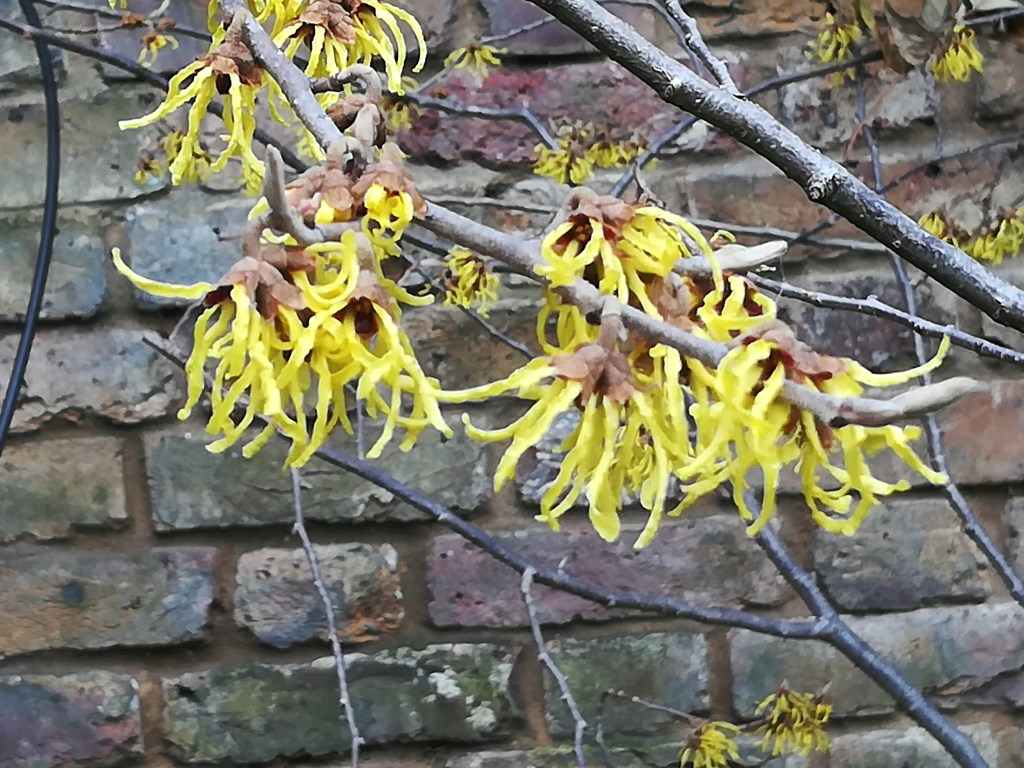
Then there is the witch hazel, Hamamellis x intermedia ‘Arnold Promise’. Its yellow wispy petals are designed to attract insects, though I haven’t seen any visiting them.
I’m pleased to have some Cyclamen coum, which flower in the spring rather than the similar Cyclamen hederifolium which is so noticeable in the autumn. In fact, I have planted this only in my front garden which is just a few square metres of south-west facing garden. Everywhere else, the cyclamen are C.hederifolium.
I’m told you can’t grow the two together as the autumn-flowering species tends to take over. My experience is quite consistent with that, and I have deliberately removed C.hederifolium from my front garden.

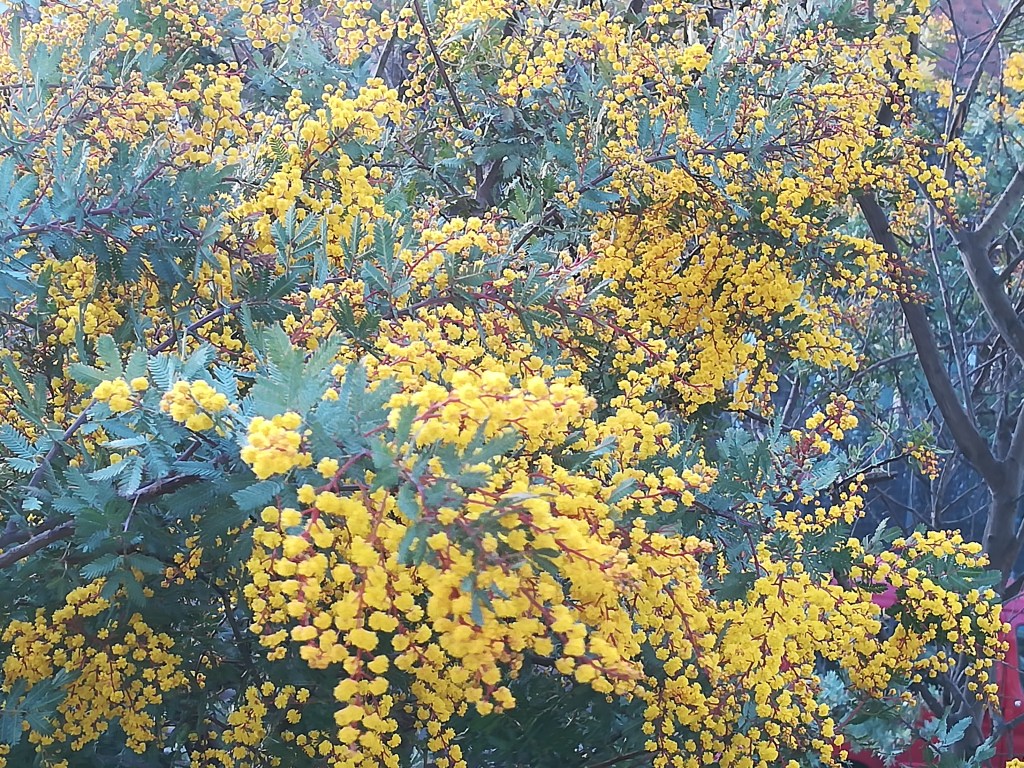
Also in the front garden, towering above the cyclamen, is this acacia which is flowering beautifully this year. This tree is rather splendid and gets a lot of attention from passers-by who constantly ask me for a name. Generally though, this is in the summer when its chief attraction is the purple young growth nestling against the older blue-grey leaves.
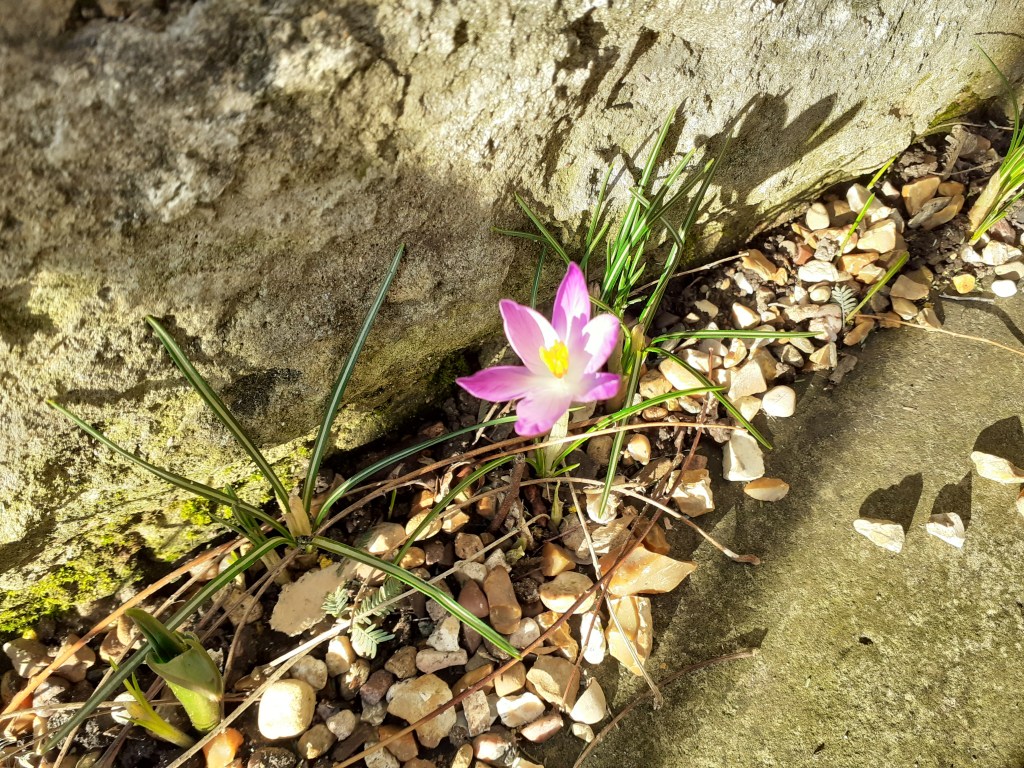
Finally in the front garden, there are some Crocus tommasinianus purpurea nestling against the base of a south facing wall. I call this my two-inch border, and I try and restrict it to a few small bulbs and succulents. Last year I cleared it out and sprayed it to kill of an infestation of a copper-leaved Oxalis which is very weedy in gardens around here.
In the back garden there is a large mahonia which is in flower through the autumn and winter. It requires vicious pruning after flowering but does produce black berries much-loved by blackbirds. I am careful to allow many of these to remain available.

It’s hard to admit to failures, but I have not had much success with snowdrops. I have flowering a single Galanthus elwesii which I bought some years ago in a pot. It has clearly not spread wildey!
I have also transplanted a couple of clumps of smaller snowdrops, which I assume are G. plicatus, from my mother’s garden, which was on a clay soil. But they are not in flower yet.
I think that snowdrop doesn’t like my soil but it could just be that they don’t like drying out in summer, which is very likely here. They are planted in the shadier side of the garden in an area where I am doing my best to put plenty of leaf mould and mulch.

Finally, a nice surprise. I have been growing the pineapple-scented sage for some time but with little success. I gave it plenty of sun last summer and was disappointed that there were no flowers. Now it has burst into life! I didn’t realise that it likes to flower in autumn and winter, which is difficult because it is certainly not very hardy. I keep it close to the house to benefit from the heat, but it gets no sun at all just now.






 gardentrip.co.uk