
Planting a new tree in a small garden is not a decision you take every day, every year or even every five years. Having recently decided to remove a very large and over dominant Japanese cherry tree from my garden, I now face that decision. So here are my thoughts on the subject.
Height and spread: My last cherry tree – Prunus shirotae Tai Haku – was planted in about 1995 and in almost 25 years grew to about 6-7 metres tall with a spread of at least 5 metres. I think I don’t want such a large tree again, but in another 25 years I might be past caring! The garden probably won’t be my major concern then if I’m still around.
Reasonably though, I think I can say that I would not mind another tree that grew to 8 metres in 25 years provided it’s spread was less. But if I’m going to buy it at a reasonable size – and I think I will need to in order to quickly restore my garden – then it shouldn’t grow too fast. A reasonable aim would be four metres or so in 10 years and a spread of no more than three.
Trees I’m ruling out because they are a shade too big include the handkerchief tree (Davidia involucrata), the tulip tree (Liriodendron tulipifera) and stewartia .
Do I want red leaves, green, yellow, blue or silver? I think red leaves on what is probably going to be the largest plant in the garden might be oppressive. So I’m thinking green to yellow. Silver is nice and blue is great.
Anyone choosing a tree needs to think about their site and whether it will be suitable for the chosen tree. I have a sunny site and well drained soil, so I’m lucky, but there is a slight question of exposure to north winds. Poor drainage and shade might make a choice more difficult.
Here’s the ten trees I’m looking at in detail:
1. Japanese maple eg Acer palmatum Seiryu
2. Cornus kousa var chinensis
3. Snake bark maple Acer capillipes
4. Rowan Joseph Rock
5. Amelanchier lamarckii or Amelanchier alnifolia Obelisk
6. Betula jacquemontii
7. Cercis eg Cercis chinensis Avondale
8. Magnolia
9. Styrax japonicus
10. Acacia baileyana purpurea
1. Japanese Maple
Bearing in mind my size requirements, there are many which might fit, and many which might remain too small. Those that fit my size requirements include Seriyu, Sango-kaku and Red Wood.
Seriyu
Seriyu is part of the dissectum group with very finely divided leaves. It is relatively tall – an October 2016 article in The Garden magazine says 7m tall with a spread of 4m, but there is no age specified. The plus points of this tree are its fine shape and elegant leaves which colour up in autumn.


Sango-kaku
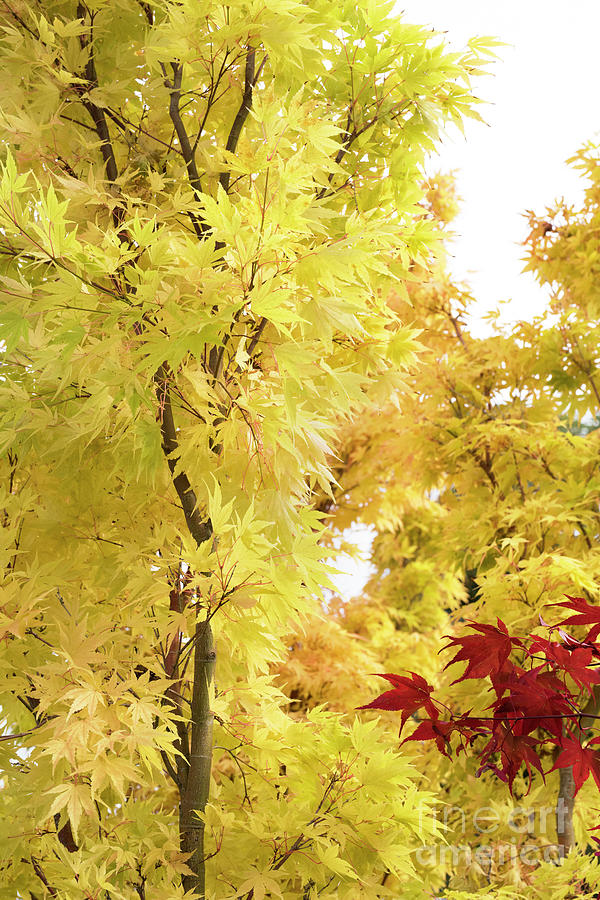
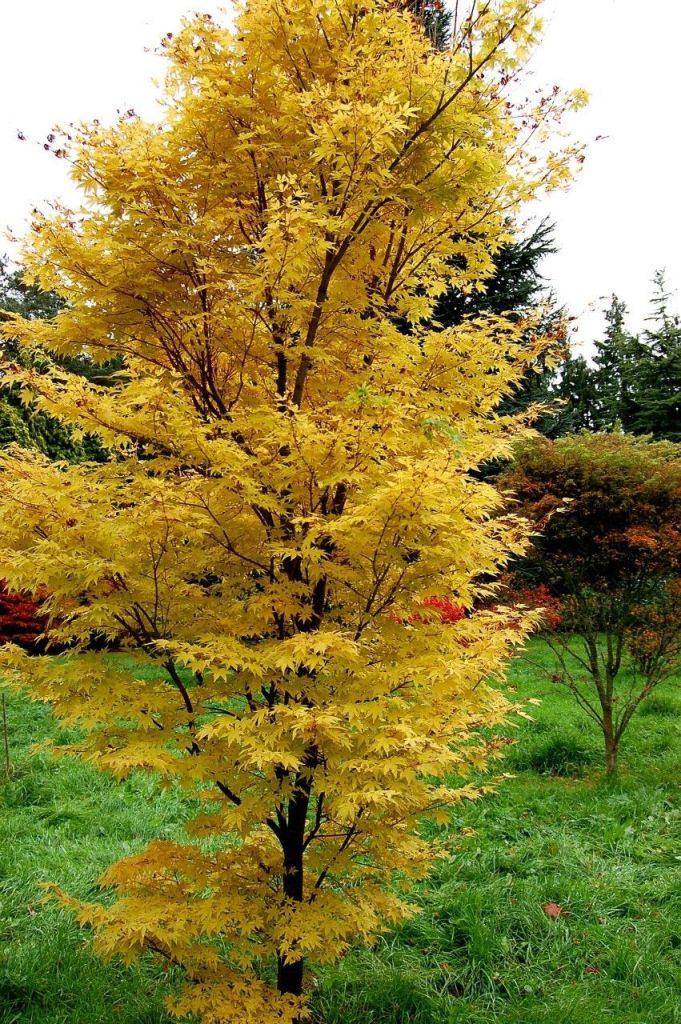
My own experience of this tree suggests it will reach about 6-7m in 20 years with a spread of perhaps 4m which can be curtailed by pruning. It has fine yellowish foliage in the autumn, its young shoots are red and the tree has an elegant profile.
Red Wood
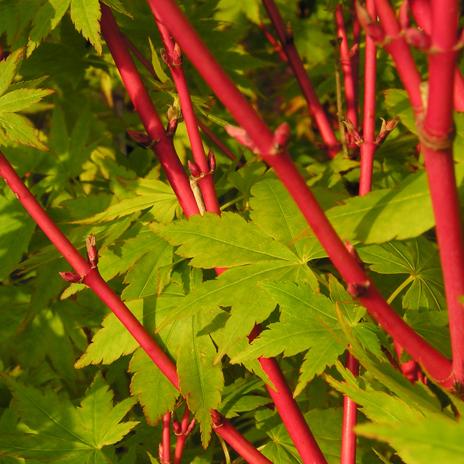
This is an improved version of Sango-kaku, according the 2016 article in The Garden. It has similar foliage but perhaps redder bark and is perhaps slightly smaller. Its height is given as 6m with a spread of 4m.
2. Chinese Dogwood
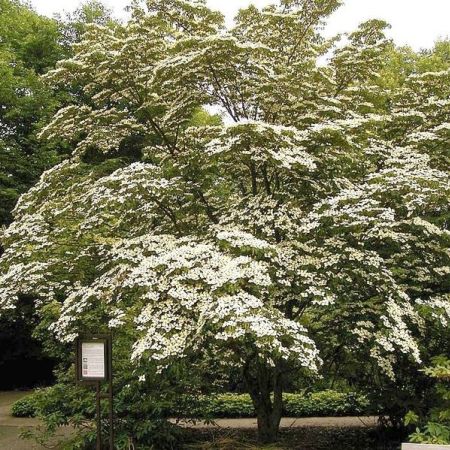
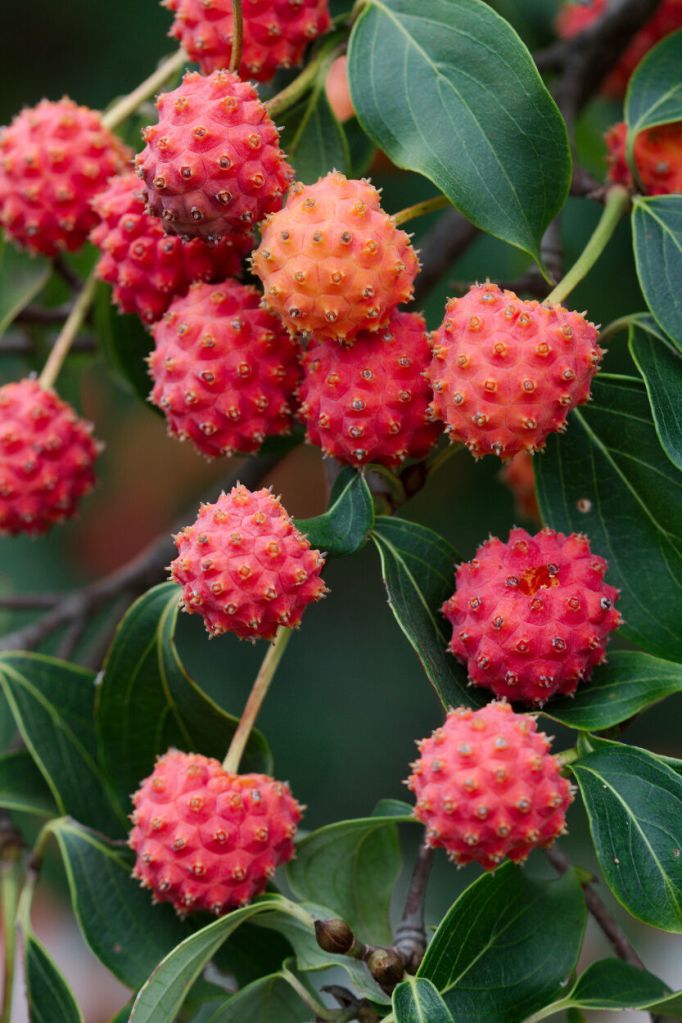
Also known as Cornus kousa, this small tree is variously quoted at 3 to 4 metres tall at 20 years with a 3 metre spread. It has a lovely form and fine flowers in May-June in the UK. It also bears a red fruit and has good autumn colour.
The tree comes in various forms, the standard being Cornus kousa v. chinensis. The variety China Girl may be slightly different but I’m not sure how. It needs a sunny site and well drained soil.

One of the things that puts me off this tree is the fact that I know one of my friends treasures it and has it in her garden!
3. Snake Bark Maple
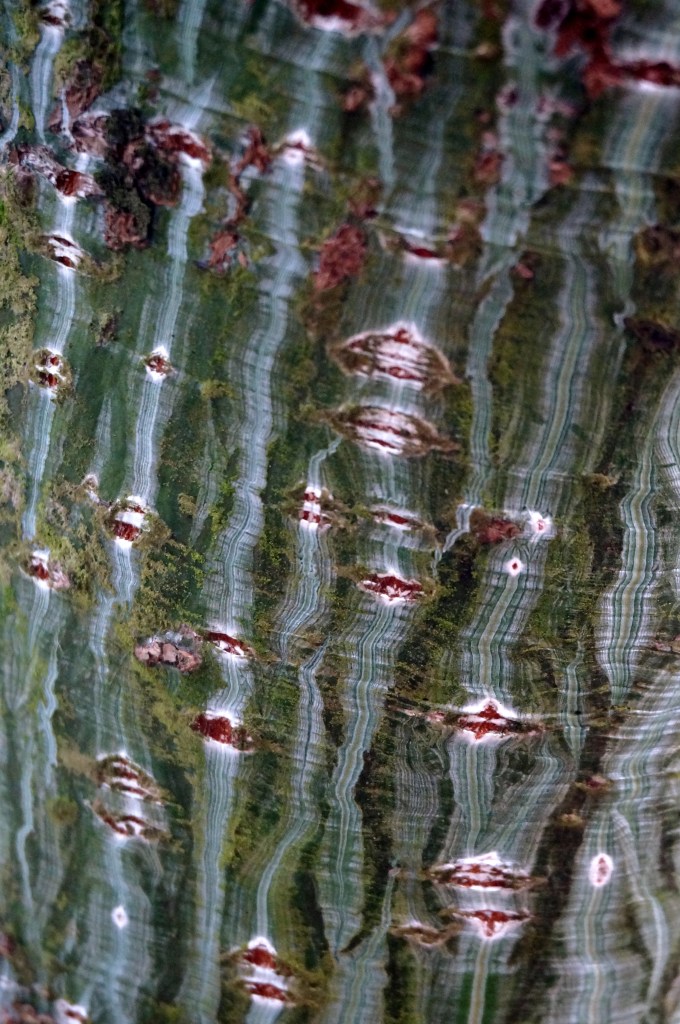
This is an unusual tree which one doesn’t see often. It’s chief attraction is the ornamental bark, but the leaves are also an interesting shape and turn red in the autumn.
There are several species which appear under this English name: Acer capillipes, A. davidii, A. rufinerve and A. tegmentosum for example. All have similar attractive bark but in terms of size, you need to be careful about what you are buying as they may vary.
UK retailer Ornamental Trees lists the height of Acer capillipes as 5m with a spread of 4m in 20 years, A. davidii as the same, and A. rufinerve as 7m x5m. It does not sell A. tegmentosum, but Burncoose Nurseries lists this species as 10m x 8m.
I have seen a snake bark maple growing in my locality and it was a well mannered tree, not growing too fast or out of shape. My bet would be that this was A. capillipes or A. davidii.

4. Rowan Joseph Rock
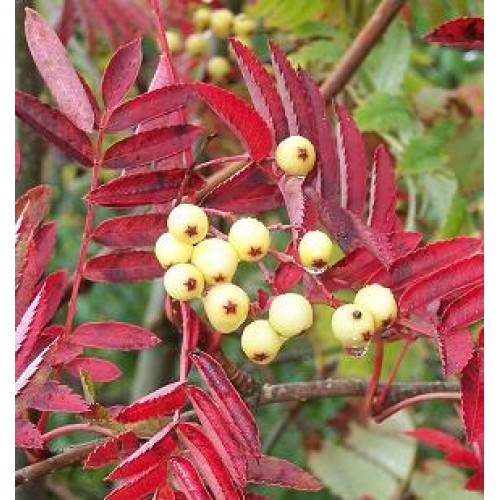
Of all the many varieties of rowan trees (Sorbus) I think this is among the best. Its attractions are its leaves which colour up nicely in the autumn, its yellow berries and of course its spring blossom.
Ornamental Trees gives its height and spread as 6m x 4m in 20 years.
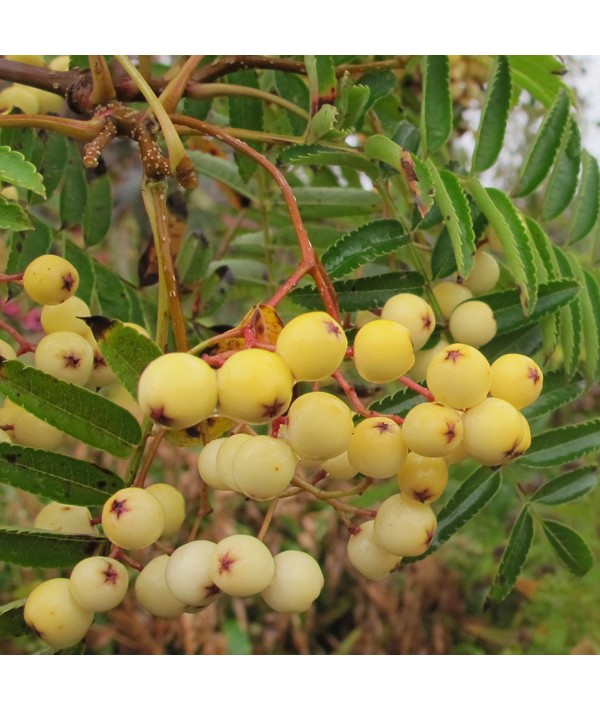

I will say no more as I know from experience it does not like the sandy soil and dry summer climate of my garden in Hackney. In the early 1990s I planted a 2m tree which seemed to get smaller by dying back each year. I then tried grafting stems onto other Sorbus rootstock. I produced a decent looking young tree but still it didn’t grow.
So if you are planning to plant it, then clay or higher rainfall may be what it likes. Having spent several years of failure, I don’t think I’ll try giving it space in my garden again.
5. Amelanchiers
Amelanchiers are small trees or shrubs with lovely white (or pinkish) flowers in spring, bright autumn foliage and small berries which are loved by birds. They are native to North America and there are many species – for example: A. canadensis, A. lamarckii, A. x grandiflora and A. laevis, plus many named varieties.
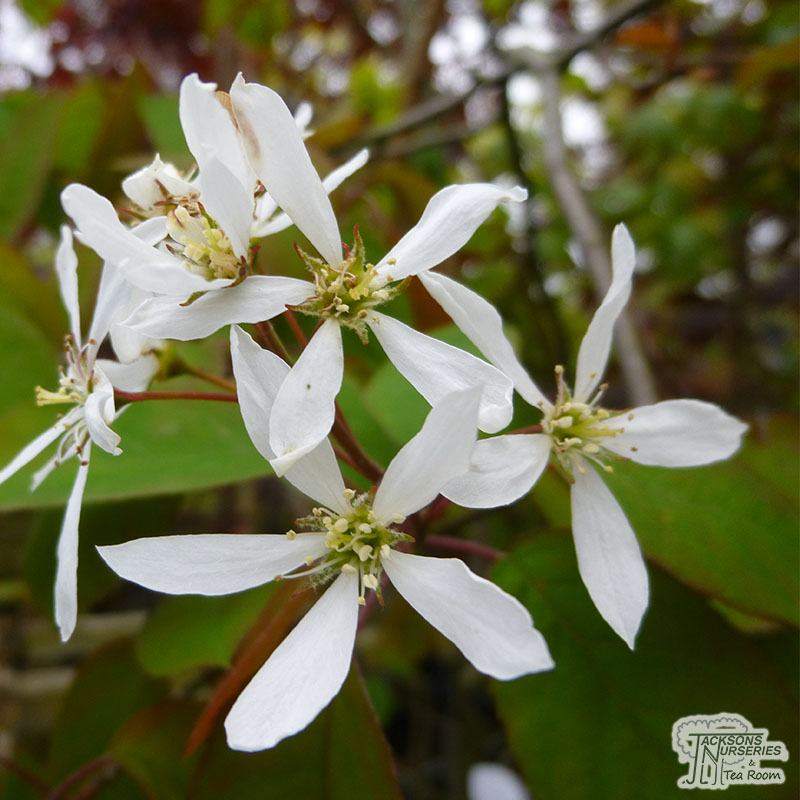
English names include Snowy Mespilus, Serviceberry and Juneberry. You can buy them as shrubs or trained trees up to 2m in height. They are reported to be tough and tolerant of a wide range of conditions. Their natural habitat is as under shrubs in forests, and the Royal Horticultural Society (RHS) says they look good dotted around in a woodland garden.

I am not sure, however, that the growth habit of these trees will suit everyone. Although you can buy them as trees, they look like they are apt to become many stemmed shrubs. I can quote from the RHS website which says: “As a small specimen tree A. lamarckii is agreeably manageable, reaching 4-5m in 10 years. However it does have a slight drawback in that it does not have a definite habit: it suckers from the base, meaning it will quickly revert to a shrubby, multi-stemmed habit if not pruned to encourage a clean trunk.”
I suspect the same is true of most Amelanchiers. I note that the website of Ornamental Trees – a comprehensive UK tree retailer – notes for all Amelanchiers that you should prune out growth more than four years old to retain shape and vigour. Of course that’s not so applicable to trees!
So I think that you will have to prune Amelanchiers regularly to maintain a clear stem if you want a tree. But if you’re looking for a big decorative shrub/small many-stemmed tree they are ideal.

Perhaps a slight exception may be A. x grandiflora Robin Hill which may work as a tree. Ornamental Trees describes this variety as having a more upright habit than most Amelanchiers. There are also plenty of images on the web which suggest it can be kept as a tree.


6. Himalayan Birch
Birches are lovely trees and are extremely fashionable, which means of course that they are everywhere. They don’t seem to mind growing in London even though you might think it is getting too warm and dry for them.
I have chosen to look at the Himalayan birch, Betula jacquemontii, as it seems to be smaller that the magnificent Betula pendula – the UK native silver birch. Nevertheless, the RHS lists its maximum height as 12m and its spread as 8m but it would take over 20 years to get to this size.
The bark of the Himalayan birch is even whiter than the silver birch, but it does not have the same weeping habit. Many-stemmed forms of all birches are also popular and have the advantage of maximising the attraction of the stems.

7. Judas Tree
The Judas Tree, Cercis siliquastrum, produces a bold statement in spring with strong purple flowers before its leaves develop. I’ve seen it in mediterranean climes where the blossom can be stunning. They are widely planted as street trees in some parts of the south of France.
Cercis belongs in the pea family, Fabaceae, and it does produce pods after flowering. Other cultivated species include C. chinensis and C. canadensis.
The Royal Horticultural Society says some C. siliquastrum can get to 12m high and an 8m spread, but I have never seen one that large. So be wary what you buy. To be sure of a small tree there is C. chinensis Avondale which grows to a maximum of 4m with a spread of only 2.5m.
Other cultivars worth noting are the purple-leaved C. canadensis Forest Pansy, which only grows to about 2m high and 2m spread. Its leaves are large and beautiful and is grown more for these that the flowers, which are less conspicuous. Then there is C. canadensis Ruby Falls which has purple leaves, is described as having a weeping habit and again rarely gets taller that 2m. Its flowers are larger than those of Forest Pansy.


And then there’s the C.canadensis alba form with the white blossoms. Apparently this can get up to 10m so a substantial tree.
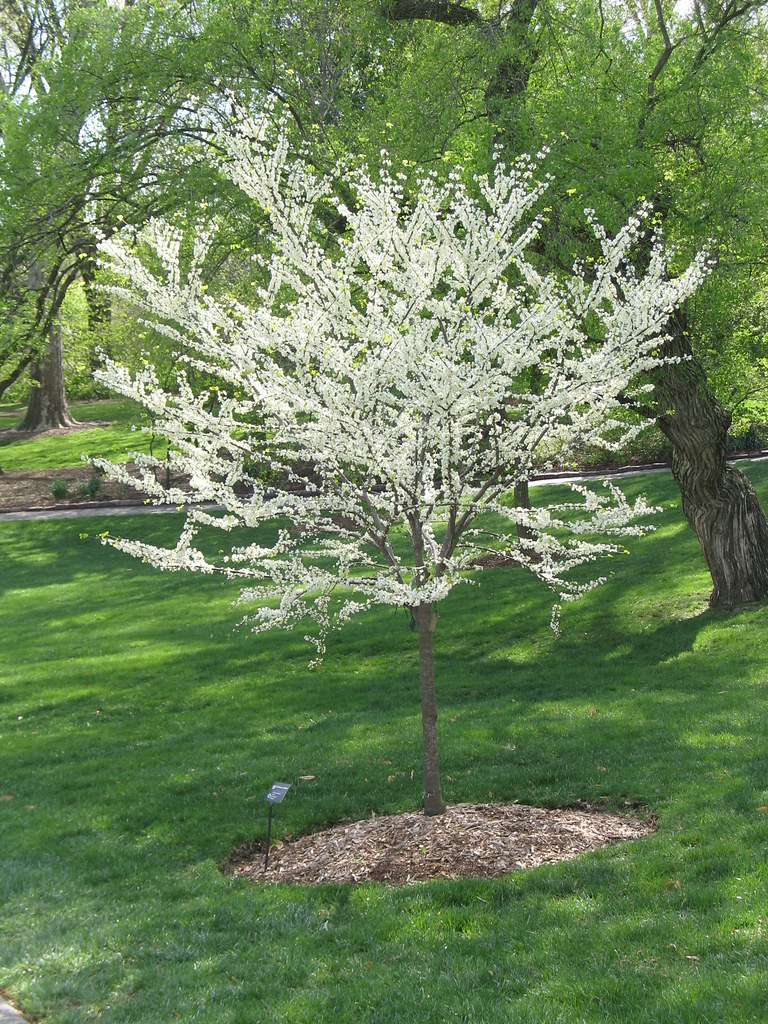
My impression of Cercis from looking at images on the internet is that if you go for a multi-stemmed plant then you are going to end up with a thicket. But if you trim down to a single trunk then your will get a small tree which is a very spreading lollipop shape.
8. Styrax japonicus
Styrax japonicus or the Japanese snowbell tree is a deciduous tree with white flowers that grows to about 10m high and 4m spread in 20 years, so it is a little on the large side for my garden. However, it is unusual and elegant with the benefit of many white blossoms in May, probably lasting longer than those of a cherry tree.

Styrax japonicus, in the Styracaceae family, comes in many varieties including Pink Chimes above with the slightly pink-tinged flowers. Generally though the flowers are pure white and hang neatly from the spreading branches. In the UK, Burncoose Nurseries has a wide range of varieties, including other species of Styrax.

It wants full sun and a sheltered position, so it likes a good spot. But it is very elegant and can be controlled by pruning after flowering, the Royal Horticultural Society tells us.
9. Magnolia
There are so many magnolias it is difficult to know where to start. The commonest one in the UK is M. x soulangeana, of which there are many pure white to pink varieties. All are spring flowering before the leaves develop and the typical look is large tulip-shaped flowers with broad white petals flushed with pink from the base. The trees are deciduous and like a sunny spot.
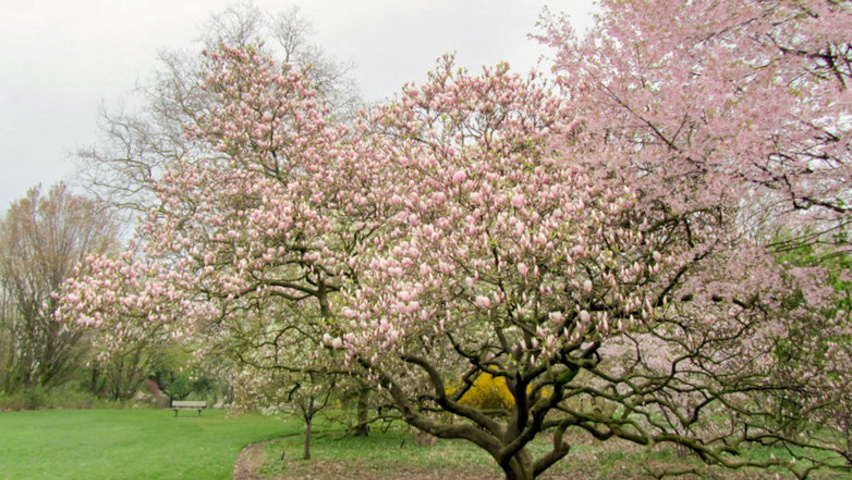
M. x soulangeana gets big when it gets older – the Royal Horticultural Society says 6-8m in height and spread at age 20-50 years. It’s true. And it will spread if you let it. But it is undoubtedly beautiful and worth considering.
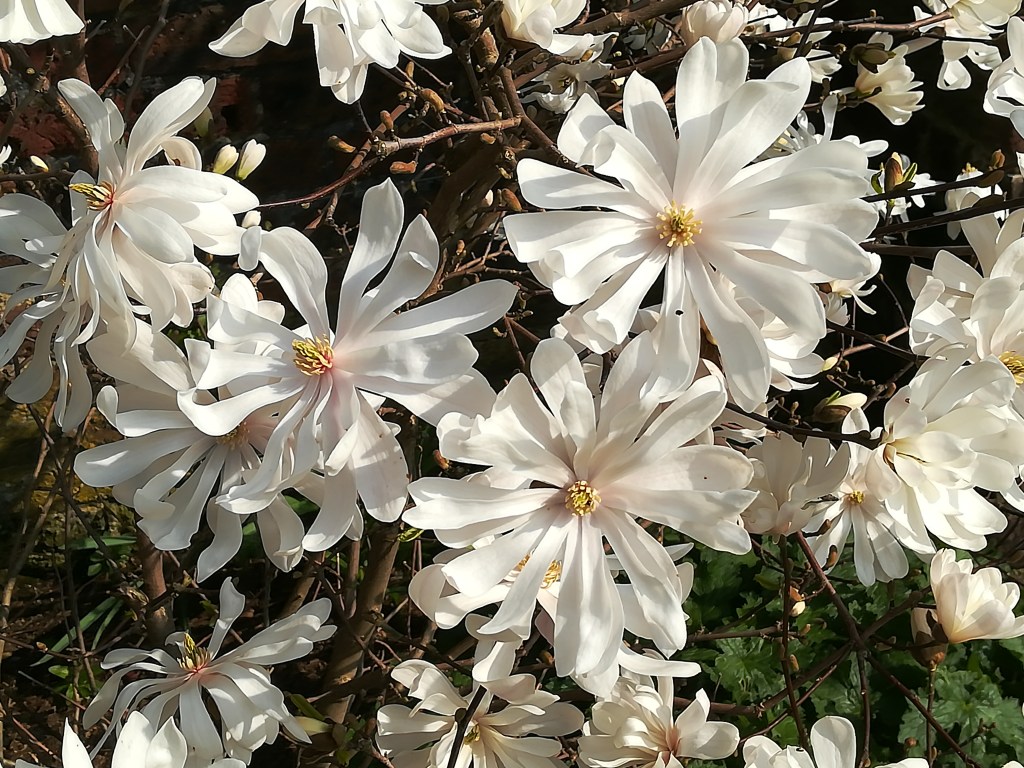
Other smaller varieties include M. x loebneri Leonard Messel. I’ve never seen this more than about three metres tall and it has spidery fragrant pink flowers in the spring. The RHS gives a maximum height and spread of 4-8 metres with a similar spread.

There is also M.stellata Water Lily, but this is up to 2.5m, according to the RHS, so more of a shrub than a tree.
10. Acacia baileyana purpurea
This small acacia, also called the Cootamundra wattle, is notable for its lovely blue foliage which is purple when young. It produces yellow flowers in the depths of winter – January and February – and grows to a height of 4-5m in 20 years with a spread of about 3m.

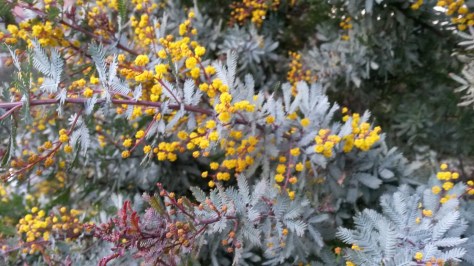
I speak with some experience, having planted one in my south-west-facing front garden 25 years ago. It has been a joy and something passers-by often ask me about.

I don’t intend to plant another just yet. So no further consideration for me but check it out if it is new to you. My tree is about 4m tall with a 2-3m spread. It attracts a lot of attention from passers by who ask me for its name!




 gardentrip.co.uk