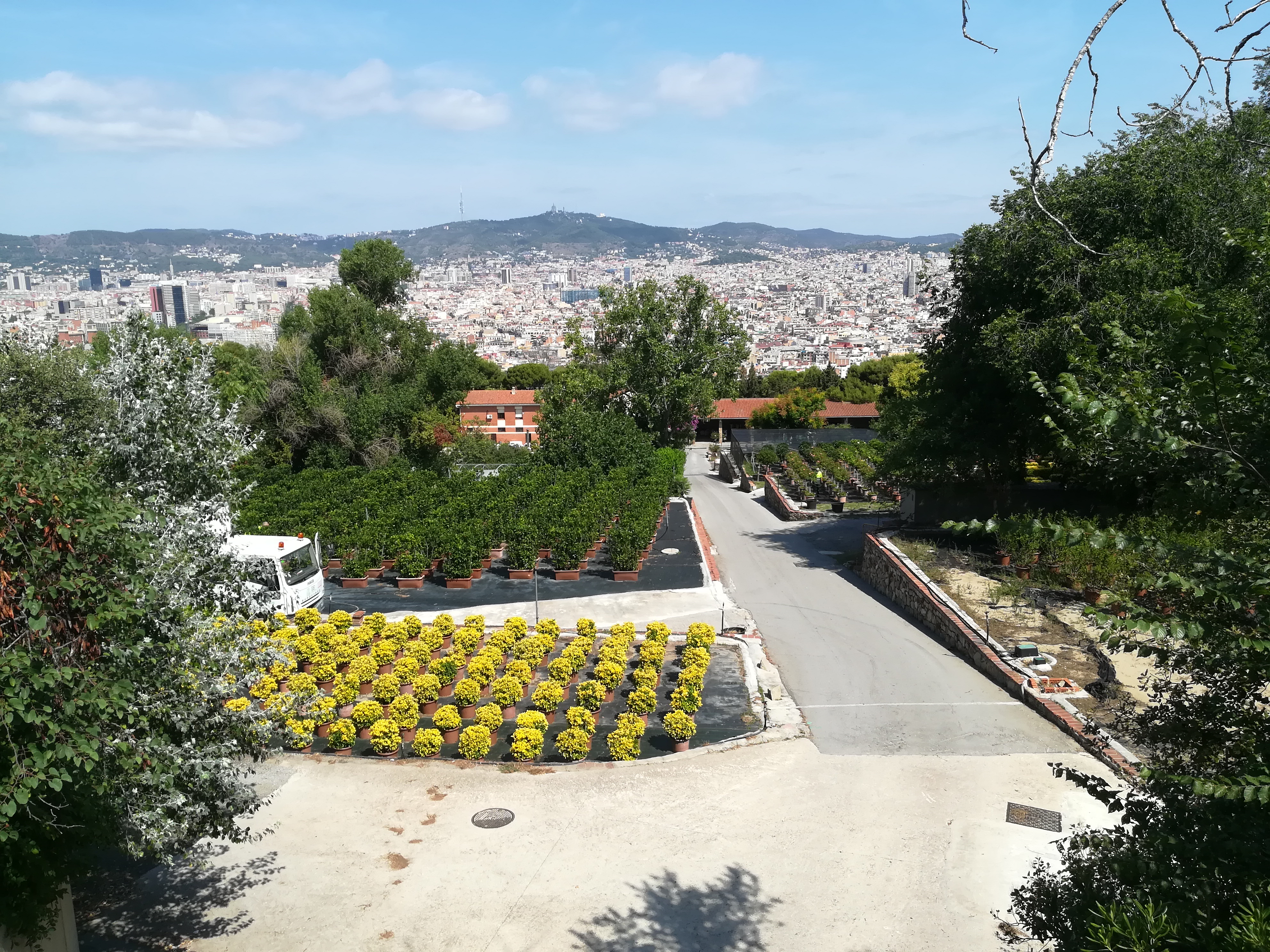
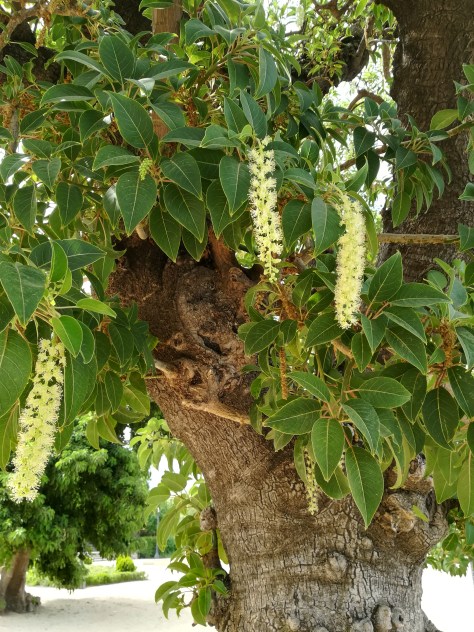
All posts by plighto

Lunuganga: An Architect’s Garden

Lunuganga, meaning salt river, is near the coastal tourist town of Bentota in Sri Lanka. It is a garden of vistas and beauty, and a garden often more about art and buildings than plants. It is about landscape, on both a large and small scale.

The garden was built over many years by Geoffrey Bawa (1919-2003), one of the great hotel architects of the 20th Century. He is described as a tropical modernist and believed particularly in merging the outdoor and indoor, something only practical in the tropics, where temperatures are always warm and can be managed by breezes and shade.

The indoors then can merge with the outdoors, which is a bit of a conundrum, as we tend to think that gardens are outside, not in. But perhaps in a Bawa garden, gardens can start inside with a view out, or even outdoors with a view in and then out again. Views are certainly important for Bawa, as his buildings and Lunuganga show.

Lunuganga is built around his country home, where he might spend the weekends after leaving his office in the Sri Lankan capital, Colombo. The house and garden is built on a peninsula in a tropical lagoon, with water readily visible on two sides, north and south.

The classic view is that featured above. From Bawa’s living room, the glass doors take you out onto a patio where you can look north, through the magnificent branches of an ancient frangipani tree (Plumeria obtusa), at a terrace, then water and then the tree-covered land beyond.

A visit to Lunuganga begins at some wide gates, flanked by two little lodges with pointed roofs (1). (Click the map below to enlarge). Here you leave your car and walk up a wooded driveway toward the house. You are overshadowed by huge tropical trees as you turn through more than 90 degrees to approach the house.

A plan of Lunuganga house and garden: North is to the right. 1. Start 2. Garden Room
3. Eastern Terrace 4. Black Portico 5. Water Gate 6. Blue Pavilion 7. Field of Jars
8. Small House 9. Cinnamon Hill 10. Windmill Tower 11. Guest Houses
12. Northern Terrace 13. Main House and Finish

The house is of a traditional design, with white walls and curved tile roofs, never more than a couple of stories high. But punctuated with occasional towers which hold water tanks. Steps and more gates welcome you to a square and a ‘loggia’ where you enter the rooms, courtyards and perambulating levels of the house.

The first room you enter is the Garden Room (2), in which you turn to the left and begin an anticlockwise route around the garden. The Garden Room, cleverly perched above Bawa’s garage, has large doors and a portico which enter onto a terrace (3) to the east of the house.

The Garden Room, looks out to the Eastern Terrace
With antique pillars to the porch, the Garden Room opens onto the Eastern Terrace
The Eastern Terrace and lawn is decorated with antique Chinese vases

A raised lawn with antique Chinese vases is on your left, while on your right there are a few picturesque buildings including the ‘Hen House’, as the ground falls away giving you a view of lily ponds and a bench, known as the Black Portico (4).
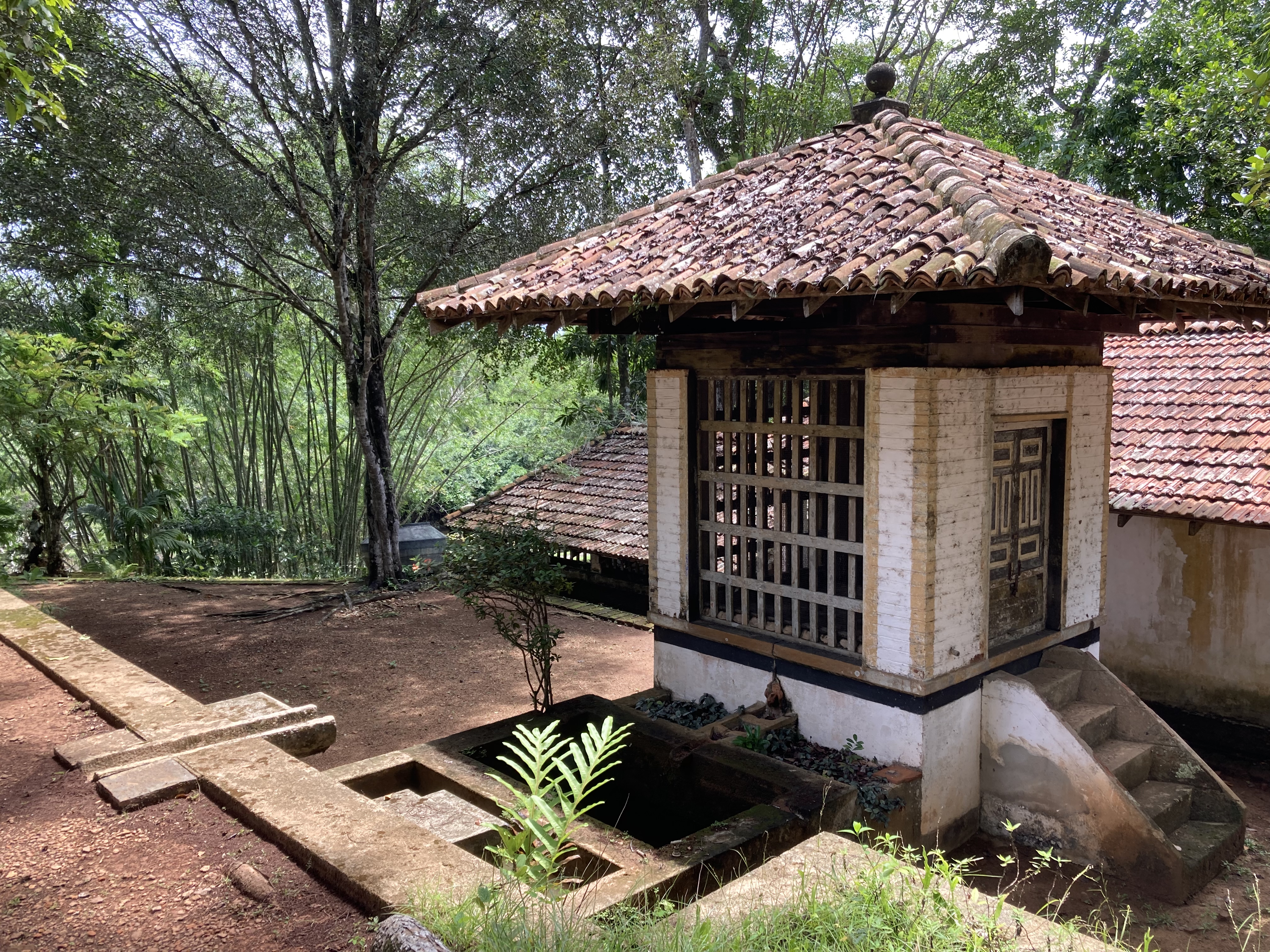
The Hen House, and beyond a huge bamboo and the lily pond
The view from the house down to a lily pond and the Black Portico

The Black Portico is a place where the architect used to sit and admire a view westwards along a straight avenue called the Broad Walk. On the left is the house in the trees, and on the right, paddy fields and beyond them the lagoon. In the foreground is a bridge, then an island with sculptures and a walkway. It is surrounded by ferns and water lilies.

The view along the Broad Walk, with bridge, island and lily pond in front

Walking along the Broad Walk, the views are to your right, across the paddy fields and out to the lagoon, known as Dedduwa Lake. Old frangipani trees line the way, and the shoreline is decorated with a balustrade and classical vases.

Frangipani and paddy fields

You can approach the lagoon from the Broad Walk to a paved area known as the Water Gate (5). You might catch a glimpse of a leopard statue or a large stone ball on the water’s edge.

A view near the Water Gate, enhance by a classical balustrade

When you get to the end of the Broad Walk the path turns slowly to the left, bringing you up wooded steps and back towards the house.

Here there’s a little shelter known as the Blue Pavilion (6) which looks west to an area known as the Field of Jars (7). It’s said there are six jars here, plus a reflective pond and a well with an elegant wrought iron cover.

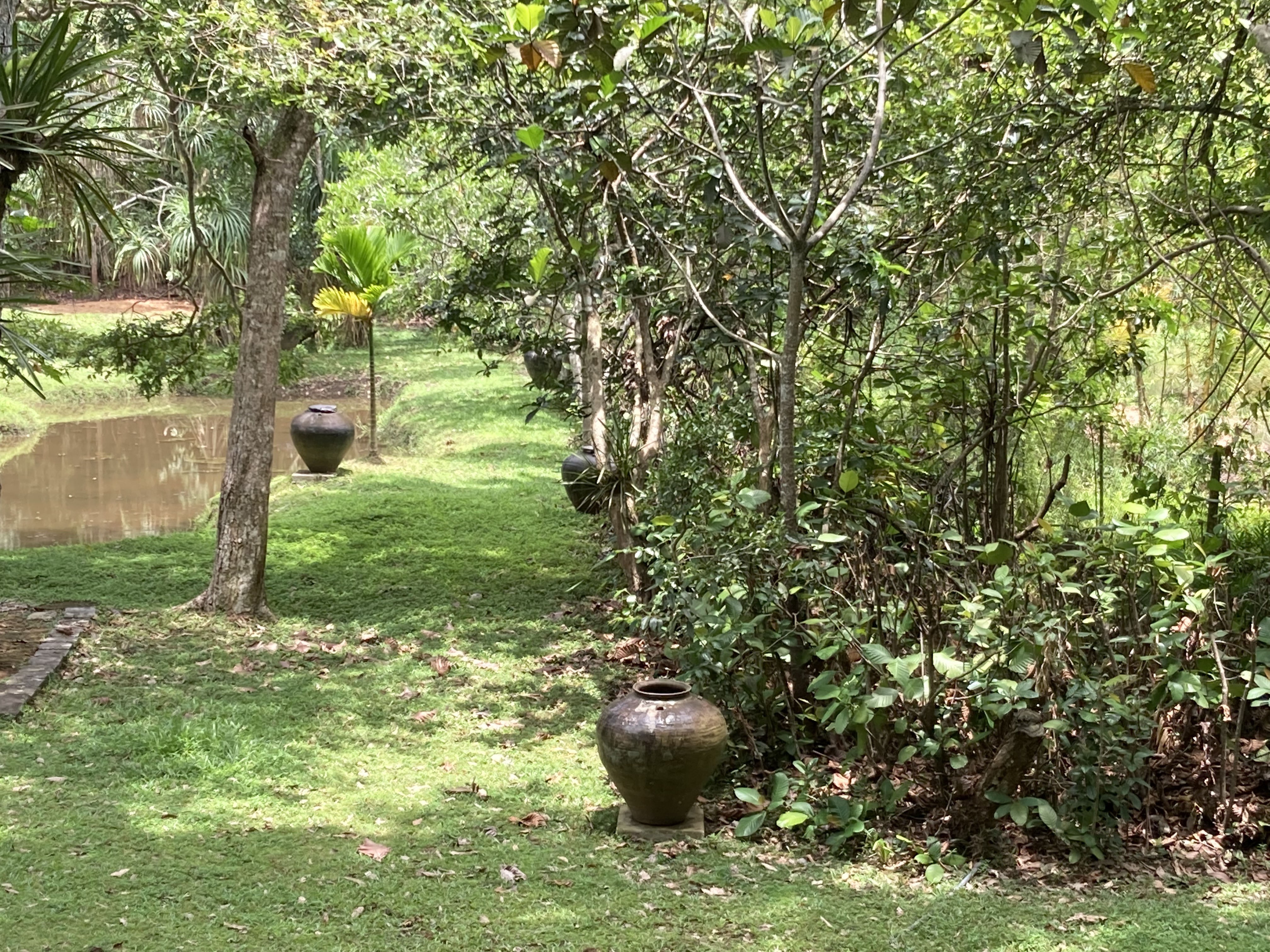
The well marks the beginning of the Field of Jars
The Field of Jars and a reflective pond

From here the tour takes us to the Small House (8), which stands on the corner of the drive where we came in. From this side we see the stairs and the wrought iron railing, while to the right there is the entrance to the veranda which takes us across a sunken lane to Cinnamon Hill (9).

The Small House, used for guests upstairs, and below garden tools and office

Back in Geoffrey Bawa’s day, Cinnamon Hill (9) was marked by an ancient Moonamal tree (Minusops elengi) and a Ming vase. Today the old tree is gone and has been replaced by another, but the vase remains.

Cinnamon Hill, a Chinese jar on the horizon

Walking over the hill, named after an old cinnamon plantation, the lagoon becomes visible on the southern side. Here cows help keep the grass short, accompanied as is traditional in Sri Lanka, with an egret or two. And to the right side, one of several brick towers supports a windmill used for raising water (10).

Cow plus egrets
The Windmill Tower, and beyond the lagoon to the south

Then at the far end of the garden, what were once described as ruins have been transformed into picturesque chalets (11) that are available to rent out. They enjoy the view toward the lagoon.

Chalets

Heading back to the house, the tour takes us to the Northern Terrace (12). It is here that the large old frangipani tree gives us the view of the lake and far shore through its branches.

Bawa built the terrace to create a space on this side of the house to enjoy from the living room windows and space north of the house. And he embellished the view with one or two Roman statues of naked youths to give a classical and homoerotic atmosphere.

The windows that get these views are the north facing ones in Bawa’s former living room. Those facing west give entry to a conservatory with views of the forest trees.

North facing windows from Bawa’s living room

The living room reflects Bawa’s taste in the garden. Muted natural tones and the contrast of black and white, with little in the way of bright colour. Here polished brown concrete floors match the antique Burgher furniture and contrast with the white walls and fabrics.

Bawa’s living room and the west facing conservatory

Bawa’s bedroom and private rooms are not open, but he had a private enclosed pool and a small terrace where he had his breakfast.

It is said that Bawa also carefully considered the view from this table, to the south towards Cinnamon Hill. In Capability Brown fashion, he had the hill lowered and a country lane sunk down so as not to interfere with the vista across the water to a resplendent white Buddhist temple. Unfortunately, the temple is now hidden by trees.

The vista from Bawa’s breakfast table, the Buddhist temple hidden by trees

Some plants

I cannot finish without mentioning a few plants you can see at Lunuganga. Firstly the pinky blue water lily that is the national flower of Sri Lanka, that abounds in lily ponds by the Black Portico.

The flower of Nymphaea nouchali, the national flower of Sri Lanka

And everywhere in Sri Lanka you can see the largest fruit in the world: Jackfruit, which may weigh up to 55kg. It makes and good curry if picked before it’s ripe and has large and tasty seeds which are also edible. When ripe it is sweet but I have never had that in Sri Lanka, although it is popular in Thailand.

Sri Lankans say that cutting down these trees is illegal in their country as destroying it threatens to starve the Sri Lankan people.

The Jackfruit tree, Artocarpus heterophyllus

Creeping over slightly shaded damp stonework in Sri Lankan gardens you might find Episcia cupreata, the flame-violet. It has charming patterned leaves and the bright scarlet flowers that are hard to forget.

Episcia cupreata in the Gesneriaceae, the family of Saintpaulia African violets

Planted just to the west of the house is a Ceylon ironwood tree, which has a great religious significance in Sri Lanka, and under which several Buddhas are thought to have achieved enlightenment. And there is evidence it was widely planted around ancient Buddhist sites such as Dambulla, Ritigala and Kandalama and still survives there.

Ironwood is the national tree of Sri Lanka. It is graceful with reddish pink branches of young leaves and a fragrant white flower. The wood is incredibly dense and hard.
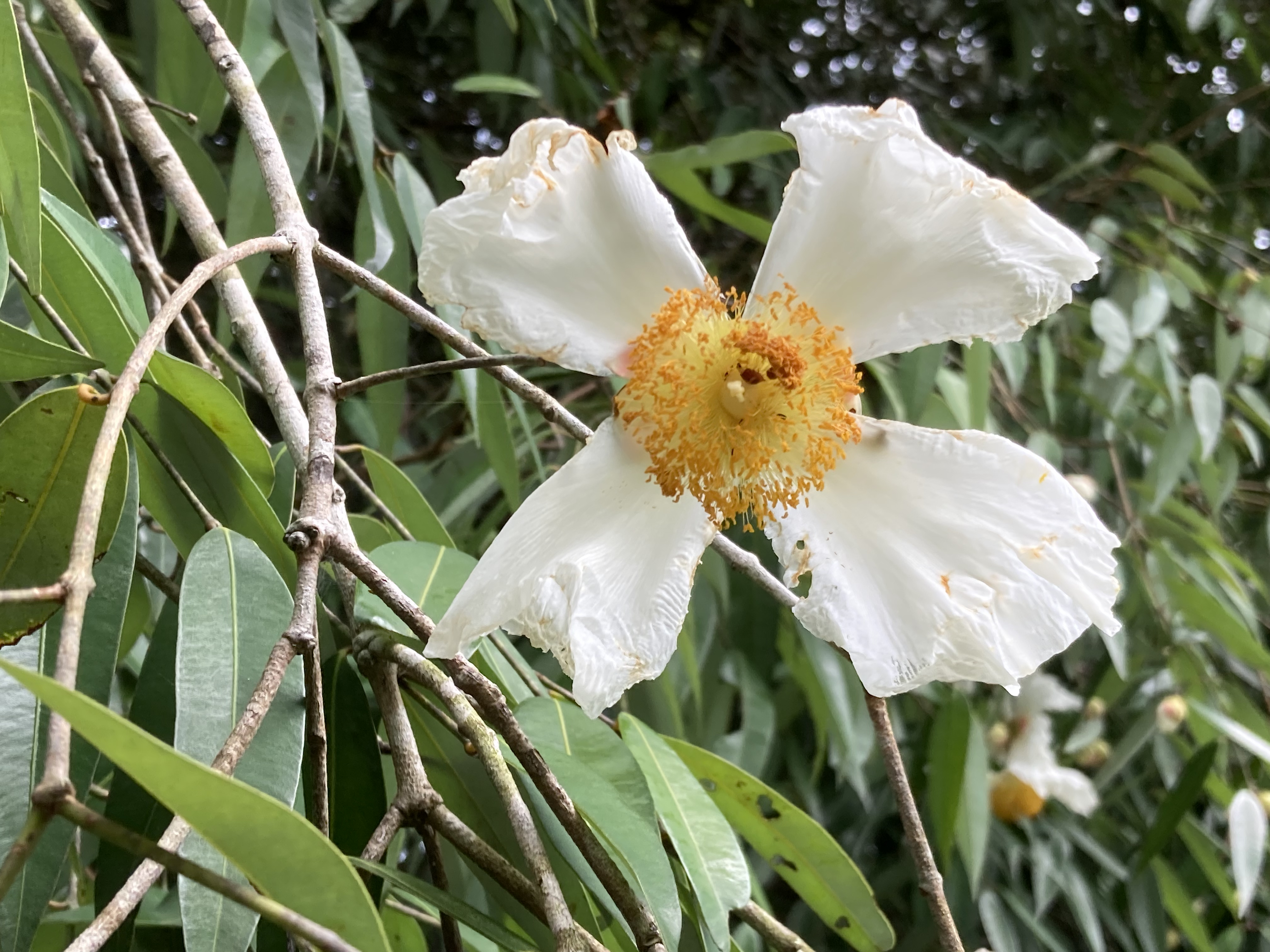
The flower of the Ceylon ironwood tree, Mesua ferrea

Also in the woodland surrounding the house is the large yellow-flowered shrub Dillenia suffruticosa. It has various medicinal uses and the leaf can be used for holding food. But the plant is also regarded as an invasive weed.

Dillenia suffruticosa, a large shrub known locally as para

Dotted around Lunuganga are several huge basket ferns (Drynaria sp.) which are highly architectural plants. This one sits magnificently on a rock in woodland, while others may clasp the trunks of trees.

A basket fern, possibly Drynaria quercifolia, with its two kinds of fronds

Useful references:

Garden website: lunuganga.com

Book: Lunuganga by Geoffrey Bawa, Cristoph Bon and Dominic Sansoni. Marshall Cavendish Editions, 2006.
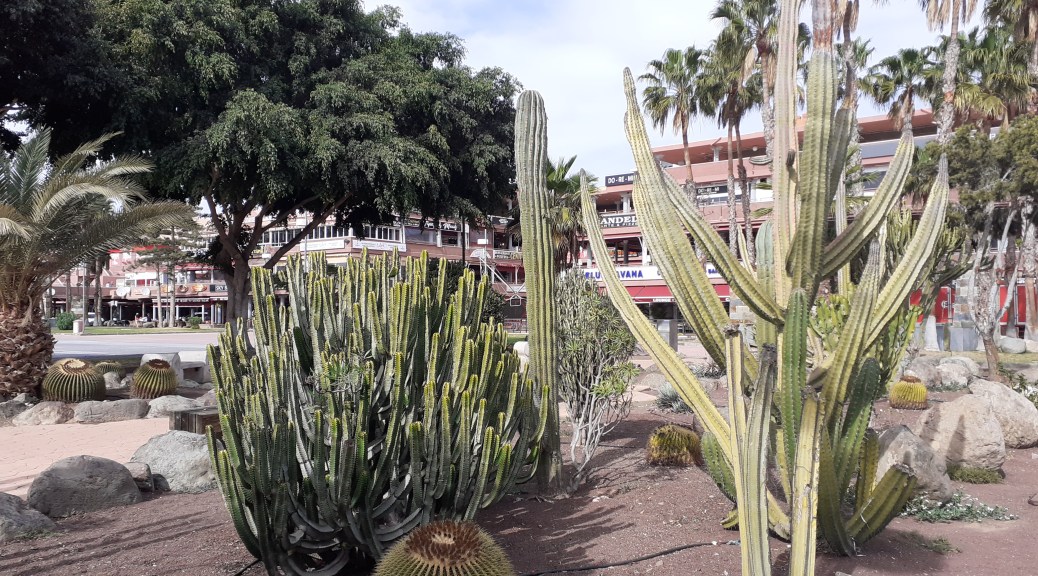
Some subtropical plants from the Canary Islands

I spent a week on Gran Canaria over New Year in 2020. I didn’t do much apart from appreciating the sun and warmth. But I couldn’t help but notice these lovely plants in gardens around Maspalomas.

Just in the hotel grounds there were a few things to grab my attention. Here’s a beautiful aloe which I think it would be unwise to attach a name to – there seem to be too many to choose from!

An aloe with lovely lemon yellow flowers

I looked through a good number of pictures on the California-based Dave’s Garden website where there a host of postings on the different kinds of aloes, all by Geoff Stein. Rather than giving me any confidence in an identification, I realised it’s a very diverse genus with all sorts of hybrids.

These stems were about 1 metre high and the flowers were a gorgeous lemon yellow. It could well be just Aloe vera, the widely grown medicinal plant which is unlikely to flower if grown indoors.

Aloe flower up close

Also in the hotel garden there were the classic shrub Hibiscus rosa-sinensis, which is too pretty to be called the shoeblack plant, which is what one website calls it. Let’s just call it the rose of china!

The classic Hibiscus rosa-sinensis flower

Nearby another shrub which I didn’t recognise was the yellow flower Turnera diffusa, with its plicate leaves. It’s in the passion flower family, the Passifloraceae, and one of its English names is damiana. I didn’t try tasting the leaves but they are supposed to be spicy and this plant has some useful medicinal properties. It has been shown to be protective against gastric ulcers and even an aphrodisiac.

Turnera diffusa

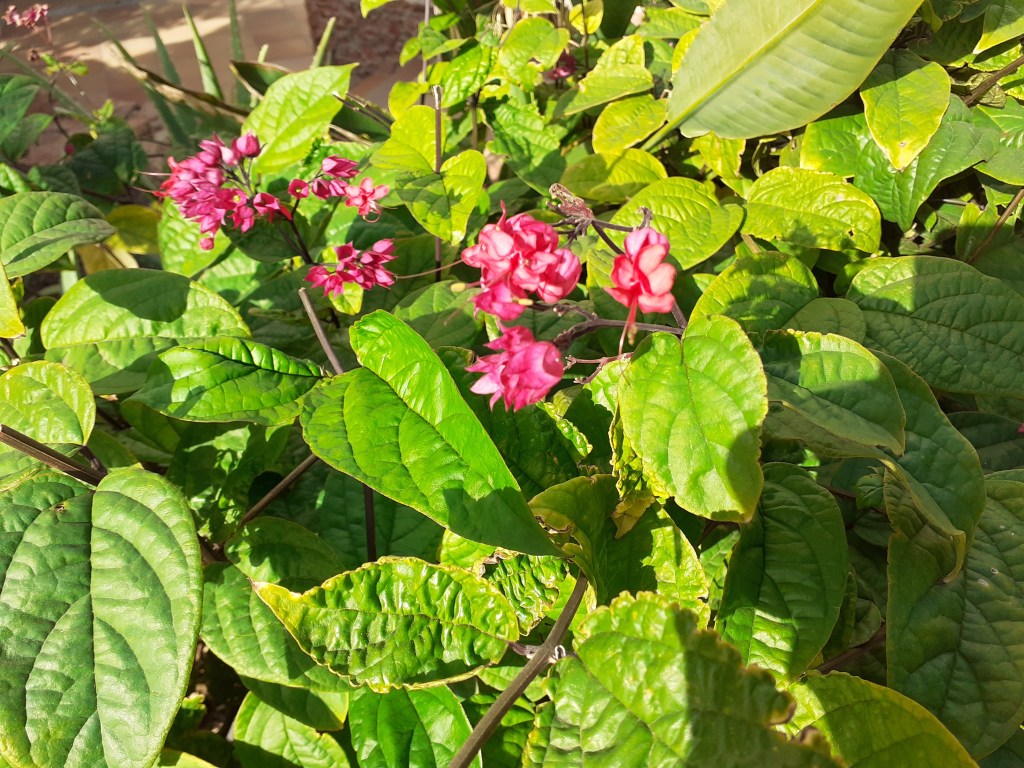
And this pink clerodendron was also in the garden, a shrub about a metre high. I didn’t recognise it as a clerodendron, which is familiar to me as a tree planted on Hackney streets (probably C.bungei). It flowers in the late summer and has thick evergreen leaves.

Clerodendrum x speciosum – a small shrub or climber

What’s worth noting about clerodendron, which belongs in the mint family – Labiatae or Lamiaceae as it’s now called – is that the flowers have a calyx of coloured sepals. This then produces a flower which is zygomorphic with very prominent stamens. In this case the flower petals and the sepals are almost the same colour so difficult to distinguish. This is not always so, the calyx can be much paler. Clerodendrons can then go on to produce usually dark purple berries which are still surrounded by the pinkish sepals.

Clerodendrum x speciosum flowers

Out and about on the streets of Las Palomas there was Lantana camara being grown as a hedge. It can be prickly and it is widely grown in greenhouses in UK butterfly farms – if such things still exist. No doubt it produces plenty of accessible nectar for such insects. It is in the verbena family, Verbenaceae, not at all hardy and is apparently toxic.

Lantana camara

Another hedge was this rather unruly plant – Acalypha – which was about 2 metres tall. It’s in the euphorbia family, Euphorbiaceae, and is noted for its variable coppery or red leaves. In English it’s called copperleaf or Jacob’s coat.

Acalypha amentacea or A.wilkesiana grown as a hedge

If there is a centre to Maspalomas it is the Yumbo Centre which is a sort of 1970s concrete shopping mall with a garden at its centre. Here there’s some grass, a few sculptures and rocks plus a planting of palms, succulents, cacti and exotic trees.

Gardens in the Yumbo Centre feature succulent euphorbias, palms and exotic trees

Always dominant are the beautiful Washingtonia palms which in fact come from Mexico but are most famous for me as the trademark of Los Angeles. They became an icon when painted so often by David Hockney back in the 1970s.

The Mexican fan palm Washingtonia robusta

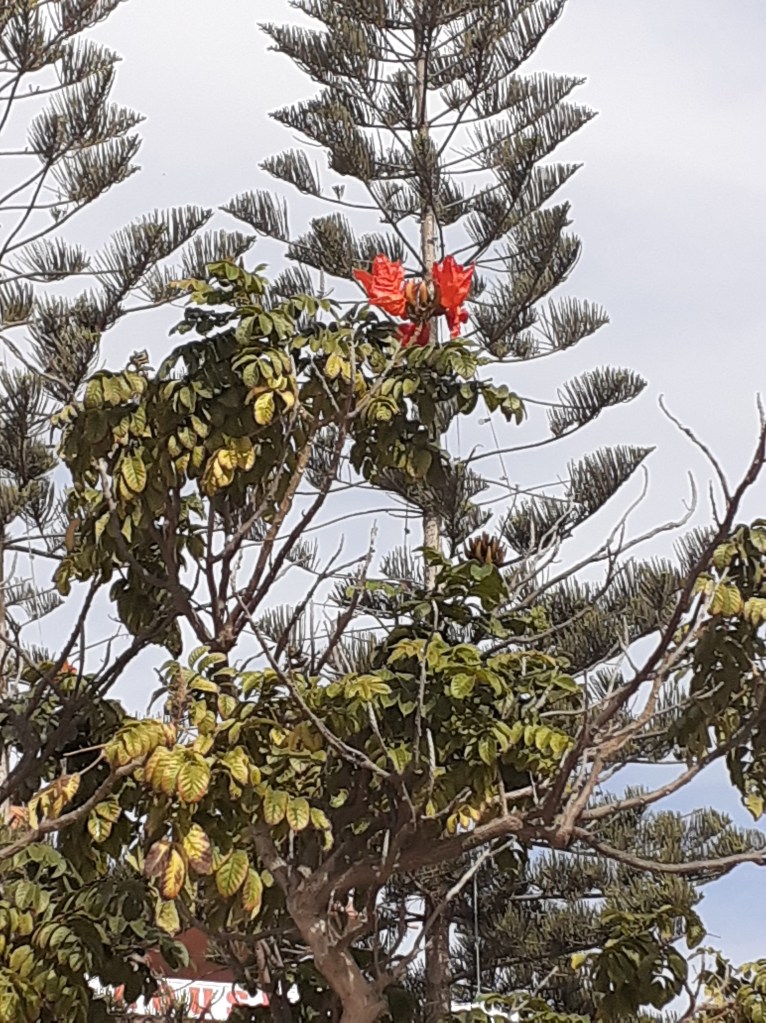
There’s also Norfolk Island pines, Araucaria heterophylla, commonly planted on the island, and I think the African tulip tree, Spathodea campanulata. It’s flowering but looking a bit dried up – probably a result of incessant wind at this time of year.

Exotic trees in the Jumbo Centre gardens: Norfolk Island Pines and African tulip tree

Out on the streets I noticed this recently plant palm tree, which I think is quite attractive. It has plumose leaves – that means the leaflets are attached to the spine of the leaf at several angles, not just at 180 degrees producing a flat leaf like a date palm.

I think it’s a foxtail palm – Wodyetia bifurcata

I’ve always found identifying palms difficult as we see so few of them in the UK, so I was happy to find this US website IDTOOLS.ORG which helps you to identify cultivated palm trees. Using this and a few other websites I’m convinced this palm is the Australian foxtail palm, Wodyetia bifurcata, which is pretty unique.

Plumose palm leaves of Wodyetia bifurcata, perhaps like a fox’s tail

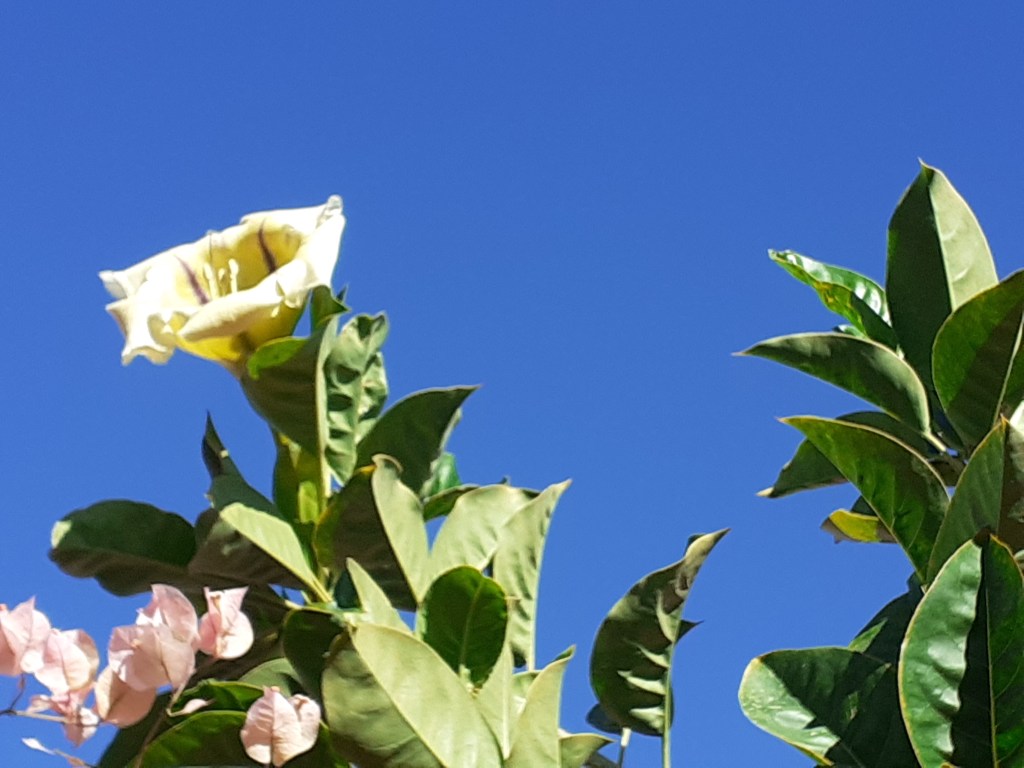
And if you like something a bit spectacular and a little gross, here are the flowers of the cup of gold vine, Solandra maxima. They are about 20cm across! This was growing as a climber at a garden edge with bougainvilleas. Apparently it comes from Mexico and has hallucinogenic properties like some other members of the potato family, the Solanaceae.

Solandra maxima: a climber with massive flowers
Solandra with bougainvillea flowers

Ten top trees for a small garden

Planting a new tree in a small garden is not a decision you take every day, every year or even every five years. Having recently decided to remove a very large and over dominant Japanese cherry tree from my garden, I now face that decision. So here are my thoughts on the subject.

Height and spread: My last cherry tree – Prunus shirotae Tai Haku – was planted in about 1995 and in almost 25 years grew to about 6-7 metres tall with a spread of at least 5 metres. I think I don’t want such a large tree again, but in another 25 years I might be past caring! The garden probably won’t be my major concern then if I’m still around.

Reasonably though, I think I can say that I would not mind another tree that grew to 8 metres in 25 years provided it’s spread was less. But if I’m going to buy it at a reasonable size – and I think I will need to in order to quickly restore my garden – then it shouldn’t grow too fast. A reasonable aim would be four metres or so in 10 years and a spread of no more than three.

Trees I’m ruling out because they are a shade too big include the handkerchief tree (Davidia involucrata), the tulip tree (Liriodendron tulipifera) and stewartia .

Do I want red leaves, green, yellow, blue or silver? I think red leaves on what is probably going to be the largest plant in the garden might be oppressive. So I’m thinking green to yellow. Silver is nice and blue is great.

Anyone choosing a tree needs to think about their site and whether it will be suitable for the chosen tree. I have a sunny site and well drained soil, so I’m lucky, but there is a slight question of exposure to north winds. Poor drainage and shade might make a choice more difficult.

Here’s the ten trees I’m looking at in detail:

1. Japanese maple eg Acer palmatum Seiryu
2. Cornus kousa var chinensis
3. Snake bark maple Acer capillipes
4. Rowan Joseph Rock
5. Amelanchier lamarckii or Amelanchier alnifolia Obelisk
6. Betula jacquemontii
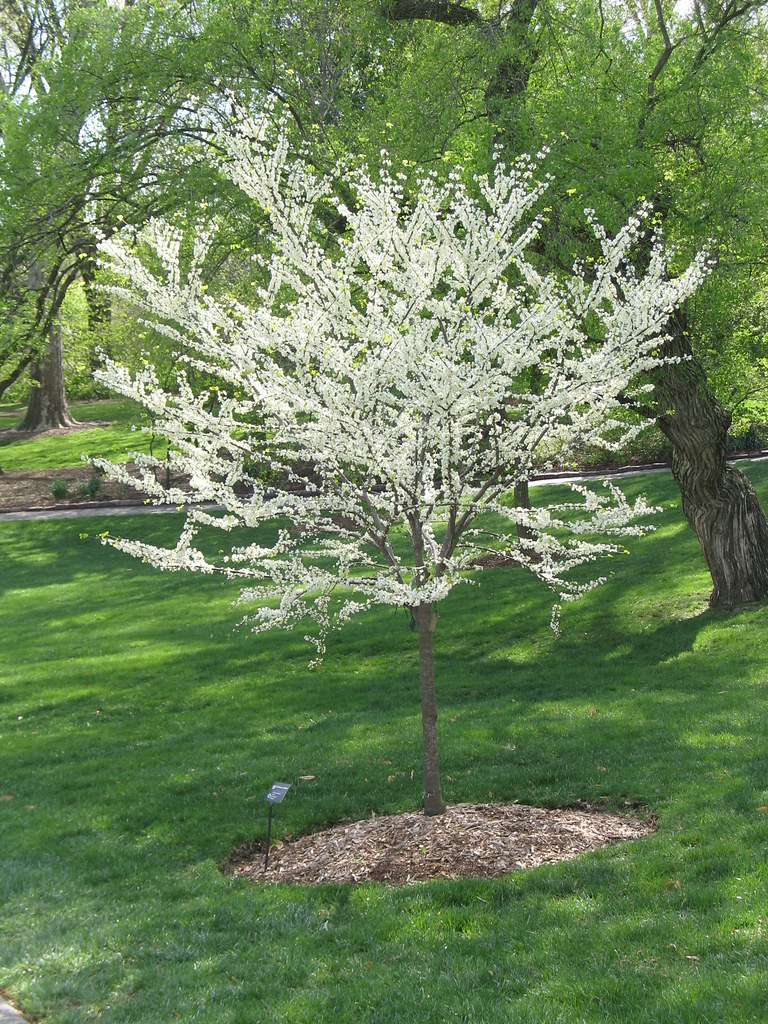
7. Cercis eg Cercis chinensis Avondale
8. Magnolia
9. Styrax japonicus
10. Acacia baileyana purpurea

1. Japanese Maple

Bearing in mind my size requirements, there are many which might fit, and many which might remain too small. Those that fit my size requirements include Seriyu, Sango-kaku and Red Wood.

Seriyu

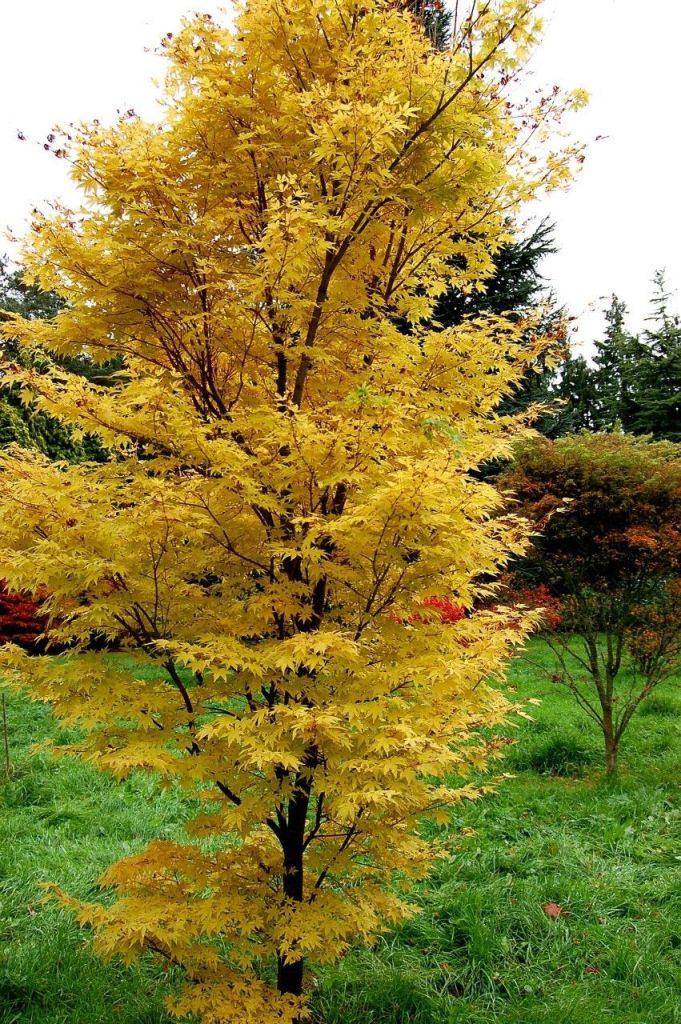
Seriyu is part of the dissectum group with very finely divided leaves. It is relatively tall – an October 2016 article in The Garden magazine says 7m tall with a spread of 4m, but there is no age specified. The plus points of this tree are its fine shape and elegant leaves which colour up in autumn.

Seriyu tree Image: Gardening Express
Autumn leaves of Seriyu . Image: Gardeners Dream

Sango-kaku

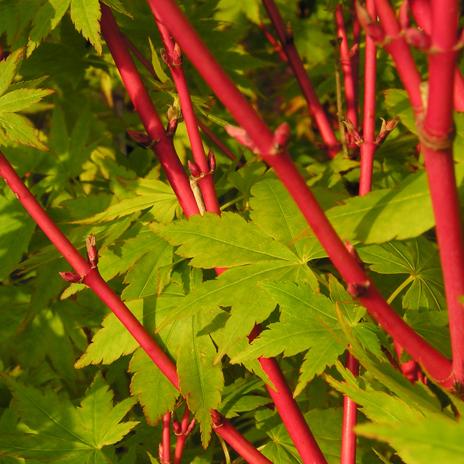
My own experience of this tree suggests it will reach about 6-7m in 20 years with a spread of perhaps 4m which can be curtailed by pruning. It has fine yellowish foliage in the autumn, its young shoots are red and the tree has an elegant profile.

Sango-kaku Image: Tim Gainey

Red Wood

This is an improved version of Sango-kaku, according the 2016 article in The Garden. It has similar foliage but perhaps redder bark and is perhaps slightly smaller. Its height is given as 6m with a spread of 4m.

Red Wood . Image: Pintrest
Red Wood stems and leaves . Image: Katsura

2. Chinese Dogwood

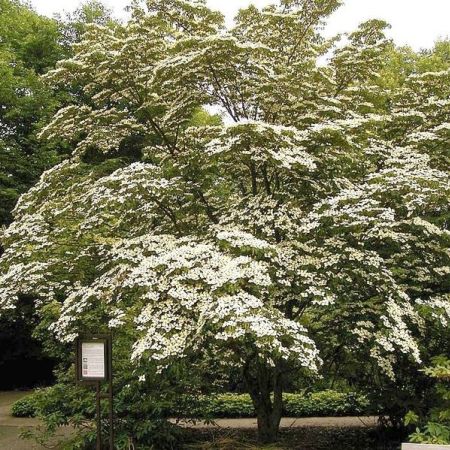
Cornus kousa v. chinensis Image: Trees Direct

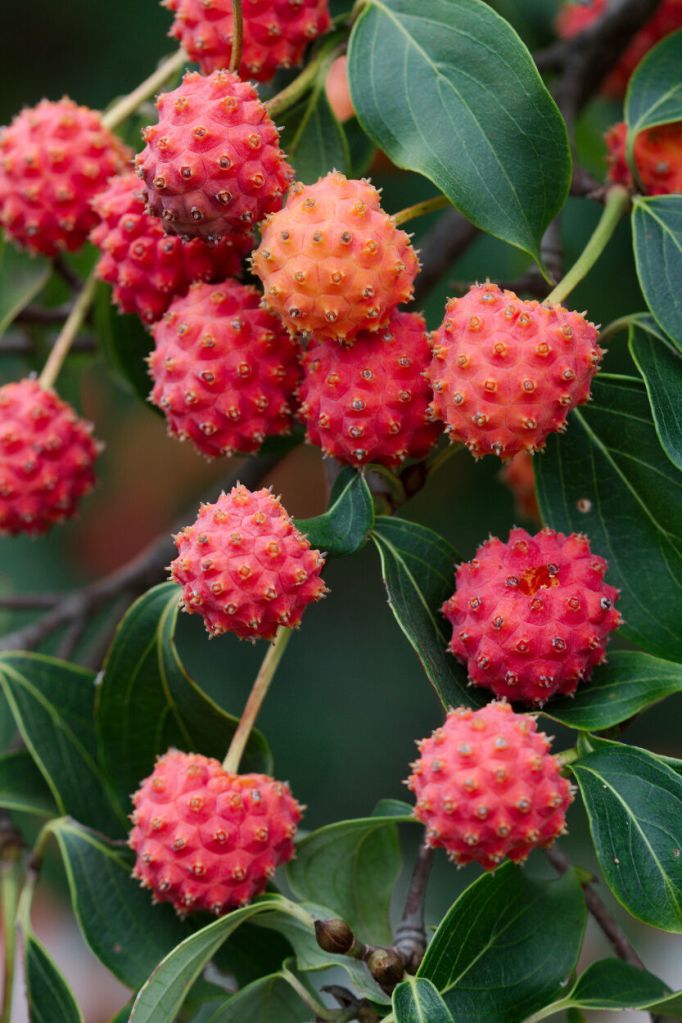
Also known as Cornus kousa, this small tree is variously quoted at 3 to 4 metres tall at 20 years with a 3 metre spread. It has a lovely form and fine flowers in May-June in the UK. It also bears a red fruit and has good autumn colour.

The tree comes in various forms, the standard being Cornus kousa v. chinensis. The variety China Girl may be slightly different but I’m not sure how. It needs a sunny site and well drained soil.

Cornus kousa China Girl . Image: Ornamental Trees
Fruit of Cornus kousa . Image: Exotic Cactus Collection

One of the things that puts me off this tree is the fact that I know one of my friends treasures it and has it in her garden!

3. Snake Bark Maple

This is an unusual tree which one doesn’t see often. It’s chief attraction is the ornamental bark, but the leaves are also an interesting shape and turn red in the autumn.

There are several species which appear under this English name: Acer capillipes, A. davidii, A. rufinerve and A. tegmentosum for example. All have similar attractive bark but in terms of size, you need to be careful about what you are buying as they may vary.

UK retailer Ornamental Trees lists the height of Acer capillipes as 5m with a spread of 4m in 20 years, A. davidii as the same, and A. rufinerve as 7m x5m. It does not sell A. tegmentosum, but Burncoose Nurseries lists this species as 10m x 8m.

I have seen a snake bark maple growing in my locality and it was a well mannered tree, not growing too fast or out of shape. My bet would be that this was A. capillipes or A. davidii.

Acer rufinerve . image: Tree Shop
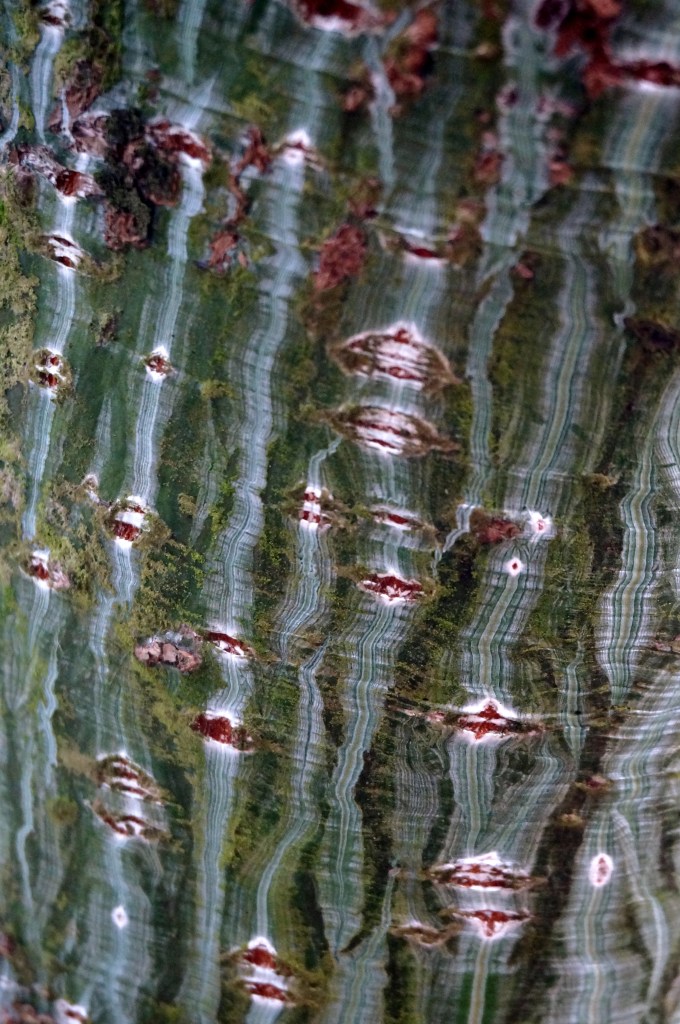
The bark of Acer capillipes . image: Travel with intent

4. Rowan Joseph Rock

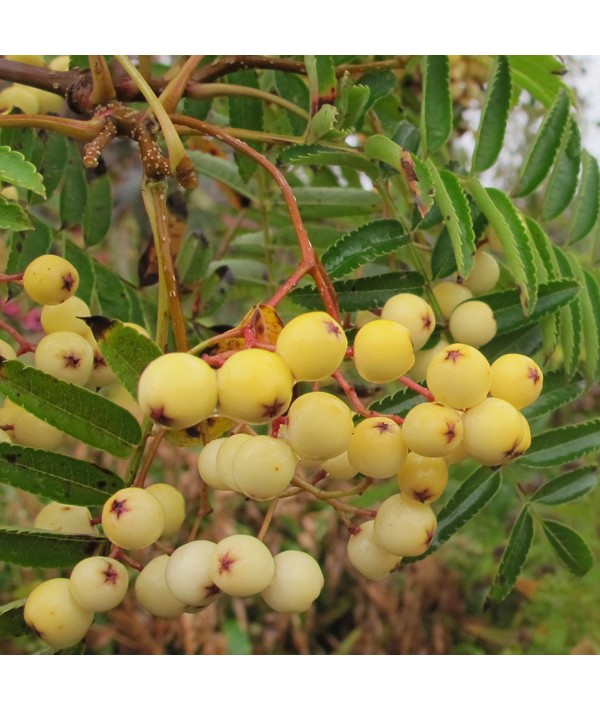
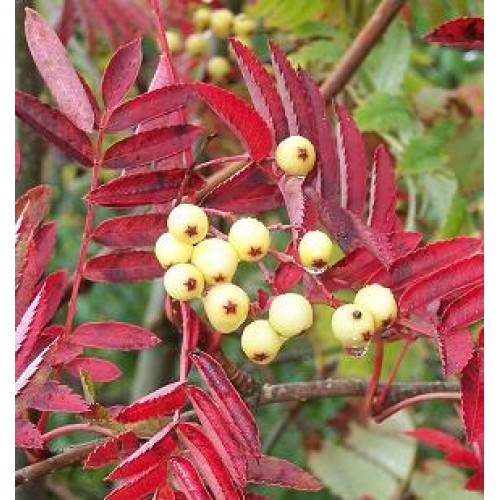
Of all the many varieties of rowan trees (Sorbus) I think this is among the best. Its attractions are its leaves which colour up nicely in the autumn, its yellow berries and of course its spring blossom.

Ornamental Trees gives its height and spread as 6m x 4m in 20 years.

Sorbus Joseph Rock . Image: Langthorns Plantery
Sorbus Joseph Rock . Image: Pinterest

I will say no more as I know from experience it does not like the sandy soil and dry summer climate of my garden in Hackney. In the early 1990s I planted a 2m tree which seemed to get smaller by dying back each year. I then tried grafting stems onto other Sorbus rootstock. I produced a decent looking young tree but still it didn’t grow.

So if you are planning to plant it, then clay or higher rainfall may be what it likes. Having spent several years of failure, I don’t think I’ll try giving it space in my garden again.

Joseph Rock with autumn colour . Image: Scotplants

5. Amelanchiers

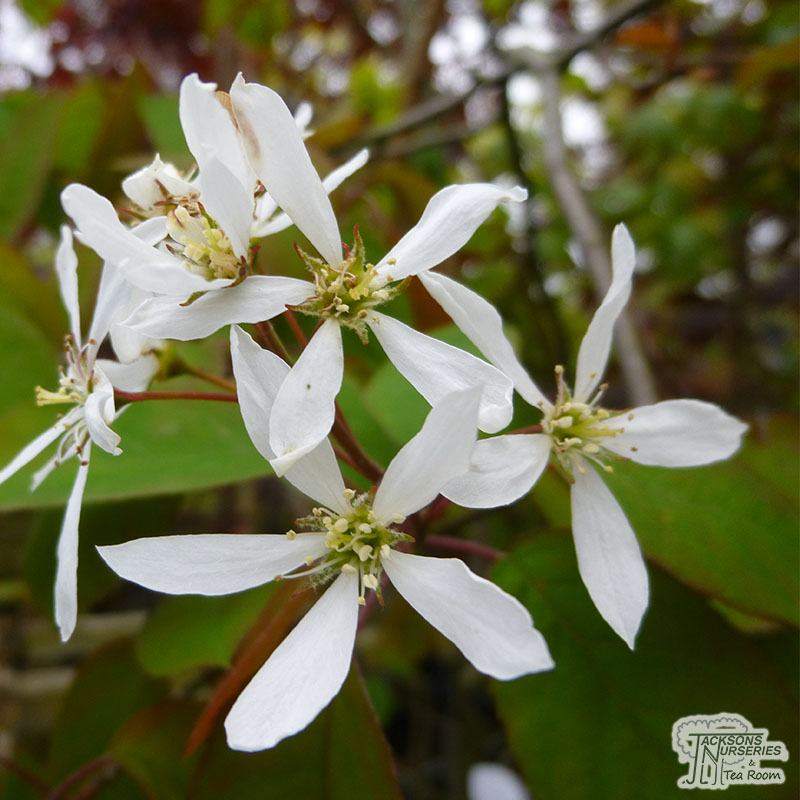
Amelanchiers are small trees or shrubs with lovely white (or pinkish) flowers in spring, bright autumn foliage and small berries which are loved by birds. They are native to North America and there are many species – for example: A. canadensis, A. lamarckii, A. x grandiflora and A. laevis, plus many named varieties.

Amelanchier lamarckii. Image: Jacksons Nurseries

English names include Snowy Mespilus, Serviceberry and Juneberry. You can buy them as shrubs or trained trees up to 2m in height. They are reported to be tough and tolerant of a wide range of conditions. Their natural habitat is as under shrubs in forests, and the Royal Horticultural Society (RHS) says they look good dotted around in a woodland garden.

Amelanchier x grandiflora Robin Hill. Image: Caragh Nurseries

I am not sure, however, that the growth habit of these trees will suit everyone. Although you can buy them as trees, they look like they are apt to become many stemmed shrubs. I can quote from the RHS website which says: “As a small specimen tree  A. lamarckii is agreeably manageable, reaching 4-5m in 10 years. However it does have a slight drawback in that it does not have a definite habit: it suckers from the base, meaning it will quickly revert to a shrubby, multi-stemmed habit if not pruned to encourage a clean trunk.”

I suspect the same is true of most Amelanchiers. I note that the website of Ornamental Trees – a comprehensive UK tree retailer – notes for all Amelanchiers that you should prune out growth more than four years old to retain shape and vigour. Of course that’s not so applicable to trees!

So I think that you will have to prune Amelanchiers regularly to maintain a clear stem if you want a tree. But if you’re looking for a big decorative shrub/small many-stemmed tree they are ideal.

Amelanchier canadensis . Image: The Times

Perhaps a slight exception may be A. x grandiflora Robin Hill which may work as a tree. Ornamental Trees describes this variety as having a more upright habit than most Amelanchiers. There are also plenty of images on the web which suggest it can be kept as a tree.

Amelanchier x grandiflora Robin Hill. Image: stpaulsgarwood.com
Amelanchier x grandiflora Robin Hill. Image: Connon Nurseries

6. Himalayan Birch

Birches are lovely trees and are extremely fashionable, which means of course that they are everywhere. They don’t seem to mind growing in London even though you might think it is getting too warm and dry for them.

I have chosen to look at the Himalayan birch, Betula jacquemontii, as it seems to be smaller that the magnificent Betula pendula – the UK native silver birch. Nevertheless, the RHS lists its maximum height as 12m and its spread as 8m but it would take over 20 years to get to this size.

The bark of the Himalayan birch is even whiter than the silver birch, but it does not have the same weeping habit. Many-stemmed forms of all birches are also popular and have the advantage of maximising the attraction of the stems.

Himalayan birch trees Images: Van Den Berk

7. Judas Tree

The Judas Tree, Cercis siliquastrum, produces a bold statement in spring with strong purple flowers before its leaves develop. I’ve seen it in mediterranean climes where the blossom can be stunning. They are widely planted as street trees in some parts of the south of France.

Cercis belongs in the pea family, Fabaceae, and it does produce pods after flowering. Other cultivated species include C. chinensis and C. canadensis.

The Royal Horticultural Society says some C. siliquastrum can get to 12m high and an 8m spread, but I have never seen one that large. So be wary what you buy. To be sure of a small tree there is C. chinensis Avondale which grows to a maximum of 4m with a spread of only 2.5m.

Other cultivars worth noting are the purple-leaved C. canadensis Forest Pansy, which only grows to about 2m high and 2m spread. Its leaves are large and beautiful and is grown more for these that the flowers, which are less conspicuous. Then there is C. canadensis Ruby Falls which has purple leaves, is described as having a weeping habit and again rarely gets taller that 2m. Its flowers are larger than those of Forest Pansy.

Cercis silquastrum blossom Image: Ornamental Trees
Leaves of Cercis chinensis Avondale Image: Van den Berk Trees
Cercis chinensis Avondale . Image vdberk.nl

And then there’s the C.canadensis alba form with the white blossoms. Apparently this can get up to 10m so a substantial tree.

Cercis canadensis alba . Image: flickr.com

My impression of Cercis from looking at images on the internet is that if you go for a multi-stemmed plant then you are going to end up with a thicket. But if you trim down to a single trunk then your will get a small tree which is a very spreading lollipop shape.

8. Styrax japonicus

Styrax japonicus or the Japanese snowbell tree is a deciduous tree with white flowers that grows to about 10m high and 4m spread in 20 years, so it is a little on the large side for my garden. However, it is unusual and elegant with the benefit of many white blossoms in May, probably lasting longer than those of a cherry tree.

Styrax japonicus Pink Chimes Image: Melissa Clark Photography

Styrax japonicus, in the Styracaceae family, comes in many varieties including Pink Chimes above with the slightly pink-tinged flowers. Generally though the flowers are pure white and hang neatly from the spreading branches. In the UK, Burncoose Nurseries has a wide range of varieties, including other species of Styrax.

Hanging white flowers of the Japanese snowbell tree Image: Melissa Clark Photography

It wants full sun and a sheltered position, so it likes a good spot. But it is very elegant and can be controlled by pruning after flowering, the Royal Horticultural Society tells us.

9. Magnolia

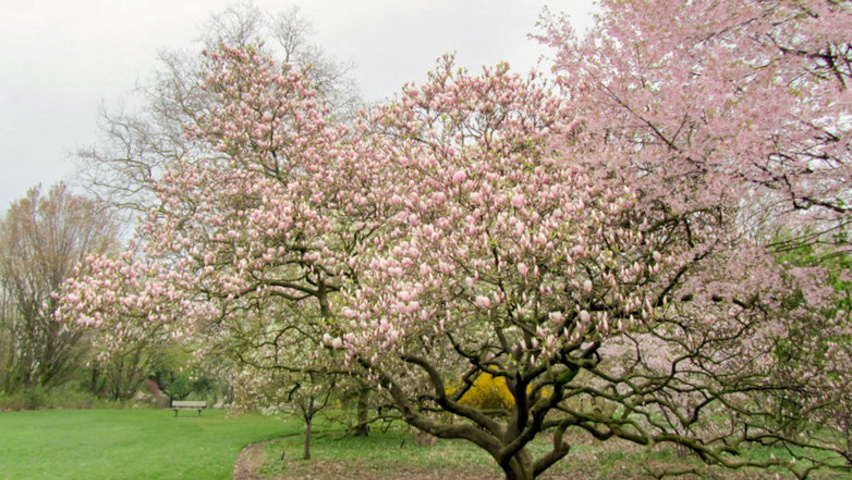
There are so many magnolias it is difficult to know where to start. The commonest one in the UK is M. x soulangeana, of which there are many pure white to pink varieties. All are spring flowering before the leaves develop and the typical look is large tulip-shaped flowers with broad white petals flushed with pink from the base. The trees are deciduous and like a sunny spot.

M. x soulangeana gets big when it gets older – the Royal Horticultural Society says 6-8m in height and spread at age 20-50 years. It’s true. And it will spread if you let it. But it is undoubtedly beautiful and worth considering.

Other smaller varieties include M. x loebneri Leonard Messel. I’ve never seen this more than about three metres tall and it has spidery fragrant pink flowers in the spring. The RHS gives a maximum height and spread of 4-8 metres with a similar spread.

Magnolia x loebneri Leonard Messel . Image: Gardening Express

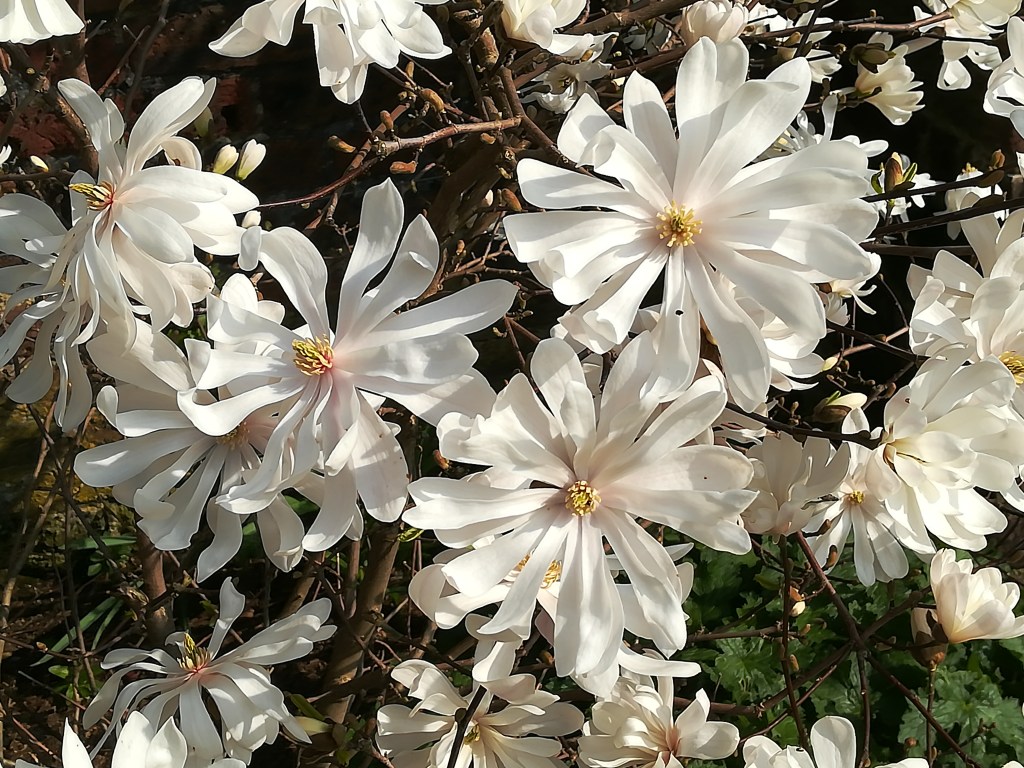
There is also M.stellata Water Lily, but this is up to 2.5m, according to the RHS, so more of a shrub than a tree.

Magnolia stellata Water Lily

10. Acacia baileyana purpurea

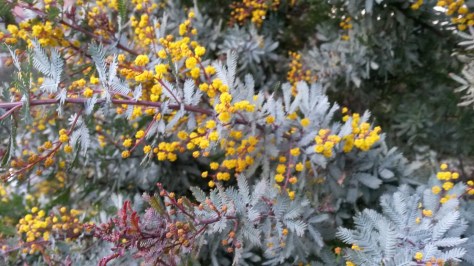
This small acacia, also called the Cootamundra wattle, is notable for its lovely blue foliage which is purple when young. It produces yellow flowers in the depths of winter – January and February – and grows to a height of 4-5m in 20 years with a spread of about 3m.

Acacia baileyana purpurea foliage
Acacia baileyana purpurea in flower

I speak with some experience, having planted one in my south-west-facing front garden 25 years ago. It has been a joy and something passers-by often ask me about.

Acacia baileyana purpurea tree . Image: Dangergarden

I don’t intend to plant another just yet. So no further consideration for me but check it out if it is new to you. My tree is about 4m tall with a 2-3m spread. It attracts a lot of attention from passers by who ask me for its name!

Flowering in January

My small London back garden is north-east facing and on a sandy loam soil. It is about five metres wide, 30m long and fortunately completely walled. I guess I should also mention my front garden which is south-west facing, but that is only about three square metres and is dominated by a small tree and a wisteria climbing the front wall of the house. This is all that I have to make beautiful and what I’m trying to show here is that it is possible to have points of interest all year round.

January is a challenge. It is not the most exciting month of the year but there’s more to see than you might think…

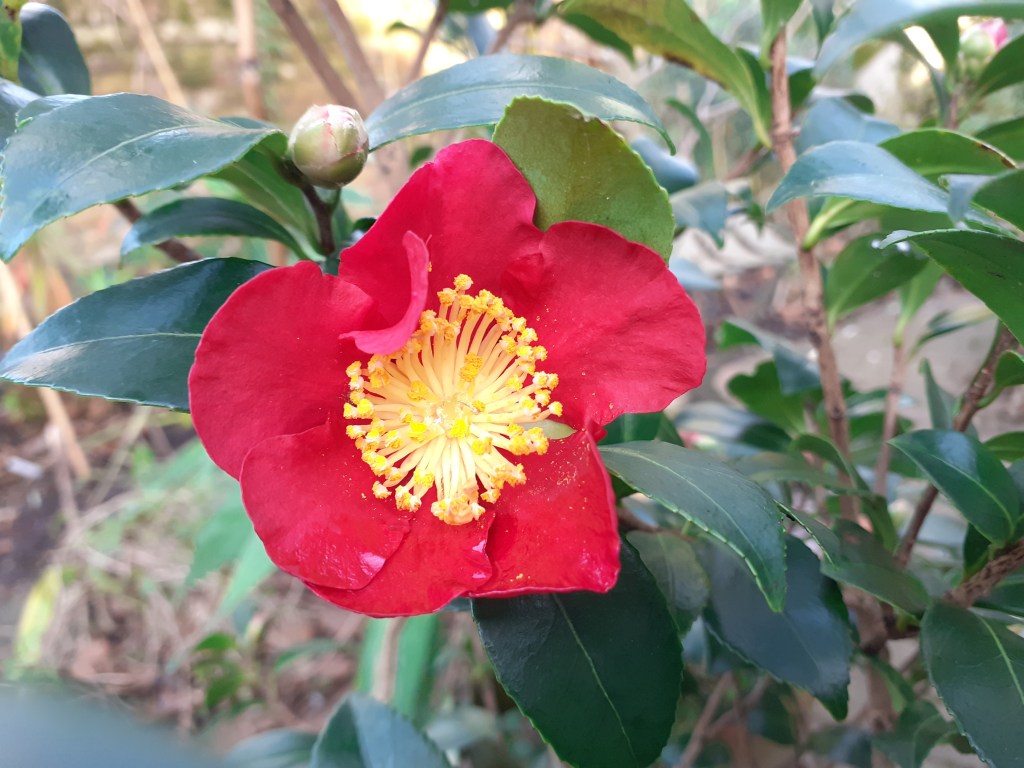
Camellia sasanqua Yuletide on Christmas Day 2019

This is one of the sasanqua camellias that are known for flowering in the autumn and winter. This lovely crimson Yuletide came out last year on Christmas Day and then flowered throughout January. Unlike some other sasanquas, it is good at holding on to its petals.

It is currently in a pot but as it gets bigger it might be better in the ground. My experience is that although my soil is at best neutral and often contaminated with concrete or mortar, with a good mulch of leaf mould or matured woodchip, camellias of all kinds can do well.

Camellia Yuletide in January

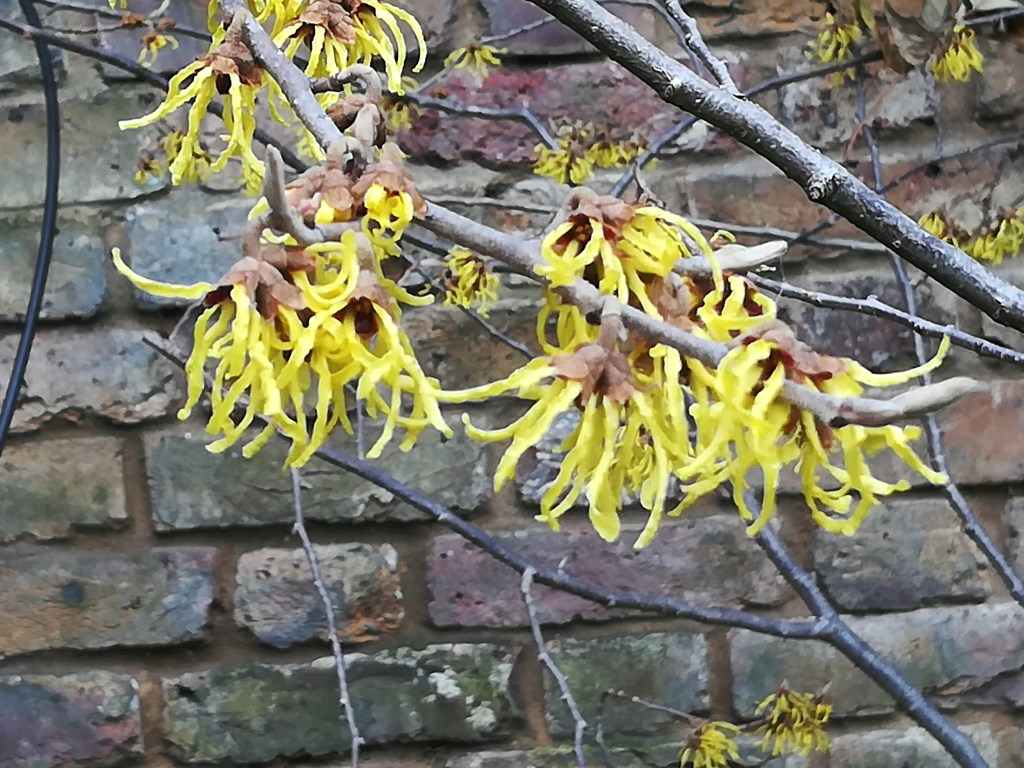
Then there is the witch hazel, Hamamellis x intermedia ‘Arnold Promise’. Its yellow wispy petals are designed to attract insects, though I haven’t seen any visiting them.

Hamamelis x intermedia ‘Arnold Promise’

I’m pleased to have some Cyclamen coum, which flower in the spring rather than the similar Cyclamen hederifolium which is so noticeable in the autumn. In fact, I have planted this only in my front garden which is just a few square metres of south-west facing garden. Everywhere else, the cyclamen are C.hederifolium.

I’m told you can’t grow the two together as the autumn-flowering species tends to take over. My experience is quite consistent with that, and I have deliberately removed C.hederifolium from my front garden.

Cyclamen coum in the shade of my Acacia tree

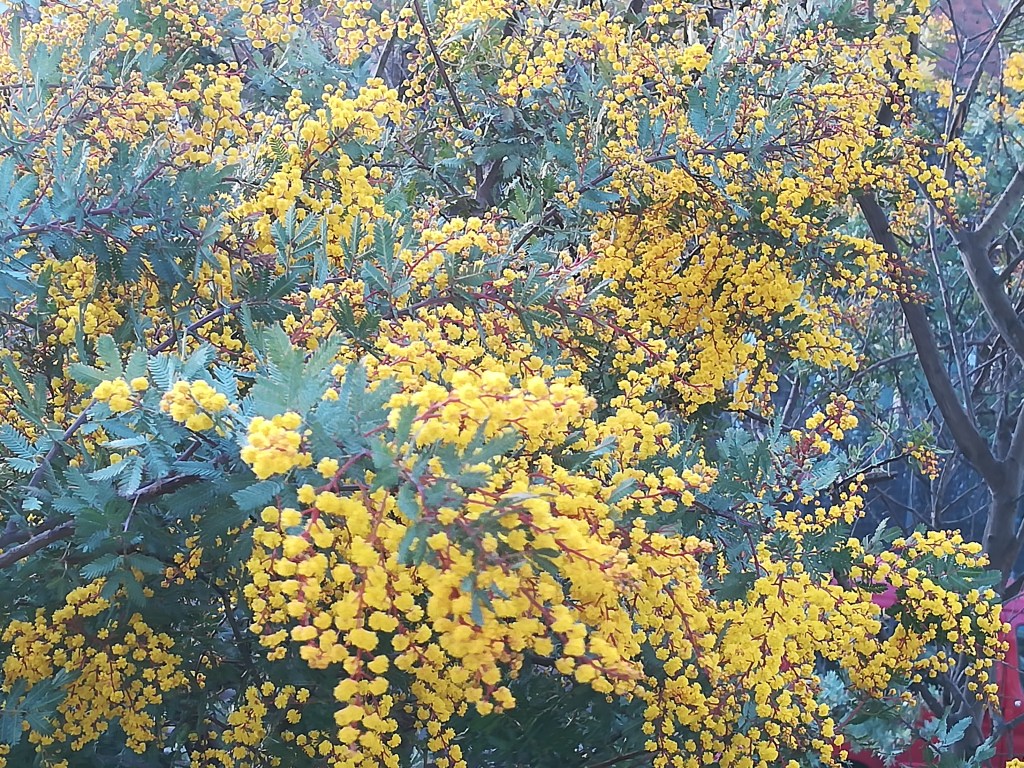
Also in the front garden, towering above the cyclamen, is this acacia which is flowering beautifully this year. This tree is rather splendid and gets a lot of attention from passers-by who constantly ask me for a name. Generally though, this is in the summer when its chief attraction is the purple young growth nestling against the older blue-grey leaves.

dig

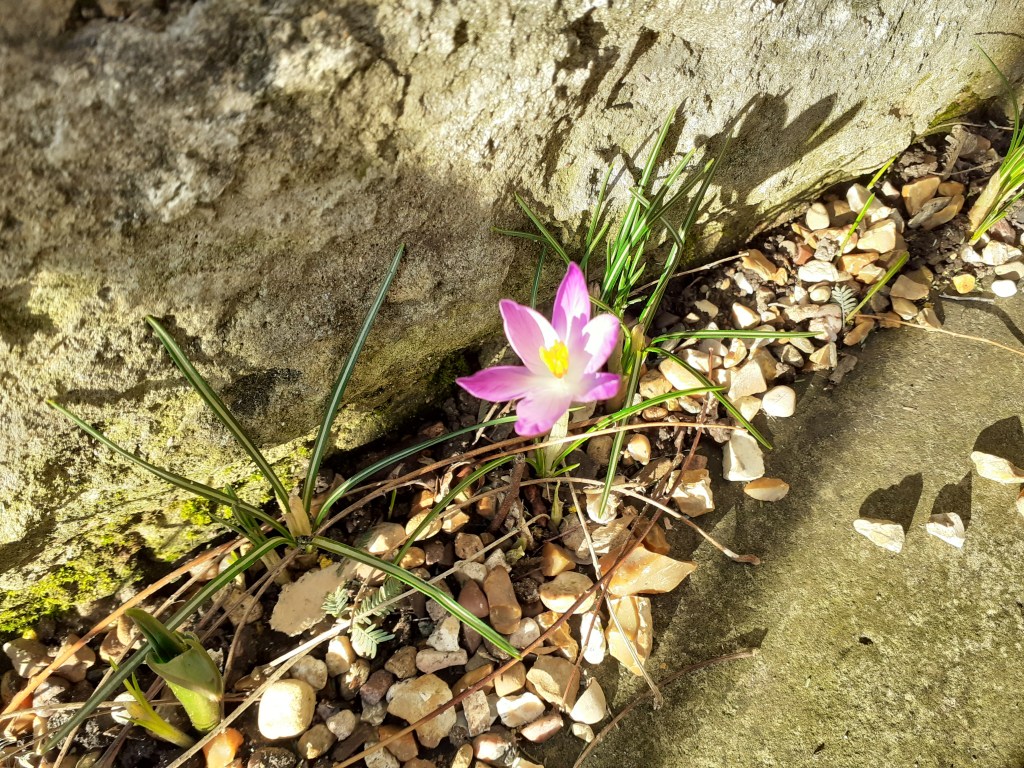
Finally in the front garden, there are some Crocus tommasinianus purpurea nestling against the base of a south facing wall. I call this my two-inch border, and I try and restrict it to a few small bulbs and succulents. Last year I cleared it out and sprayed it to kill of an infestation of a copper-leaved Oxalis which is very weedy in gardens around here.

Crocus tommasinianus purpurea

In the back garden there is a large mahonia which is in flower through the autumn and winter. It requires vicious pruning after flowering but does produce black berries much-loved by blackbirds. I am careful to allow many of these to remain available.

Mahonia aquifolium Charity

It’s hard to admit to failures, but I have not had much success with snowdrops. I have flowering a single Galanthus elwesii which I bought some years ago in a pot. It has clearly not spread wildey!

I have also transplanted a couple of clumps of smaller snowdrops, which I assume are G. plicatus, from my mother’s garden, which was on a clay soil. But they are not in flower yet.

I think that snowdrop doesn’t like my soil but it could just be that they don’t like drying out in summer, which is very likely here. They are planted in the shadier side of the garden in an area where I am doing my best to put plenty of leaf mould and mulch.

A single snowdrop: Galanthus elwesii

Finally, a nice surprise. I have been growing the pineapple-scented sage for some time but with little success. I gave it plenty of sun last summer and was disappointed that there were no flowers. Now it has burst into life! I didn’t realise that it likes to flower in autumn and winter, which is difficult because it is certainly not very hardy. I keep it close to the house to benefit from the heat, but it gets no sun at all just now.

Salvia elegans Scarlet Pineapple

Free Plant Identification Apps

How good are free Android and Apple Apps that identify plants from photos?

I’ve tested four free apps available in the UK for identifying plants. I pulled out four good photos – 3 of flowers and 1 of leaves – and found out how they fared in identifying them accurately.

My Results

Best: PlantSnap *****

You can download this app for either iPhone or Android. It correctly identified all four of my photos (see below) so I give it a top five star rating!

Second: Flora Incognita ***

A phone app for android. It only seems to accept photos taken there and then, not gallery photos taken previously. You can get around this if you have two devices by taking a picture of the screen. It identified photo a) and b) correctly, but it came up with a Lychnis species for photo c), even after being given photos of the leaves. It did however, correctly identified photo d). Rating three stars.

Third: PlantNet **

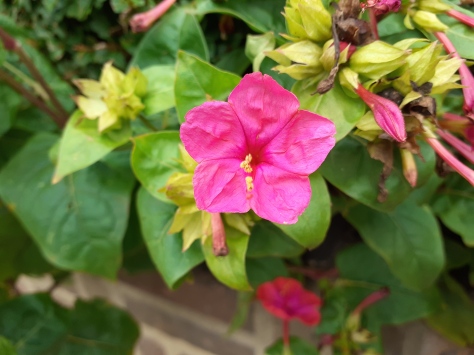
Phone App for android or IOS. On photo a). it came up with Cornus florida and Helleborus niger first, but then Houttuynia cordata. The last of these is a close relative of Anemopsis californica so that at least can be helpful in identification. On photo b) it correctly identified Mirabilis jalapa. On photo c) it came up with Crocosmia, Hyacinthus and Hibiscus, none of which were helpful. But it correctly identified the leaf in photo d). Rating two stars.

Fourth: Garden Answers *

For iPhones and iPads. With photo a) it came up with a range of quite unrelated flowers, including roses, violas and aquilegias. For photo b) it correctly identified Mirabilis jalapa. For photo c) it came up with a stream of things with Crocosmia at the top but including Nerine bowdenii (a relative of N.sarniensis) near the bottom. It didn’t find photo d). Perhaps one of the problems is that it seems to be focused on plants you can buy, not weeds or wild plants. Rating *

My test photos

a). Flower of Apache Beads – Anemopsis californica

b). Flower of Marvel of Peru – Mirabilis jalapa

c). Flower of Guernsey Lily – Nerine sarniensis

d). Leaves of Paper Mulberry – Broussonetia papyrifera

Other Apps

I am aware that there are other services for plant identification available. See for example this page from The Plant Guide which identifies 11 apps. Here’s my conclusions on some of these:

Flowerchecker
This is a human-based service which costs about 1 US $.
NatureGate
This works for plants, animals and birds etc. but is rather limited on species numbers. It asks questions about colour, structure etc and presents you with alternatives (with pictures).
Google Goggles
Apparently this no longer exists but you can search images with Google. If you put in a flower it comes up with broadly similar things, but is rather generic.
LikeThatGarden Flower search app for android phones. Not available from Google Play Store.
Leafsnap An IPhone App aimed at identifying trees from the leaves in the UK and USA. Not currently available in the UK
iPflanzen. For IOS devices. Relies on inputting data for identification, not based on photos. Not available in UK App Store.
Garden Compass Plant/disease identification. Not really appropriate for identification.

Amherstia nobilis – the pride of Burma

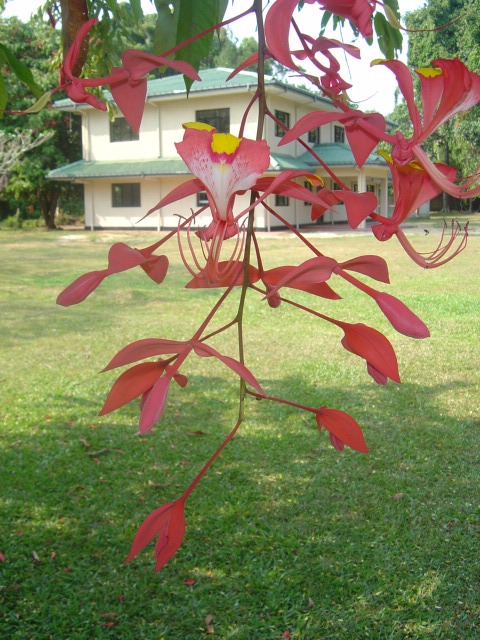
It looks like an orchid hanging from a tree, but no – these flowers come from the tree itself. This is the Pride of Burma or the Queen of Flowering Trees. I saw it in flower in Gampaha botanical gardens, Sri Lanka, in February 2005. I’ve never seen it since but it stays in my memory as a remarkable sight.

Amherstia is a tree in the Fabaceae – that’s the pea and bean family. But that’s a huge group and it comes from a subfamily called the Detarioideae which includes other gorgeous flowering trees such as Brownea and the delicious tamarind – Tamarindus indica.

Named after the Countess Sarah Amherst, a British naturalist, this tree is native to Burma or Myanmar. Apparently it is very rare in the wild and seems to be very poor at producing seed. Of course it’s widely planted in humid tropical regions but I wouldn’t say it’s a common sight. It is slow growing and difficult to propagate. Looking on the web I see there are images from India, Indonesia and Florida.

Flowering in Henarathgoda Botanical Garden, Gampaha, Sri Lanka

It’s not a huge tree – about 10 to 15m – but the inflorescences dangle from the branches in a lovely way. The leaves are large and pinnate and weep gently.

You’d be fortunate to come across one of these trees!

The Gardens of Montjuïc, Barcelona: Introduction

Barcelona has some lovely outdoor spaces and its beautiful Mediterranean climate allows some very special tropical and subtropical plants to grow there. I’ve visited the gardens of Montjuïc – the hill that forms part of the city’s southern edge – over several years. Some of them are outstanding and I love to go back there.

Montjuïc is a fascinating place. It is of course topped by an old castle and has been an important site for the defence of the city and its harbour. Now it has over 20 gardens, built at different times and for different reasons. Montjuïc also includes the remnants of a 1929 International Exposition and the 1992 Olympics . There is the National Catalan Art Museum as the hill descends toward Plaça Espanya and, on the very far side, there is one of Barcelona’s main cemeteries which shows the incredible architectural extravagance of the nineteenth century Catalonians!

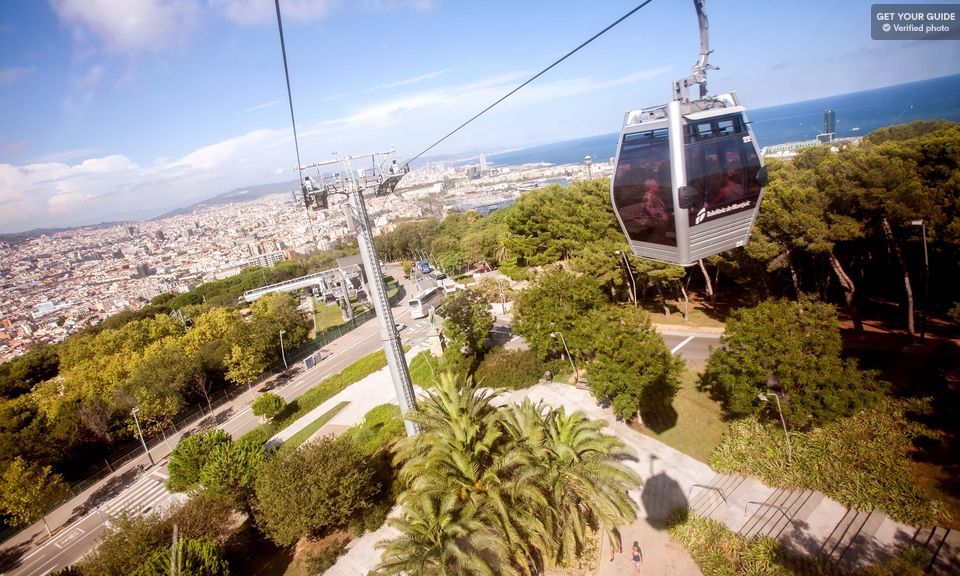
The mountain also boasts two cable cars. One can take you out across the harbour to Barcelonetta and another which can take you from the Parc de Montjuïc metro station to the summit and the castle. There are other museums, art galleries and even a public swimming pool – so plenty for holiday makers.

Barcelona’s City Council has defined a “botanical journey” through the gardens of Montjuïc. There is a pdf file available and there are many green signs around and about with maps and explanations. These figure across the city and all its points of interest, but I find them less than helpful because every notice (and the pdf) is written only in Catalan. I’ve photographed most notices on Montjuïc and got Google to translate them. Some give useful background information which I’ve used here, but the overall tone is detailed and a little bit pompous. So if you want to get the best, follow this website!

To see all the gardens can be an exhausting process for a single day if you take as much interest in plants as I do, especially in the heat of the summer. But you can do it if you start in the cool of the morning. In my opinion, the highlights are the Gardens of Mossèn Costa and Llobera and the Gardens of Mossèn Cinto Verdaguer. Unless you’ve seen both you can’t say you’ve done the gardens of Montjuïc!

There are really two places to start. First is the Plaça de la Carbonera, at the bottom of Avinguda del Parallel and very close to the bottom of Las Ramblas (nearest metro station is Parallel, on Lines 2 and 3). Second is the Parc de Montjuïc metro station, which is connected by a “funicular” to the Parallel metro station. You can take this on your metro ticket or simply walk up from Avinguda del Parallel – it’s a ten to 15 minute minute walk uphill for the energetic.

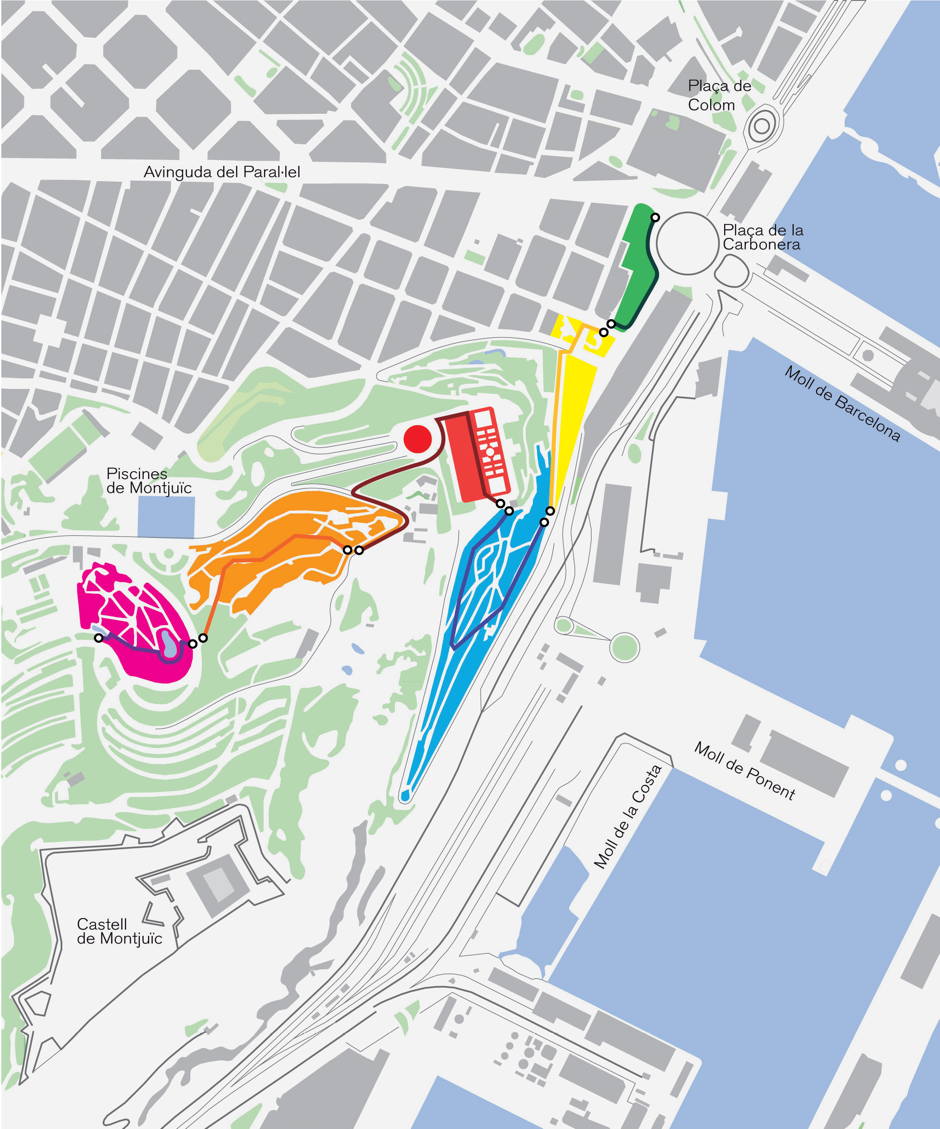
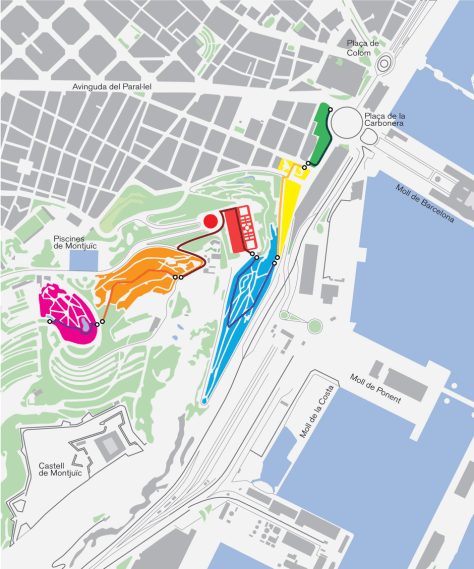
The Barcelona City Council provides the following useful map. It splits the botanical journey into six parts, denoted by the brightly coloured areas. Starting point one, Plaça de la Carbonera, is coloured dark green, from here you can gradually walk up the hill.

This is the way the City of Barcelona plans it. However you can do it in reverse by beginning at starting point two, the Parc de Montjuïc metro station. This is not labelled on the map, but it is one of the grey buildings just to the left of the swimming pool (Piscines de Montjuïc) on the opposite side of the road. From here you have a short uphill walk to the top of the Gardens of Mossèn Cinto Verdaguer which is coloured deep pink. I recommend it because it is an easy downhill walk all the way and I think you will appreciate more the great views across the city.

The map gives you the line to follow, but of course you will want to explore a little more than this. I reckon it is at least about 10,000 steps, that’s 7.6km or nearly 5 miles. It’s enough for a day, but you could split it over a couple of days, also visiting the Botanic Gardens – which are not far from the top of the Gardens of Mossèn Cinto Verdaguer – or the Castell de Montjuïc. You can also use the cable cars to make your trip easier.

So this is what I’m going to tell you about in my recommended reverse order. There’s a separate blog for each:

  1. Gardens of Mossèn Cinto Verdaguer: A lovely water garden
  2. The Gardens of Joan Brossa: A wooded walk with views across Barcelona
  3. Miramar Gardens and the Poble Sec viewpoint: Formal gardens with a viewing point across the city
  4. Gardens of Mossèn Costa and Llobera: A spectacular cactus, succulent and subtropical garden with views across the port
  5. Walter Benjamin Gardens and the Porta de Montjuïc: Urban spaces with some interesting trees.

Enjoy your botanical journey!

Gardens of Montjuïc, Barcelona: 1. Gardens of Mossèn Cinto Verdaguer

If you are coming from the Parc de Montjuïc metro station, turn right and walk past the cable car station and turn right again up the hill. In a short distance the entrance to the garden is on your right. The green notice gives you a map and I advise head straight up to the top pond so you can walk down.

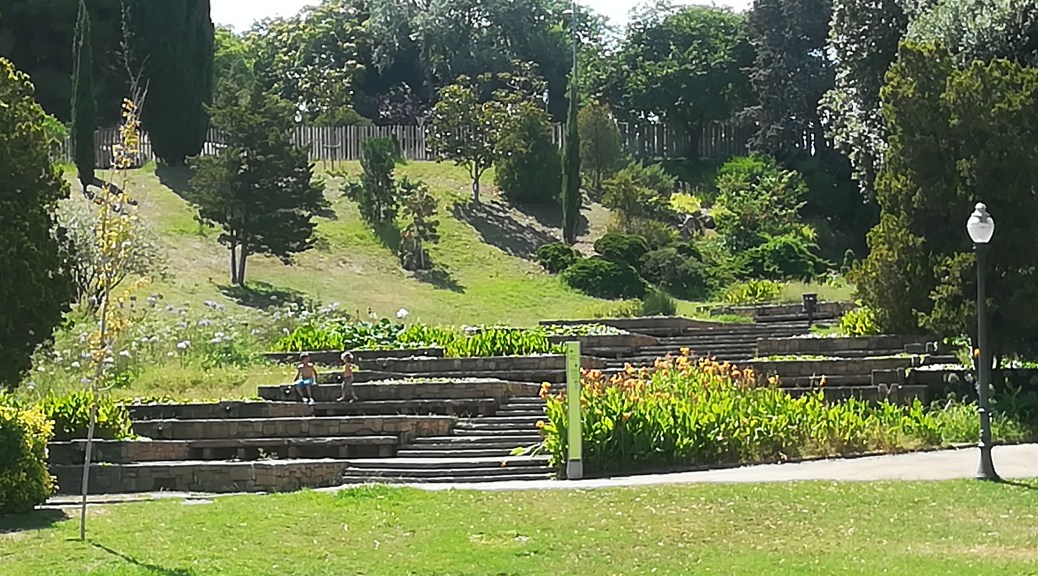
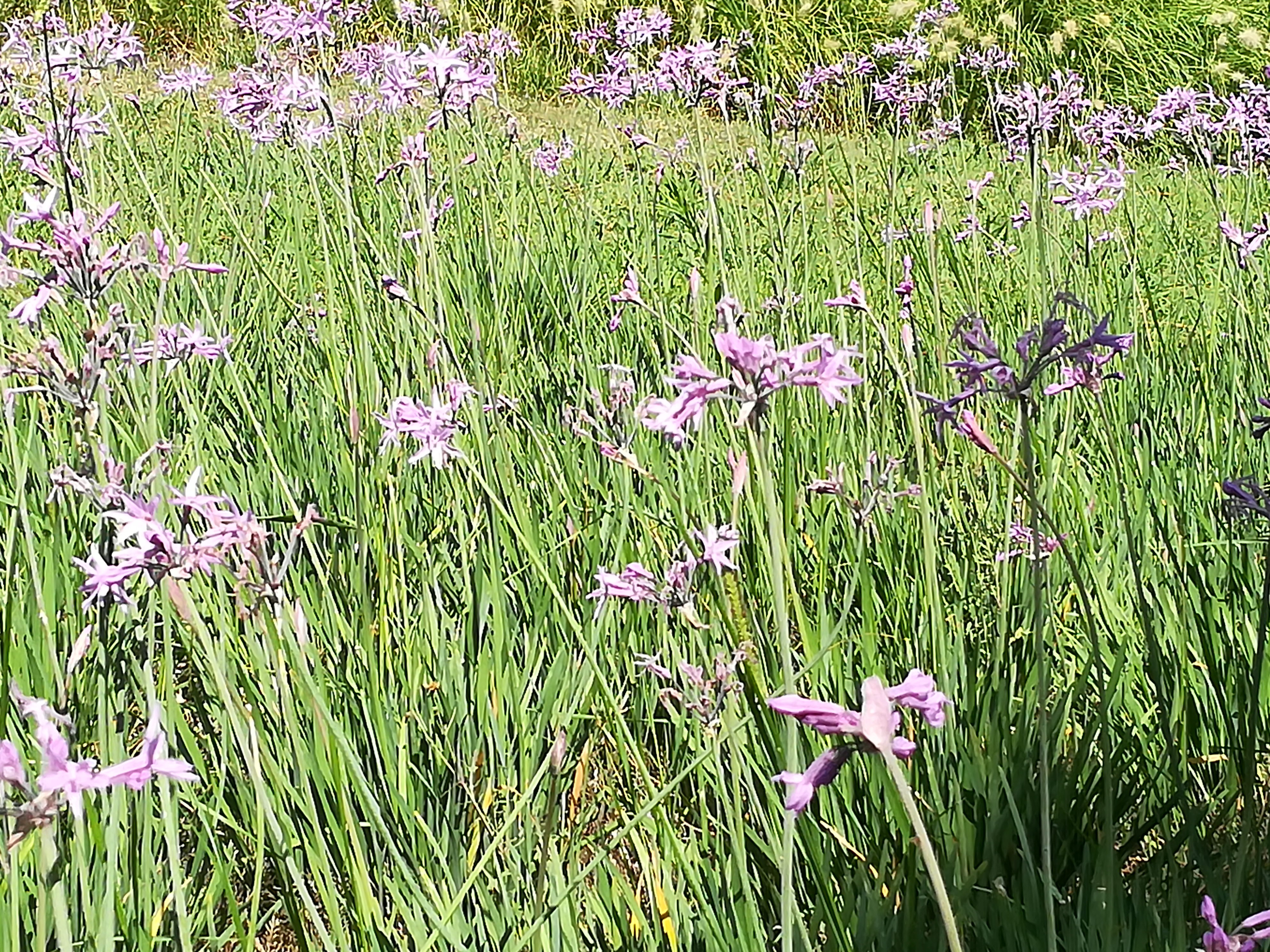
The walk up the steps will be through a glade of evergreen Magnolia grandiflora and feijoas (Acca sellowiana, or pineapple guava) trees. There’s an occasional bed of Tulberghia violacea and banks of Pennisetum grass before you arrive at the top lake, which feeds the lovely cascade of ponds.

Tulberghia violacea bedding
Pennisetum grass

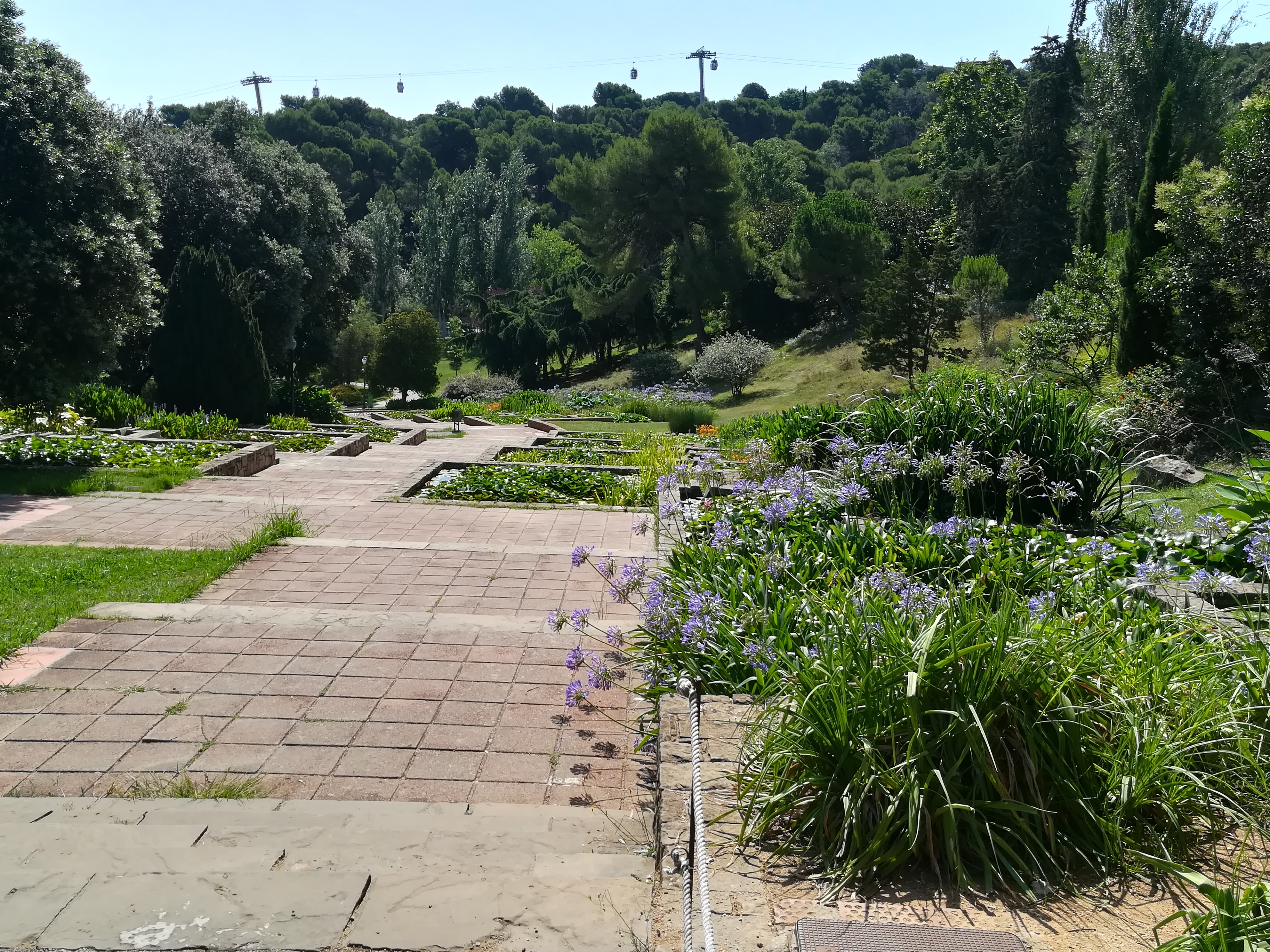
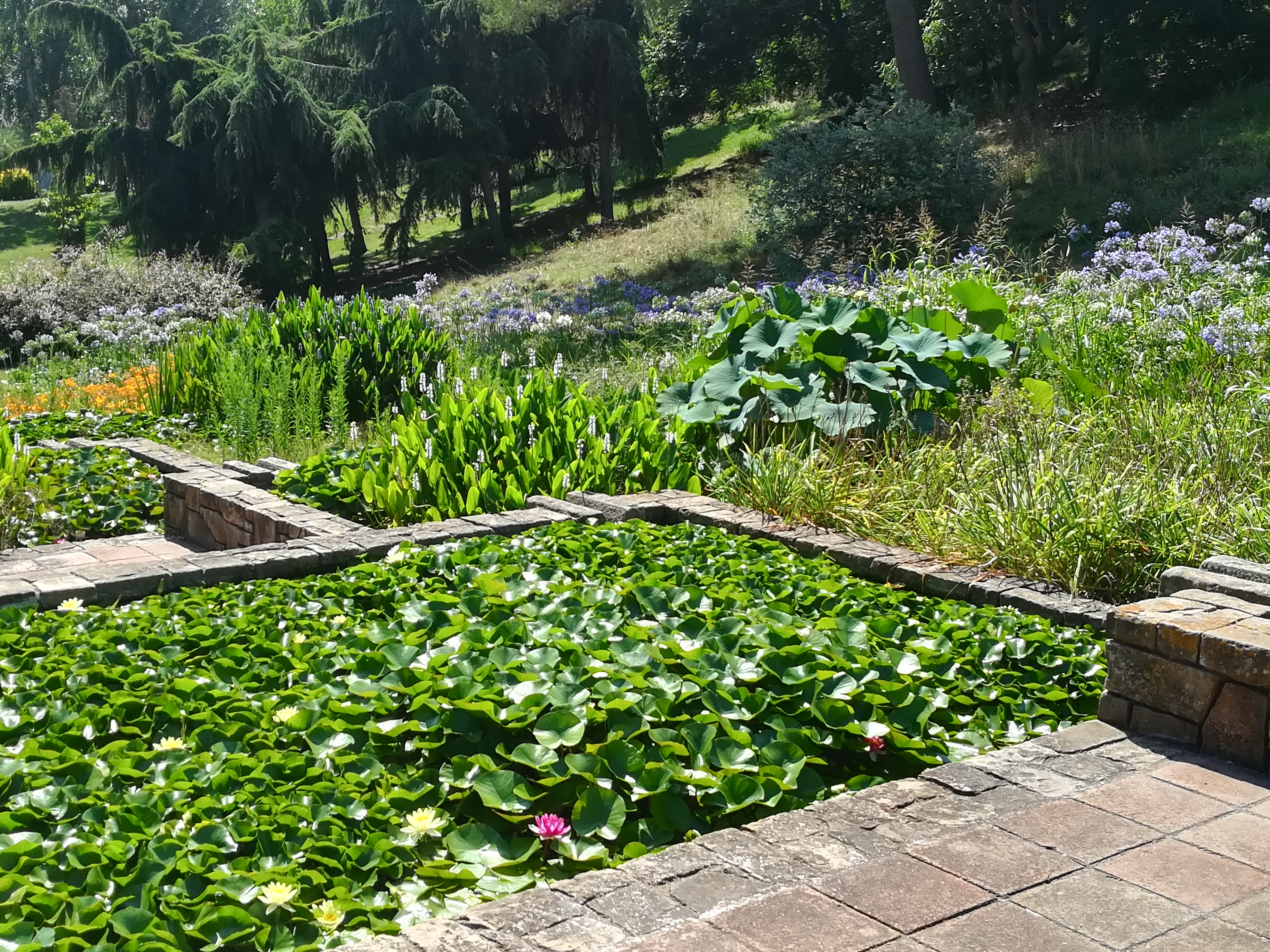
But the greatest delight is to walk downhill and look at the cascade of ponds and their water lilies, lotus flowers and waterside plants.

A cascade of ponds
Each full of aquatic plants
Water trickles down from pond to pond

Here’s some pictures of plants you can see:

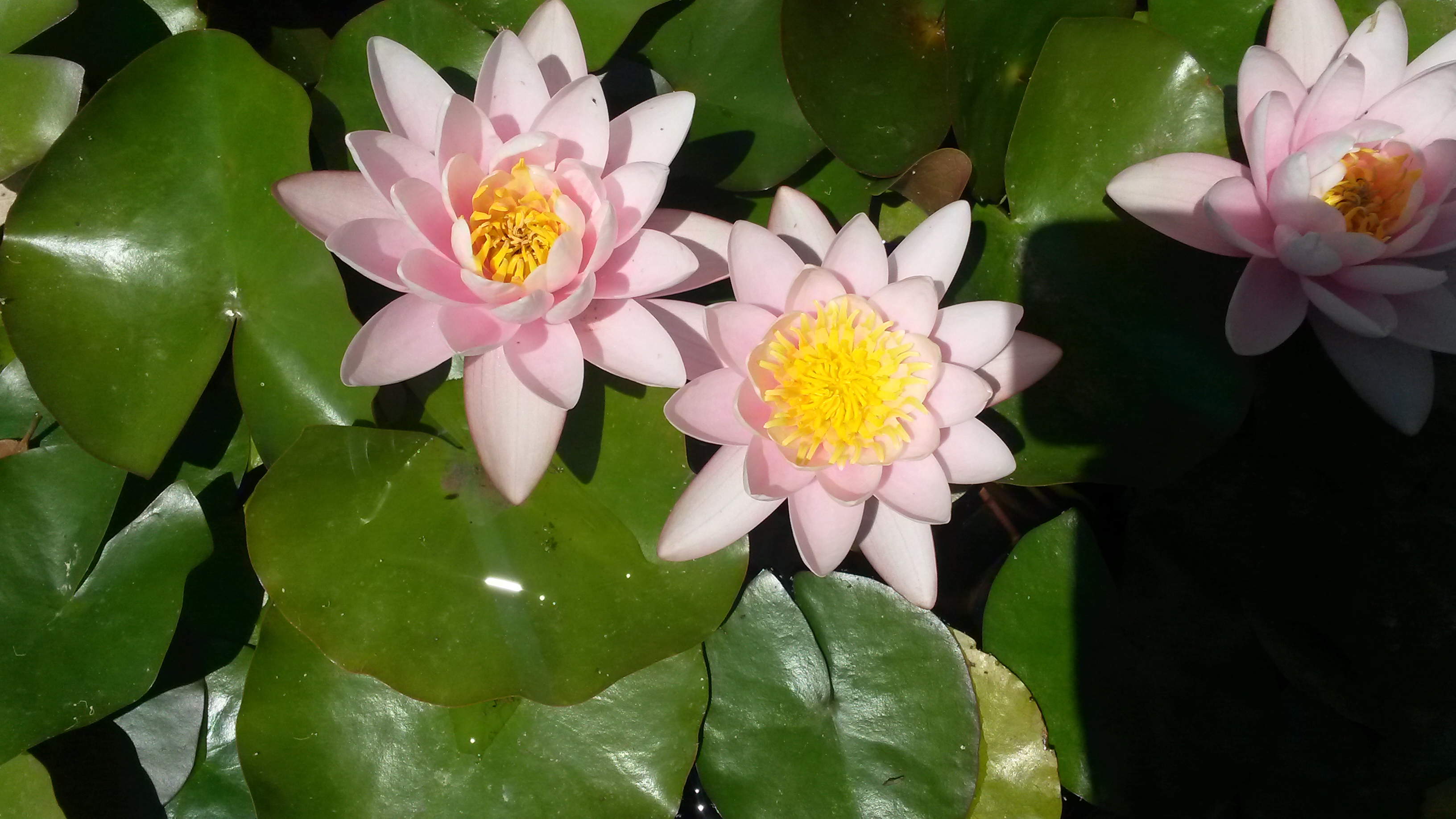
Water lilies in pink…
White
Red and white
And more pink

I have been lucky enough to see lotus blossoms, which are not closely related to water lilies and show distinct differences.

This is the American lotus flower, Nelumbo lutea,

Lotus flowers and leaves can stand well clear of the water, and the seed pods are quite distinctive. There are only two lotus species, Nelumbo nucifera – from India and Asia – and N. lutea from North America. The latin name Nelumbo is Sinhalese for lotus.

Here you can see lotus leaves and a bud, to compare with water lilies in the foreground
Lotus fruits are large discs with the seeds inset
Thalia dealbata, the powdery alligator flag, native to the southern Mississippi

The magnificently named powdery alligator flag is widely planted. How its name arose is a mystery, except if you look at the flowers they do look powdery, apart from the purple petals.

Powdery alligator flag flowers
Another American native – pickerel weed (Pontederia cordata)
Sagittaria montevidensis – the giant or Californian arrowhead

At the bottom of the cascade there is a large pond with a fountain. Around here people sit and enjoy the shade cast by the white poplar trees.

The bottom of the cascade
Populus alba ‘Pyramidalis’ – white poplar trees
The poplars have beautiful bark

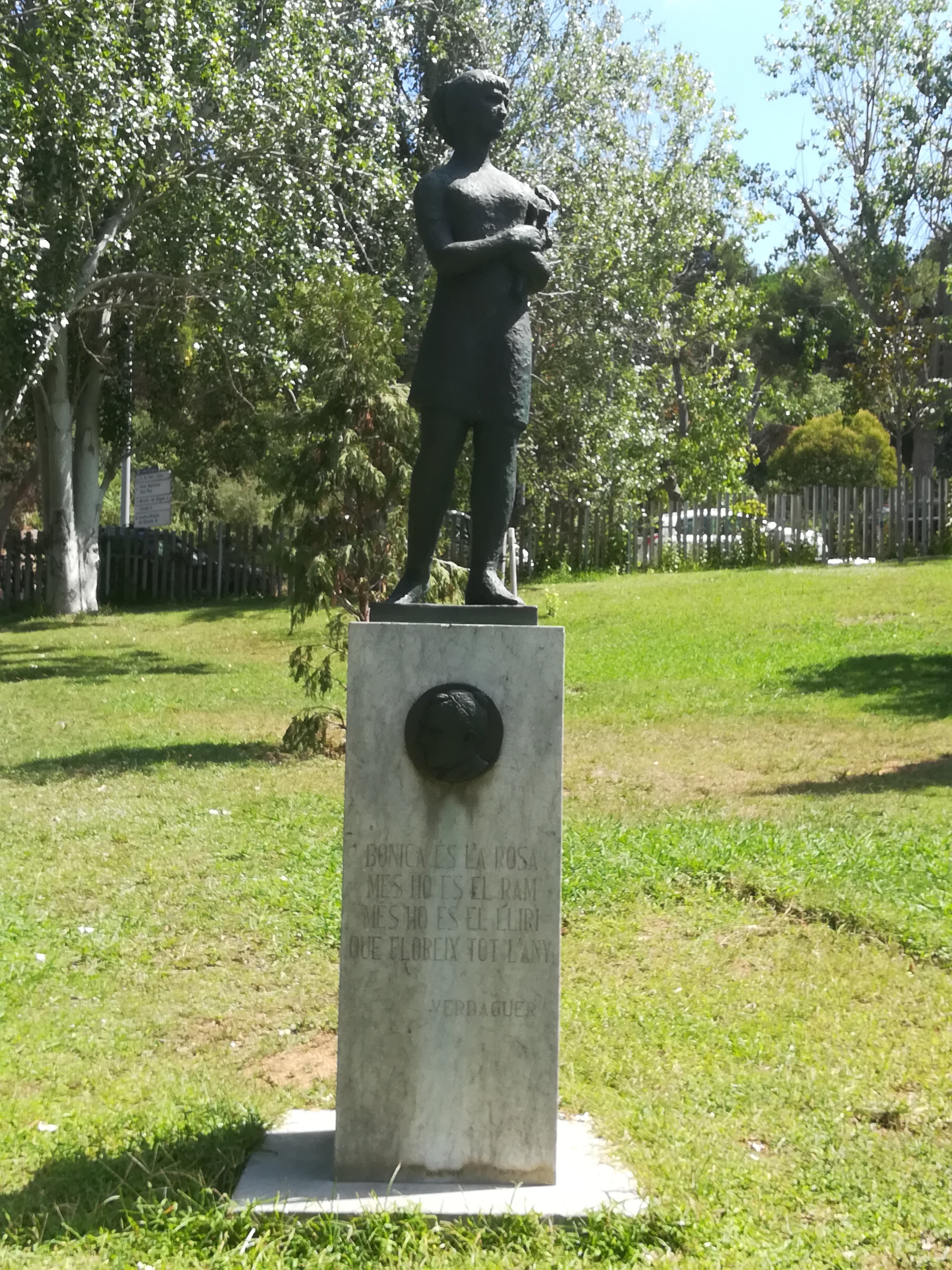
There is also a statue of a girl holding what could be a bunch of flowers.

Let’s note at this point that the garden is named after the Catalan poet Cinto Verdaguer (1845-1902), often given the priestly title Father [Mossen]. He’s known as the prince of Catalan poets and an example of his work is inscribed under the statue:

Bonica es la Rosa
Mes ho es el ram
Mes ho es el lliri
Que floreix tot l’any


This translates as:

Lovely is the rose
But so is the bouquet
And so is the lily
Which flowers all year round

To continue on the botanical journey you simply have to cross the road as you leave the garden by the gate near the lower pond. You are moving from the pink area on the map to the orange: The Gardens of Joan Brossa.

Going up Montjuïc

If you want to go further up Montjuïc (to the botanical garden or the Petra Kelly garden for example) go back to the top of the pond cascade and cross the wooden bridge. You will then see a tunnel under the road and on the other side you will be rewarded by a glorious bank of Plumbago.

Plumbago bank

Carry on and turn first right to take you up onto the higher road. Admire the oleanders along the road and the view over the Montjuïc plant nursery.

An avenue of oleanders
Montjuïc plant nursery

The botanic garden and the Petra Kelly garden is signposted to the left, so walk on past the oleanders!

Gardens of Montjuïc, Barcelona: 2: Gardens of Joan Brossa

The Gardens of Joan Brossa are situated on land that has had many uses, including an arsenal to defend the castle in the early 1800s and an amusement park which included a ‘Tunnel of Terror’. Now it has paths, trees, sculptures and open spaces. Its greatest merit is the views of the city and the fact that it’s overflown by the cable car, making its way up to the castle from the Parc de Montjuïc metro station.

Date palms and London planes

I have to say it is not a notable garden botanically but you might be interested to spot a few of the trees that are planted here. These include date palms, London planes, narrow-leaved ashes (Fraxinus angustifolia) , Monterey cypresses (Hesperocyparis macrocarpa), olive trees, walnuts and downy oaks (Quercus pubescens).

Again, it’s named after a Catalan poet Joan Brossa (1919-1998) – a man despite the first name – who wrote only in Catalan. In one of the larger open spaces overflown by the cable car is a bronze statue which is a tribute to an unnamed clown from the amusement park.

The cable car to the Castell de Montjuïc
Views across the city through the trees

From the Gardens of Joan Brossa you will end up on a main road heading up towards the castle. To follow the Montjuïc botanical journey you will need to head downhill and towards the east on the map. This is a wooded area and you will enjoy more views of the city as you descend towards the Miramar Gardens and the Miramar Hotel. Here’s the map again as a reminder – you are leaving the orange area and heading for the red – The Gardens of Miramar and the Poble Sec viewpoint.

The Gardens of Montjuïc, Barcelona: 3. Gardens of Miramar and poble sec viewpoint

From the Gardens of Joan Brossa you will end up on a main road heading up toward the castle. On your botanical journey you need to head down the hill and towards the east on the map. You will enjoy lovely views of the city and a steep decline towards the Miramar Gardens, the Miramar Hotel and the Poble Sec viewpoint. Here’s the map again to remind you – you are leaving the orange area and heading for the red:

Poble Sec viewpoint

This is the best place to view the city at the northern edge of the Miramar Gardens. viewpoint across the city that you can see from the northern side of the Miramar Gardens. The notice boards would tell you all about the geological origin of the Barcelona plain, if you could understand Catalan.

What you can see in the picture below, taken in summer 2016, is the Sagrada Familia under construction on the far left side, spanning to the right the main spire of the cathedral of the Barri Gotic old town, and then the two octagonal towers of the St Maria del Mar church. Just to the left of the central tower block (Edifici Colon) is Barcelona’s gherkin – the Torre Agbar, and on the far right a classical building which is a military museum and then the Columbus Monument column.

Miramar Gardens

The Miramar Gardens, coloured red on the map, consist of formal beds and, on the eastern side, a fine avenue of Phytolacca dioica trees. The notices tell us that the garden was developed by a French landscape engineer Jean Claude Nicola Forestier for the International Exposition of 1929. Its terraces – and the so called Forestier steps which are to the east of the avenue – are built of Montjuic stone.

Miramar Gardens looking south, with Miramar Hotel on the right
The avenue of Phytolacca dioica trees

Phytolacca trees are a remarkable South American species from Argentina and Uruguay. Their wood is very spongy and they have evolved from the herbaceous phytolaccas which include the North American pokeweeds. Phytolacca trees are widely planted in the streets of Barcelona but these are the oldest you will see in Spain. They have very gnarled and interesting stumps!

Phytolacca dioica in flower

Miramar Gardens provide an opportunity for Barcelona council to show off its bedding among box hedges and topiaried trees. But in the margins by the hotel there are a few interesting shrubs including brugmansias, abutilons, persimmons, avocados and jujubes.

Formal beds, topiary and statues
A yellow Brugmansia

When you’ve tired yourself of the Gardens of Miramar, head south and you will find, beside a restaurant, some steps leading down to the marvellous Gardens of Mossèn Costa and Llobera.