The Gardens of Montjuïc, Barcelona: Introduction

Barcelona has some lovely outdoor spaces and its beautiful Mediterranean climate allows some very special tropical and subtropical plants to grow there. I’ve visited the gardens of Montjuïc – the hill that forms part of the city’s southern edge – over several years. Some of them are outstanding and I love to go back there.

Montjuïc is a fascinating place. It is of course topped by an old castle and has been an important site for the defence of the city and its harbour. Now it has over 20 gardens, built at different times and for different reasons. Montjuïc also includes the remnants of a 1929 International Exposition and the 1992 Olympics . There is the National Catalan Art Museum as the hill descends toward Plaça Espanya and, on the very far side, there is one of Barcelona’s main cemeteries which shows the incredible architectural extravagance of the nineteenth century Catalonians!

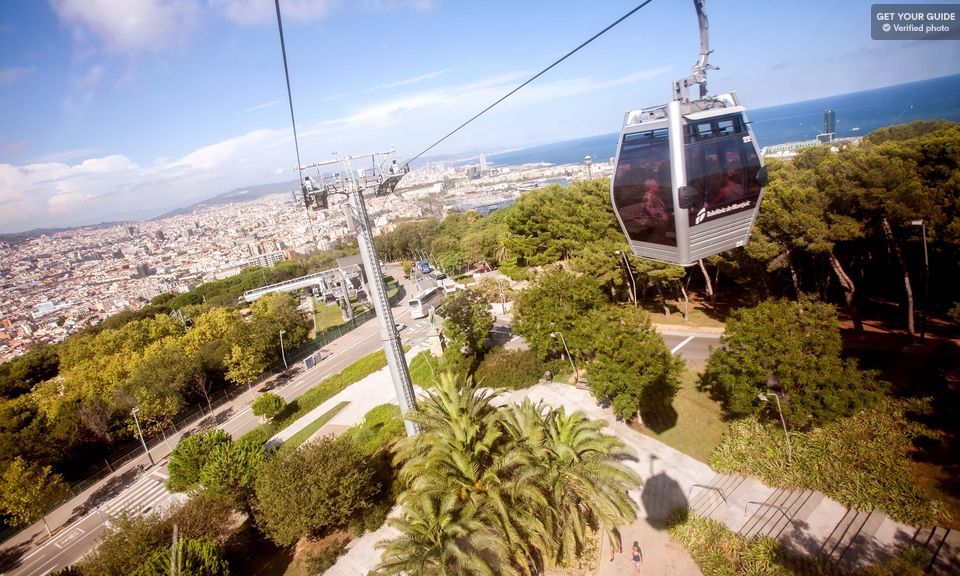
The mountain also boasts two cable cars. One can take you out across the harbour to Barcelonetta and another which can take you from the Parc de Montjuïc metro station to the summit and the castle. There are other museums, art galleries and even a public swimming pool – so plenty for holiday makers.

Barcelona’s City Council has defined a “botanical journey” through the gardens of Montjuïc. There is a pdf file available and there are many green signs around and about with maps and explanations. These figure across the city and all its points of interest, but I find them less than helpful because every notice (and the pdf) is written only in Catalan. I’ve photographed most notices on Montjuïc and got Google to translate them. Some give useful background information which I’ve used here, but the overall tone is detailed and a little bit pompous. So if you want to get the best, follow this website!

To see all the gardens can be an exhausting process for a single day if you take as much interest in plants as I do, especially in the heat of the summer. But you can do it if you start in the cool of the morning. In my opinion, the highlights are the Gardens of Mossèn Costa and Llobera and the Gardens of Mossèn Cinto Verdaguer. Unless you’ve seen both you can’t say you’ve done the gardens of Montjuïc!

There are really two places to start. First is the Plaça de la Carbonera, at the bottom of Avinguda del Parallel and very close to the bottom of Las Ramblas (nearest metro station is Parallel, on Lines 2 and 3). Second is the Parc de Montjuïc metro station, which is connected by a “funicular” to the Parallel metro station. You can take this on your metro ticket or simply walk up from Avinguda del Parallel – it’s a ten to 15 minute minute walk uphill for the energetic.

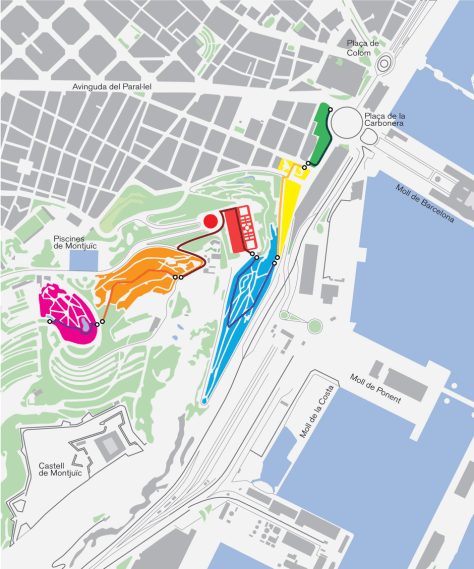
The Barcelona City Council provides the following useful map. It splits the botanical journey into six parts, denoted by the brightly coloured areas. Starting point one, Plaça de la Carbonera, is coloured dark green, from here you can gradually walk up the hill.
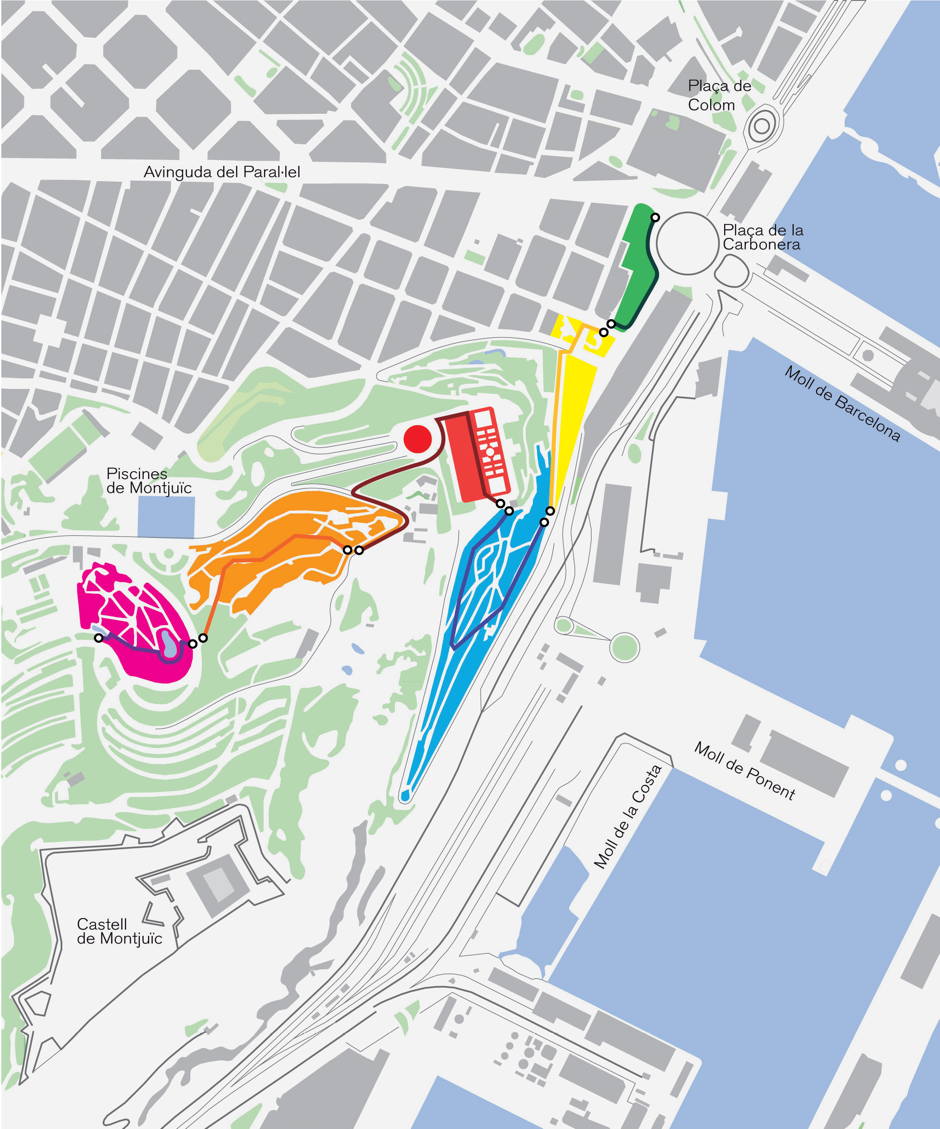
This is the way the City of Barcelona plans it. However you can do it in reverse by beginning at starting point two, the Parc de Montjuïc metro station. This is not labelled on the map, but it is one of the grey buildings just to the left of the swimming pool (Piscines de Montjuïc) on the opposite side of the road. From here you have a short uphill walk to the top of the Gardens of Mossèn Cinto Verdaguer which is coloured deep pink. I recommend it because it is an easy downhill walk all the way and I think you will appreciate more the great views across the city.

The map gives you the line to follow, but of course you will want to explore a little more than this. I reckon it is at least about 10,000 steps, that’s 7.6km or nearly 5 miles. It’s enough for a day, but you could split it over a couple of days, also visiting the Botanic Gardens – which are not far from the top of the Gardens of Mossèn Cinto Verdaguer – or the Castell de Montjuïc. You can also use the cable cars to make your trip easier.

So this is what I’m going to tell you about in my recommended reverse order. There’s a separate blog for each:

  1. Gardens of Mossèn Cinto Verdaguer: A lovely water garden
  2. The Gardens of Joan Brossa: A wooded walk with views across Barcelona
  3. Miramar Gardens and the Poble Sec viewpoint: Formal gardens with a viewing point across the city
  4. Gardens of Mossèn Costa and Llobera: A spectacular cactus, succulent and subtropical garden with views across the port
  5. Walter Benjamin Gardens and the Porta de Montjuïc: Urban spaces with some interesting trees.

Enjoy your botanical journey!
Gardens of Montjuïc, Barcelona: 1. Gardens of Mossèn Cinto Verdaguer

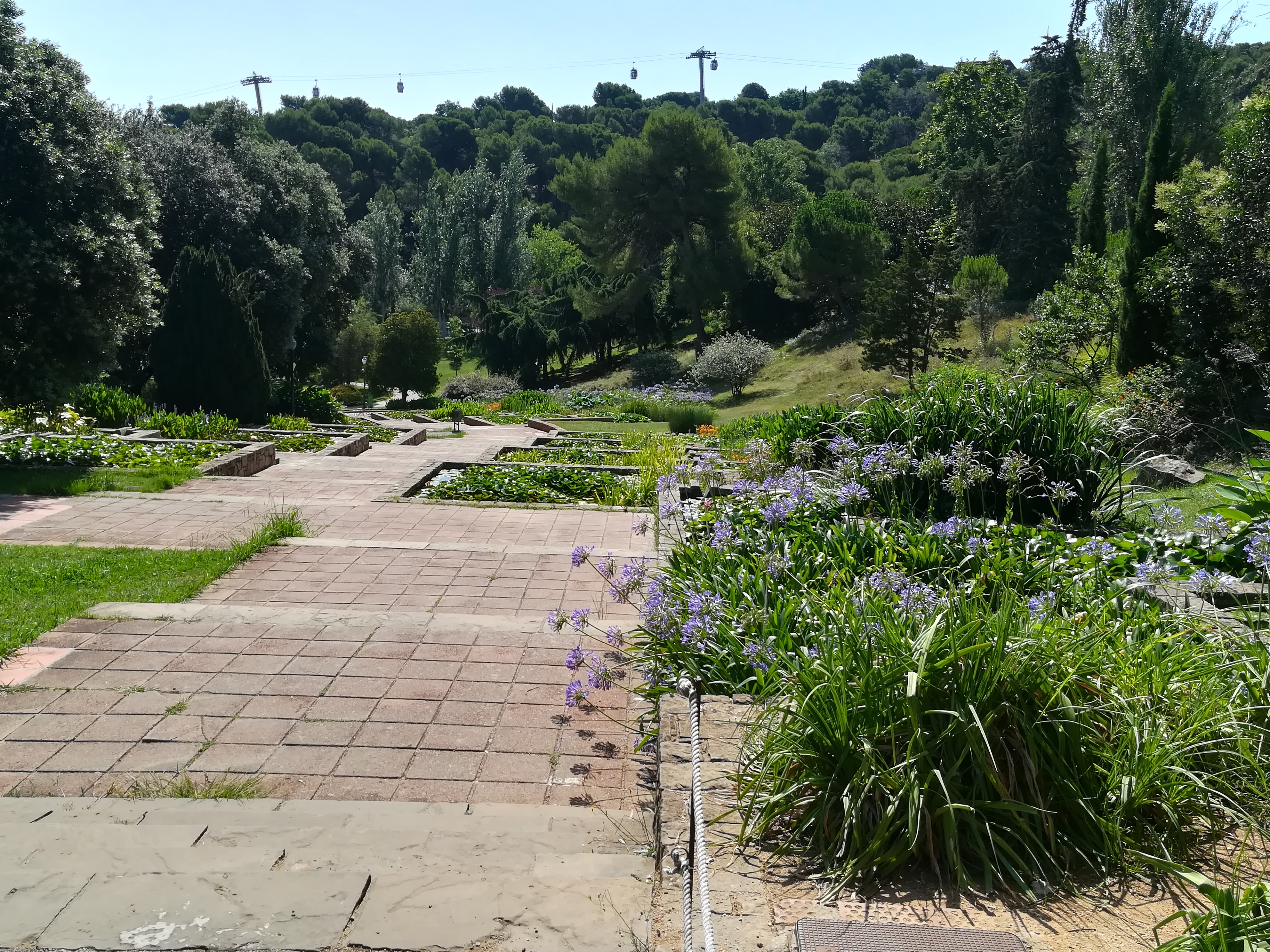
If you are coming from the Parc de Montjuïc metro station, turn right and walk past the cable car station and turn right again up the hill. In a short distance the entrance to the garden is on your right. The green notice gives you a map and I advise head straight up to the top pond so you can walk down.

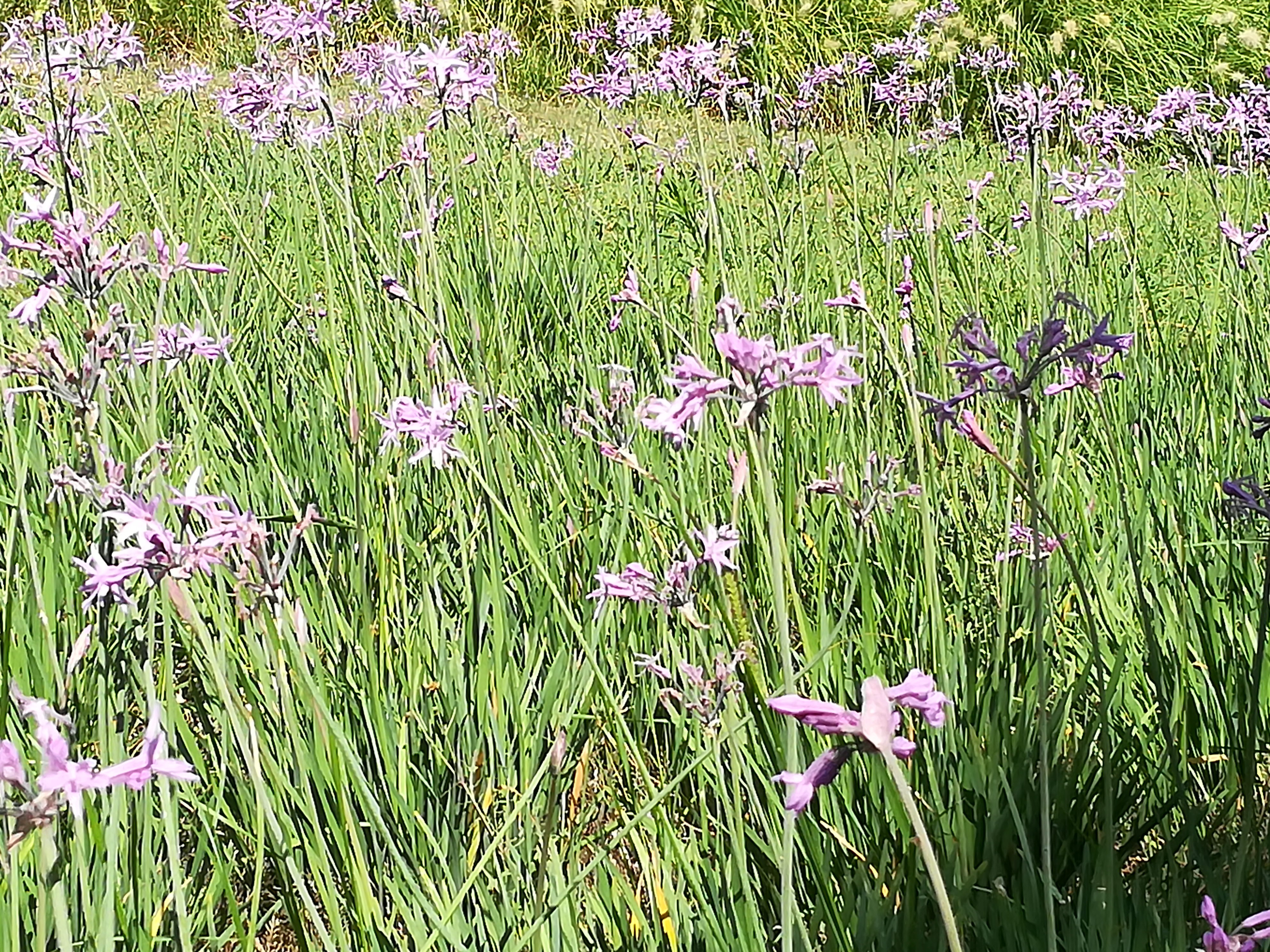
The walk up the steps will be through a glade of evergreen Magnolia grandiflora and feijoas (Acca sellowiana, or pineapple guava) trees. There’s an occasional bed of Tulberghia violacea and banks of Pennisetum grass before you arrive at the top lake, which feeds the lovely cascade of ponds.

Tulberghia violacea bedding
Pennisetum grass

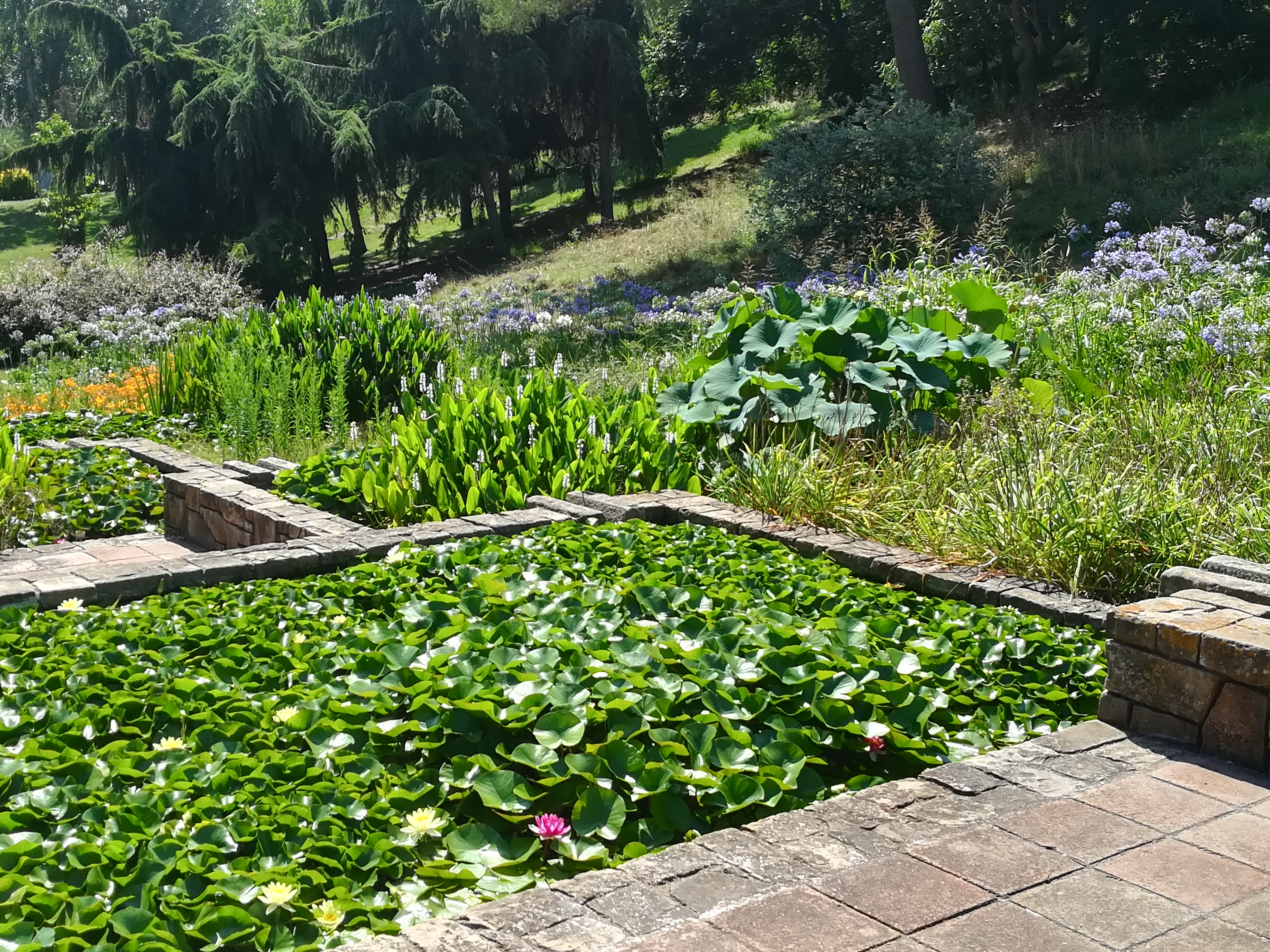
But the greatest delight is to walk downhill and look at the cascade of ponds and their water lilies, lotus flowers and waterside plants.

A cascade of ponds
Each full of aquatic plants
Water trickles down from pond to pond

Here’s some pictures of plants you can see:

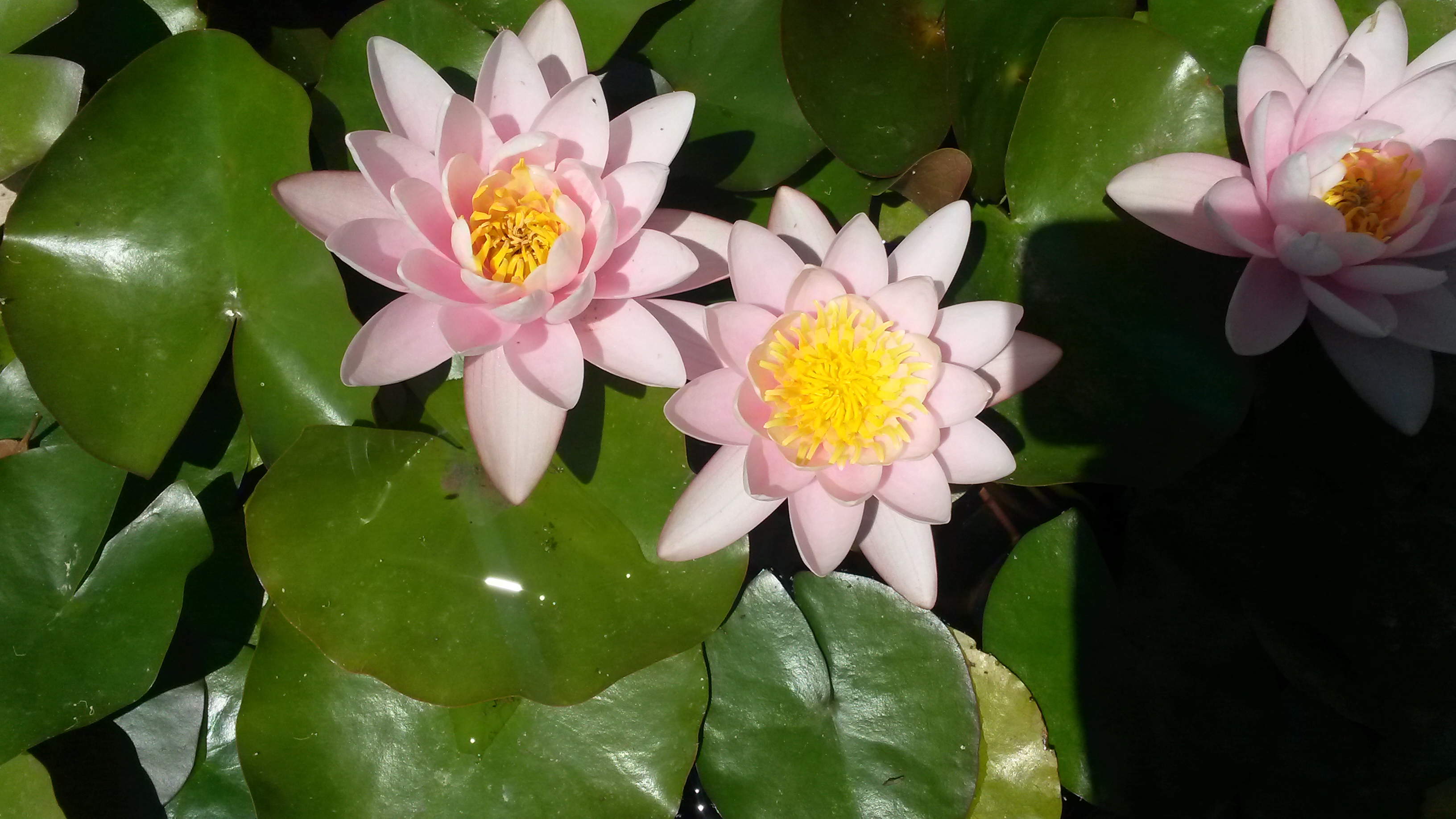
Water lilies in pink…
White
Red and white
And more pink

I have been lucky enough to see lotus blossoms, which are not closely related to water lilies and show distinct differences.

This is the American lotus flower, Nelumbo lutea,

Lotus flowers and leaves can stand well clear of the water, and the seed pods are quite distinctive. There are only two lotus species, Nelumbo nucifera – from India and Asia – and N. lutea from North America. The latin name Nelumbo is Sinhalese for lotus.

Here you can see lotus leaves and a bud, to compare with water lilies in the foreground
Lotus fruits are large discs with the seeds inset
Thalia dealbata, the powdery alligator flag, native to the southern Mississippi

The magnificently named powdery alligator flag is widely planted. How its name arose is a mystery, except if you look at the flowers they do look powdery, apart from the purple petals.

Powdery alligator flag flowers
Another American native – pickerel weed (Pontederia cordata)
Sagittaria montevidensis – the giant or Californian arrowhead

At the bottom of the cascade there is a large pond with a fountain. Around here people sit and enjoy the shade cast by the white poplar trees.

The bottom of the cascade
Populus alba ‘Pyramidalis’ – white poplar trees
The poplars have beautiful bark

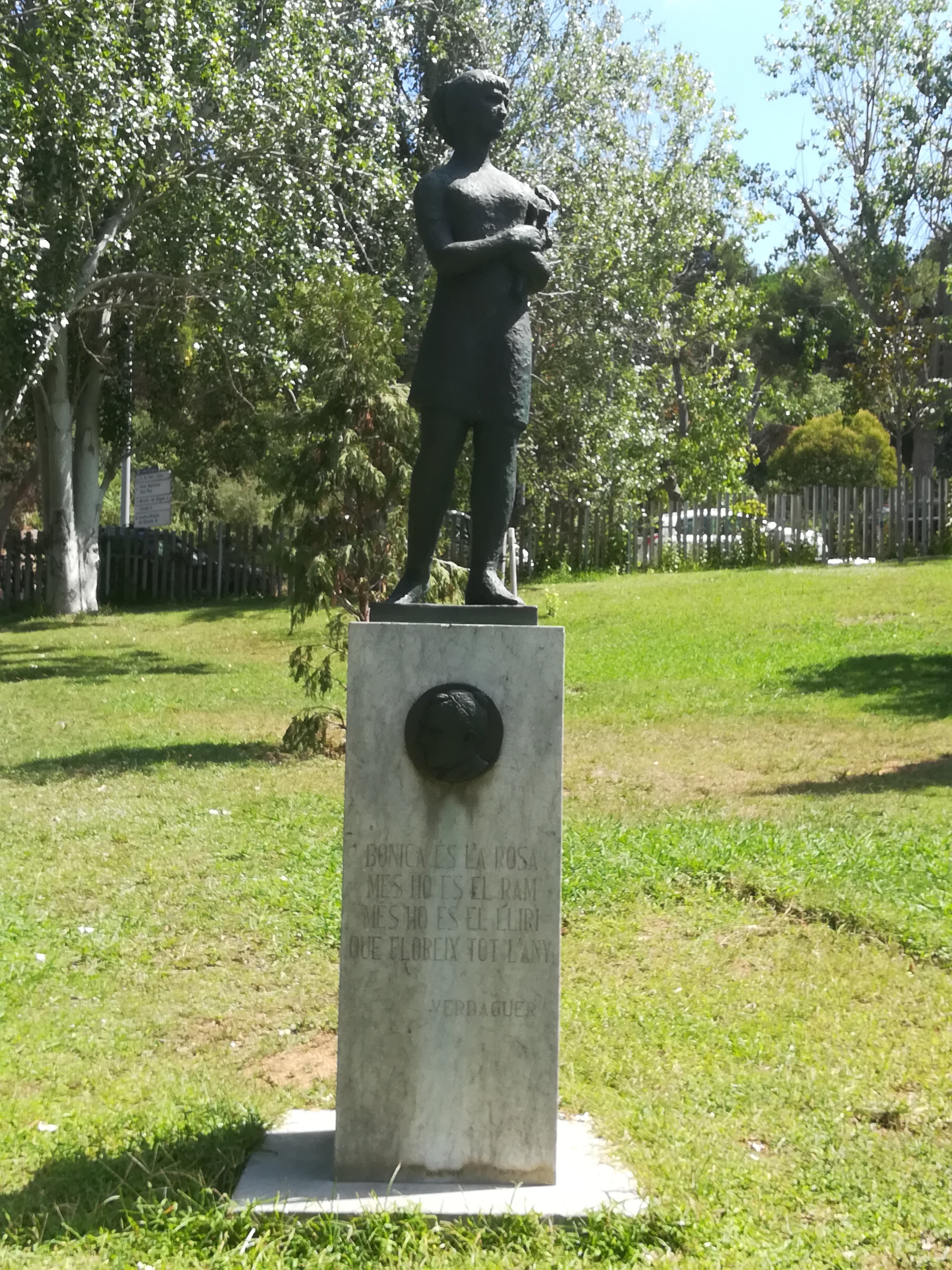
There is also a statue of a girl holding what could be a bunch of flowers.

Let’s note at this point that the garden is named after the Catalan poet Cinto Verdaguer (1845-1902), often given the priestly title Father [Mossen]. He’s known as the prince of Catalan poets and an example of his work is inscribed under the statue:

Bonica es la Rosa
Mes ho es el ram
Mes ho es el lliri
Que floreix tot l’any


This translates as:

Lovely is the rose
But so is the bouquet
And so is the lily
Which flowers all year round

To continue on the botanical journey you simply have to cross the road as you leave the garden by the gate near the lower pond. You are moving from the pink area on the map to the orange: The Gardens of Joan Brossa.

Going up Montjuïc

If you want to go further up Montjuïc (to the botanical garden or the Petra Kelly garden for example) go back to the top of the pond cascade and cross the wooden bridge. You will then see a tunnel under the road and on the other side you will be rewarded by a glorious bank of Plumbago.

Plumbago bank

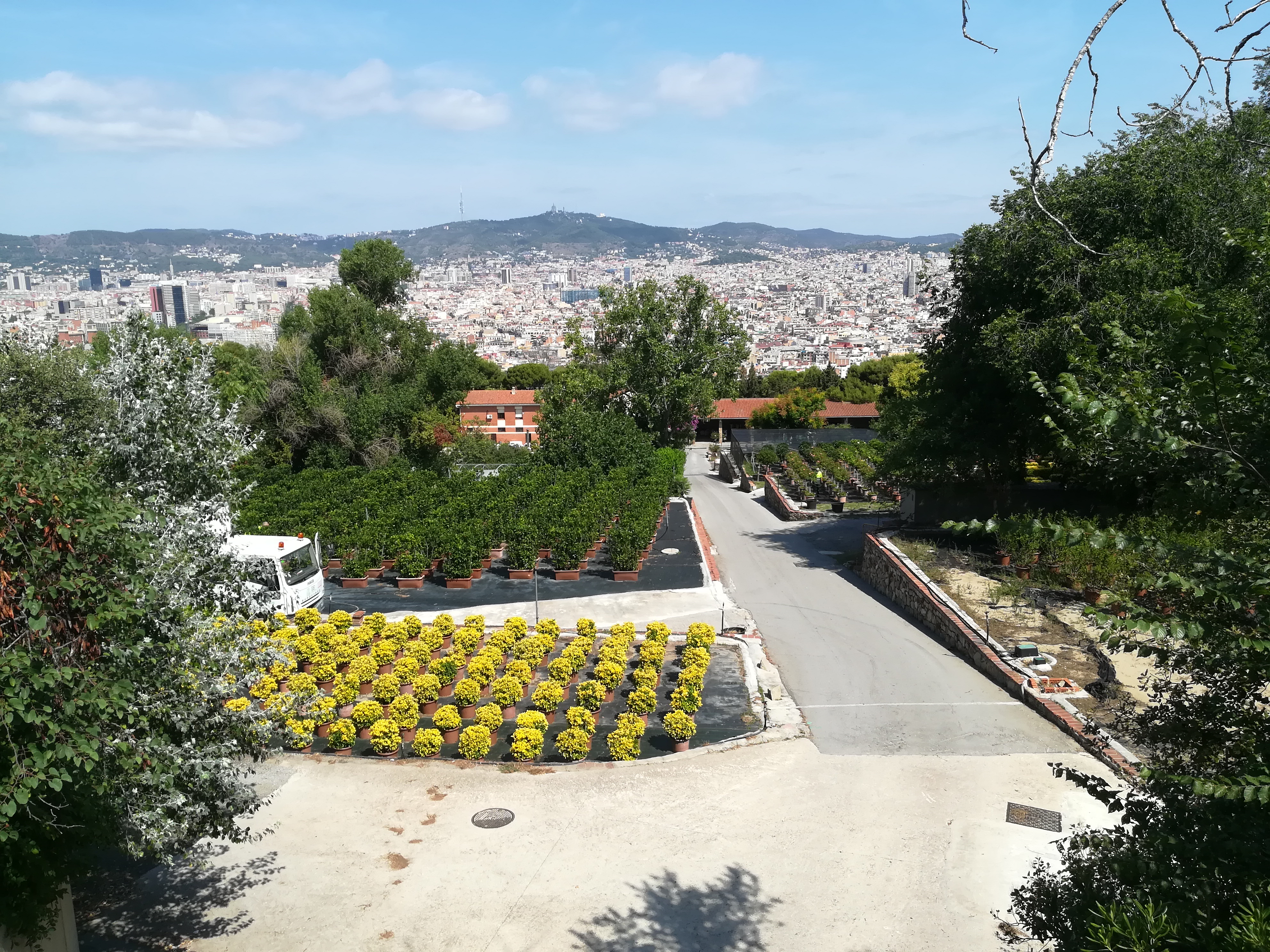
Carry on and turn first right to take you up onto the higher road. Admire the oleanders along the road and the view over the Montjuïc plant nursery.

An avenue of oleanders
Montjuïc plant nursery

The botanic garden and the Petra Kelly garden is signposted to the left, so walk on past the oleanders!

Gardens of Montjuïc, Barcelona: 2: Gardens of Joan Brossa

The Gardens of Joan Brossa are situated on land that has had many uses, including an arsenal to defend the castle in the early 1800s and an amusement park which included a ‘Tunnel of Terror’. Now it has paths, trees, sculptures and open spaces. Its greatest merit is the views of the city and the fact that it’s overflown by the cable car, making its way up to the castle from the Parc de Montjuïc metro station.

Date palms and London planes

I have to say it is not a notable garden botanically but you might be interested to spot a few of the trees that are planted here. These include date palms, London planes, narrow-leaved ashes (Fraxinus angustifolia) , Monterey cypresses (Hesperocyparis macrocarpa), olive trees, walnuts and downy oaks (Quercus pubescens).

Again, it’s named after a Catalan poet Joan Brossa (1919-1998) – a man despite the first name – who wrote only in Catalan. In one of the larger open spaces overflown by the cable car is a bronze statue which is a tribute to an unnamed clown from the amusement park.

The cable car to the Castell de Montjuïc
Views across the city through the trees

From the Gardens of Joan Brossa you will end up on a main road heading up towards the castle. To follow the Montjuïc botanical journey you will need to head downhill and towards the east on the map. This is a wooded area and you will enjoy more views of the city as you descend towards the Miramar Gardens and the Miramar Hotel. Here’s the map again as a reminder – you are leaving the orange area and heading for the red – The Gardens of Miramar and the Poble Sec viewpoint.

The Gardens of Montjuïc, Barcelona: 3. Gardens of Miramar and poble sec viewpoint

From the Gardens of Joan Brossa you will end up on a main road heading up toward the castle. On your botanical journey you need to head down the hill and towards the east on the map. You will enjoy lovely views of the city and a steep decline towards the Miramar Gardens, the Miramar Hotel and the Poble Sec viewpoint. Here’s the map again to remind you – you are leaving the orange area and heading for the red:

Poble Sec viewpoint

This is the best place to view the city at the northern edge of the Miramar Gardens. viewpoint across the city that you can see from the northern side of the Miramar Gardens. The notice boards would tell you all about the geological origin of the Barcelona plain, if you could understand Catalan.

What you can see in the picture below, taken in summer 2016, is the Sagrada Familia under construction on the far left side, spanning to the right the main spire of the cathedral of the Barri Gotic old town, and then the two octagonal towers of the St Maria del Mar church. Just to the left of the central tower block (Edifici Colon) is Barcelona’s gherkin – the Torre Agbar, and on the far right a classical building which is a military museum and then the Columbus Monument column.

Miramar Gardens

The Miramar Gardens, coloured red on the map, consist of formal beds and, on the eastern side, a fine avenue of Phytolacca dioica trees. The notices tell us that the garden was developed by a French landscape engineer Jean Claude Nicola Forestier for the International Exposition of 1929. Its terraces – and the so called Forestier steps which are to the east of the avenue – are built of Montjuic stone.

Miramar Gardens looking south, with Miramar Hotel on the right
The avenue of Phytolacca dioica trees

Phytolacca trees are a remarkable South American species from Argentina and Uruguay. Their wood is very spongy and they have evolved from the herbaceous phytolaccas which include the North American pokeweeds. Phytolacca trees are widely planted in the streets of Barcelona but these are the oldest you will see in Spain. They have very gnarled and interesting stumps!

Phytolacca dioica in flower

Miramar Gardens provide an opportunity for Barcelona council to show off its bedding among box hedges and topiaried trees. But in the margins by the hotel there are a few interesting shrubs including brugmansias, abutilons, persimmons, avocados and jujubes.

Formal beds, topiary and statues
A yellow Brugmansia

When you’ve tired yourself of the Gardens of Miramar, head south and you will find, beside a restaurant, some steps leading down to the marvellous Gardens of Mossèn Costa and Llobera.

Gardens of MONTJUïC, Barcelona: 4. Gardens of Mossèn Costa and Llobera

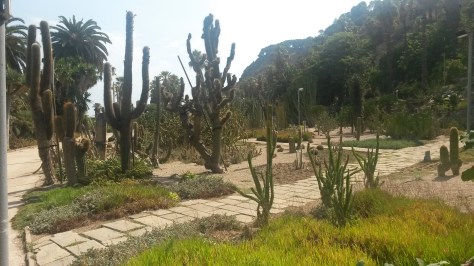
When you come to the southern end of the Miramar garden you’ll find a restaurant and on its right hand side, some stairs which allow you to descend into the Gardens of Mossèn Costa and Llobera. This is a delightful subtropical garden of palms, cacti and succulents perched over the harbour on the sunny and well drained eastern slopes of the mountain.

The green notices tell us that the garden was built by architect Joaquim Maria Casamor and gardener Joan Pañella in an area previously occupied by military batteries. It totals 6.15 hectares and was opened in 1970. It benefits from being sheltered from north winds and is generally two degrees higher than the rest of the city.

It’s surrounded by steep cliffs and old quarries. Huge Washingtonia palms from California and lots of large cacti create an amazing landscape.

Washingtonia robusta palms from California and Phoenix dactylifera date palms
An amazing landscape…

There are also some great views across the harbour.

Views across the harbour
Visiting cruise liners on show

It’s a pleasant way to walk slowly down the hill with plenty of plants to see. Who knows what you’ll find in flower, but I am sure there will be plenty whatever the time of year.

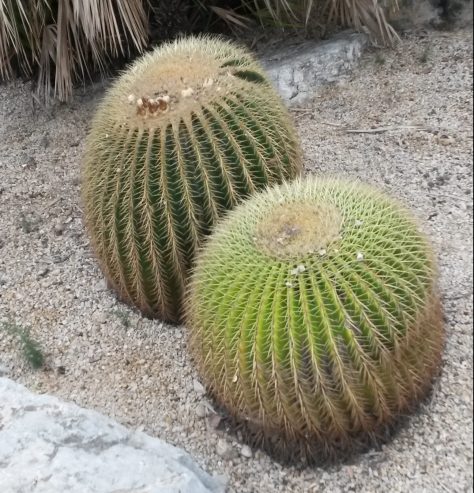
There are many of these barrel cactuses – Echinocactus grussonii – which rejoice in the Catalan name of “seient de sogra”, which translates as mother-in-law’s seat.

Mother-in-law’s seat – Echinocactus grussonii
Echinocactus grussonii in flower

A green notice in the garden tells us that E. grussonii grows fast and does not flower until it reaches maturity. It’s appearance and its easy reproduction make it one of the most cultivated cacti in the world. But in its natural habitat – Querétaro, in the centre of Mexico – it is restricted and almost extinct due to uncontrolled ploughing and the development of a reservoir.

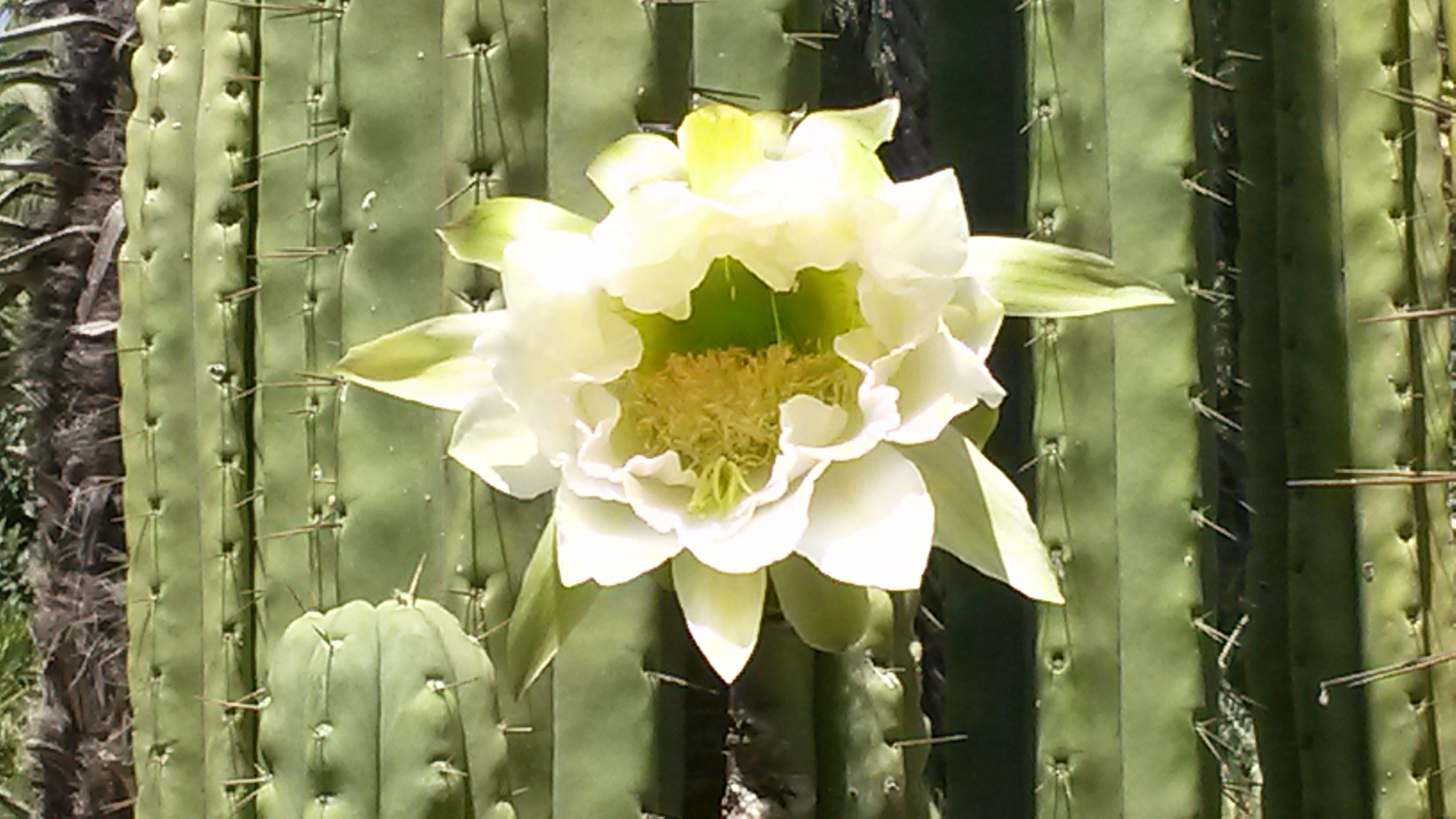
In summer I saw these flowering cacti, but I don’t have names:

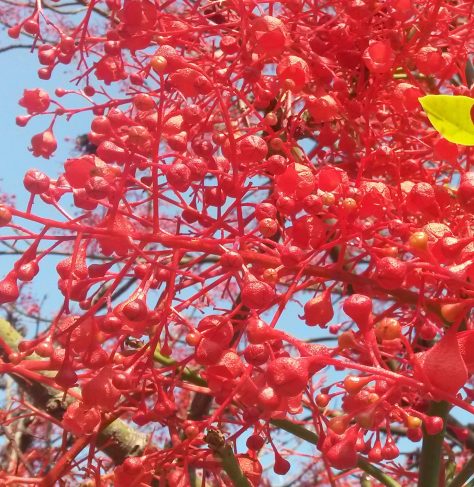
Amazing trees in this garden include the Australian flame tree, Brachychiton acerifolius, with its bright flowers and large characteristic seed pods.

Brachychiton acerifolius, Australian flame tree, with a view of the port
B.acericifolius: Intensely red bell-shaped flowers
B. acerifolius: Large pods containing seeds which are characteristic of the genus. The pods also contain irritant hairs so should be treated carefully

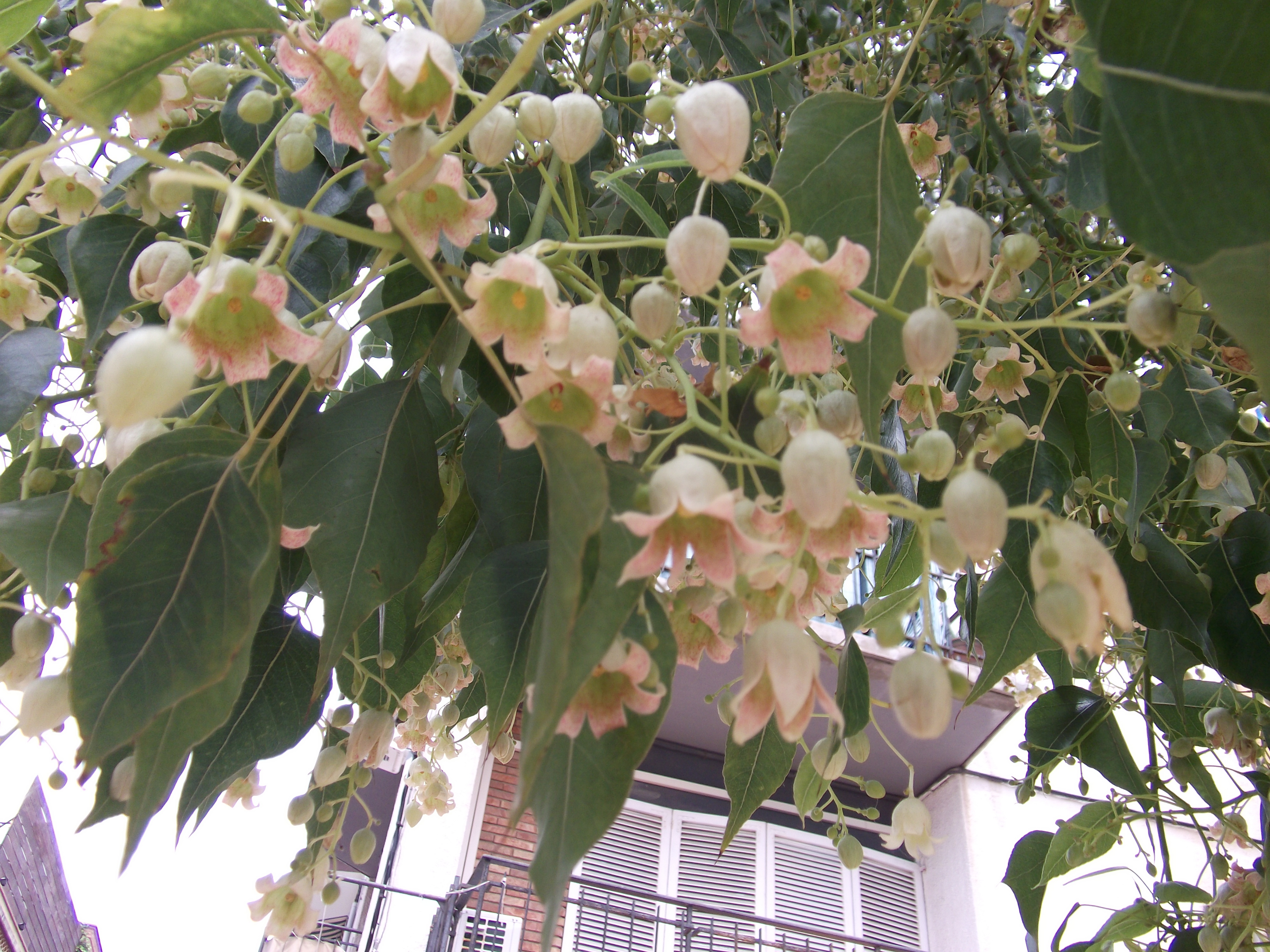
This is not the only Brachychiton species planted in Barcelona. Widely planted in parks and streets is B. populneus, a handsome tree appearing a little like a weeping fig when mature. However it has white flowers freckled pink inside and pods like those above but smaller. Be careful of the pods if you see them as they contain hairs as well as seeds which can be irritable.

B.populneus in flower in Barcelona in early June

Brachychiton trees come from the east coast of Australia. There are about nine species which are all generally called Kurrajong. The genus was classified in the family Sterculiaceae but is now considered part of the very broadly defined Malvaceae, as is the family Bombacaceae. See the Ceiba trees in the Porta de MontjuÏc.

Another member of the genus in the garden is the Pink Kurrajong, B. discolor, which I found flowering at the end of July 2016.

Brachychiton discolor, the Australian Lacebark Tree or Pink Kurrajong
Brachychiton discolor flowers

Other great trees are the Washingtonia robusta – the Californian palms which are a characteristic of Los Angeles and the southern part of the state. There’s a grove of Brahea armata – Mexican blue palms – with their long inflorescences. A native of Baja California.

Brahea armata: the Mexican blue palm

There are many desert plants to interest you and what you find will depend on the season. But I don’t think there will be a time when you will be bored!

Agave stricta in flower

When you’ve had your fill of cacti and desert plants, walk to the lowest most northerly end of the garden and leave by the lower gate. The path runs parallel to a major road and you will pass on your right the Forestier steps – an incomplete staircase intended for the 1929 Exposition.

The Forestier staircase – never completed but it can take you back up to the Miramar Gardens

You are now walking toward the Walter Benjamin Gardens and the Porta de Montjuïc: Moving from the blue area on the map to the yellow and the green.

Gardens of MONTJUÏC, Barcelona: 5. Walter Benjamin Gardens and the Porta de Montjuïc

The Porta de Montjuïc is the highlight of this part of the garden route and could be the start of your experience, in which case see the bottom of this blog. However, if you are approaching from the Gardens of Mossèn Costa and Llobera in my previous blog, you will pass the Forestier stairs on your right and then walk down pleasant series of steps surrounded by jacaranda trees.

In April or May these will be inundated by lovely blue blossom. However, I’ve never seen it myself – just one or two remainders later in the year.

Jacaranda mimosifolia in flower

Walking down these steps, you are in the yellow area on the map. At the bottom turn slightly left, cross a minor road and find a small urban park called Hortas de Sant Bertran. There’s little to say about this urban garden, so walk through it and slightly to the left you will encounter a green space running along the side of the main road. This is coloured green on the map and is the Walter Benjamin Gardens.

Walter Benjamin Gardens

These gardens comprise three tree-lined squares, trying to create a calm shady sitting space in a busy urban environment. Each square is planted with a different tree species and there are some focal points such as stone pyramids and a fountain.

These gardens take their name from a German literary critic and were designed by architects Daniel Navas, Neus Solé and Imma Jansana, the green notices tell us in Catalan.

Not foreseen by the designers is the dazzling graffiti provided by the local youth. It may detract from the calmness but it is not unattractive and does not stop people snoozing here! In fact more recently it’s clear there are people actually living under the shade of these friendly trees.

Dazzling graffitti is now part of the Gardens of Walter Benjamin

A notable tree here is Parkinsonia aculeata, which you are unlikely to see in the UK. It is in the pea family, Fabaceae, and widely planted as a street tree in Catalonia. It’s a native of Mexico and, apparently, an invasive species in Australia.

Parkinsonia aculeata

Barcelona can be proud of its street trees, which are diverse and undoubtedly reduce temperatures and pollution big time. There are at least 150 species and you can see a list here, but I can tell you that it is not complete! One of my favourites, Brachychiton populneus, is missing!

In the other two squares we have a red-leaved plum or apple tree and a green-leaved Judas tree (Cercis siliquastrum), which must be lovely when enriched with its purple flowers in spring. There’s also a good deal of Robinia pseudoacacia along the roadside.

A square with Judas trees – in spring the trees will outshine the graffitti!

Porta de Montjuïc

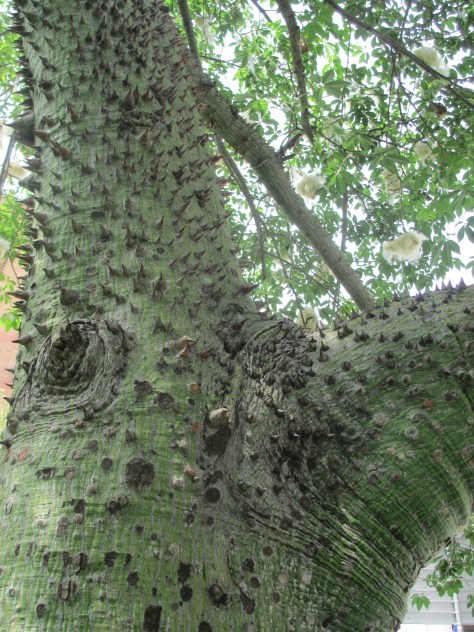
The Walter Benjamin Gardens then give on to the Porta de Montjuïc and you are back in the city. The grass verges are planted with magnificent Ceiba silk floss trees with their bottle-shaped trunks and very severe spines. I have of course featured these in my Amazing trees section.

Ceiba trees populate the grass verges of Porta de Montjuïc
The trunks and branches can be fiercely spiny

If you are lucky they may have showy flowers or silky fibrous fruit. They are from South America and were classified in the Bombacaceae family – close relatives of the kapok, balsa wood and baobab trees. However, taxonomists now believe that the concept of the Bombacaceae is flawed because it is “polyphyletic”, that is it has more than one evolutionary origin. It is now regarded as part of the Malvaceae, a very large family including the wild mallow Malva and the garden Lavatera. The is also true of the Sterculiaceae, as we saw in the Gardens of Mossèn Costa and Llobera.

Ceiba speciosa in flower in Barcelona
The fibrous fruit – similar to kapok

According to Barcelona City Council there are two species planted here – Ceiba speciosa and Ceiba insignis. I am not sure how different these two are. But there are certainly many species of Ceiba – some of which are real giants of the rainforest with huge buttress roots that tower over all other trees.

Ceiba trees are of very special importance to South American culture and it is worth giving Wikipedia a read on the subject. Think of links to Pre-Columbian and Mayan gods and the underworld, an ingredient of hallucinogenic drinks, the national tree of Guatemala and so on.

And I can’t help speculating why on earth these trees might have evolved such huge spines. My idea is that that they may have been a suitable defence against Megatherium, the giant ground sloth. It was at least the size of an elephant and used to roam much of South America in the Pleistocene, making a meal of any tasty trees.

Anyway, Ceiba are certainly interesting trees and a worthy endpoint to a day spent visiting the Gardens of Montjuïc!